The argument moved this week
For the past month the AI film conversation has been circling the same blunt question: can AI make a film?
This week made that question feel too small. Tribeca programmed Dreams of Violets, a docudrama feature by Ash Koosha that brings generative image-making into the festival room. Runway's 2026 AI Festival moved from online showcase to New York and Los Angeles screenings, with finalists, jurors, prizes, partners, and a proper event calendar. On June 12, iQIYI pushed the industrial version of the story, saying its thriller None Shall Escape used NadouPro to improve shot-production efficiency by nearly 50 percent.
Those are three different contexts: festival legitimacy, tool-culture celebration, and platform-led production efficiency. Together, they point to a better question.
AI video can generate shots. Can it hold a film together?
A prompt is not a set
A film set is not just a place where images are captured. It is a decision system.
The set holds continuity. It catches the glass that moved between takes, the hand that should not change position, the prop that tells the audience where the character has been, the eye line that either sells the relationship or quietly breaks it. It is where performance changes because an actor finds a better rhythm, where the cinematographer adjusts the key by half a stop, where the director realises the shot list is emotionally wrong, where the script supervisor protects the edit before the editor ever sees the material.
A prompt does not naturally contain that structure. It can describe a frame, a mood, a camera move, a style, even a sequence. But the set is where a hundred small decisions are made in relation to each other.
That is the real gap in AI filmmaking. Not image quality. Relationship quality.
Dreams of Violets makes the problem harder
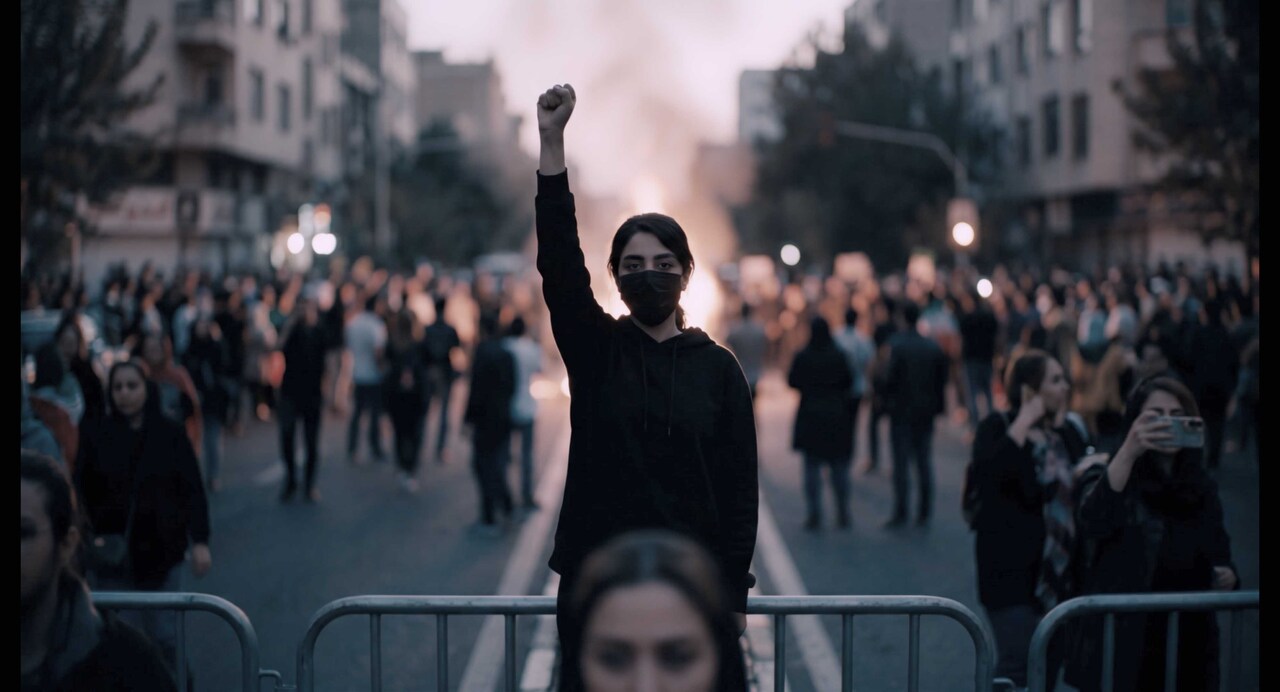
Dreams of Violets is not an easy film to dismiss as a tech demo. Tribeca's synopsis frames it around Iranian civilian resistance, five strangers, and protest footage brought back into dramatic form. That is a much more serious use case than a synthetic beer commercial or another glossy prompt reel.
The production argument is clear. If a filmmaker cannot safely access a place, cannot reconstruct certain events conventionally, or cannot finance a traditional shoot, AI becomes a possible language for staging what cannot be filmed directly.
Cinema already has a long history of doing that. It uses archive, actors, reconstructions, animation, miniatures, matte paintings, VFX, memory, and metaphor. AI does not invent the ethical problem. It compresses it and makes the provenance harder to read.
That is why the craft question matters so much. In a film about real violence, the audience is not only judging whether the images are convincing. They are judging whether the filmmaker has earned the right to make them convincing.
The grammar problem is bigger than realism
The internet tends to grade AI video by whether a frame looks expensive. That is the wrong threshold for film.
A single image can look cinematic and still fail as cinema. A character can be beautifully lit in one shot and become a different person in the next. A camera move can feel premium while the blocking tells us nothing. A face can be plausible while the performance has no interior progression. A location can be lush while the geography makes no emotional sense.
Film grammar is relational. One shot changes the meaning of the shot before it. A pause matters because of the line that preceded it. A lens choice matters because of distance, pressure, and point of view. Coverage is not just footage; it is a set of editorial promises.
That is why continuity errors in AI video are not just technical bugs. They are signs that the system does not yet understand the production object it is pretending to make.
Runway is turning the demo into a circuit
Runway's AI Festival matters because it gives AI filmmaking a public structure. It is not just a product page. It has finalists, jurors, screenings, awards, partners, categories, and submission rules.
The 2026 programme is also telling. The festival describes itself as moving beyond film into design, new media, fashion, advertising, and gaming. That is exactly where generative video is going commercially: not one neat cinema category, but a creative infrastructure layer across formats.
The useful thing about a festival is that it forces generated work into public comparison. An AI short cannot hide behind a prompt thread once it is screened in a room. It has to survive pacing, character, taste, sound, rhythm, boredom, and audience attention.
That is good for the medium. It moves the argument from possibility to judgement.
Platforms want to industrialise the missing parts
The iQIYI story is the most important industrial signal because it is not about one striking image. It is about workflow.
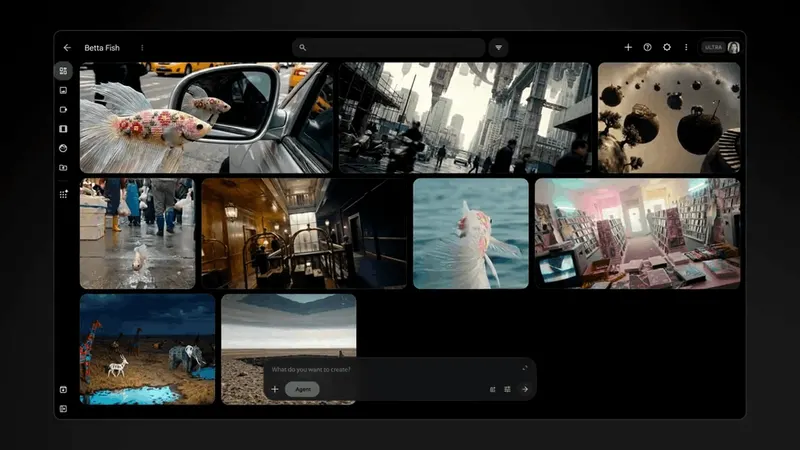
NadouPro is being positioned as a professional production platform, not a toy prompt box. iQIYI says it connects multiple large-model tools, supports shot tracking and scene management, and gives teams a shared production workspace for long-form work. In April, the company described Nadou Pro as a full-stack platform with agents for scriptwriting, directing, visual design, editing, and more.
That is where the market is heading. The useful AI product is not the generator that makes one good frame. It is the system that can manage character consistency, scene consistency, model choice, approvals, versioning, shot status, editorial intent, and distribution pressure.
In other words, the platforms are trying to build a virtual production office around the generator.

Efficiency is not authorship
The iQIYI claims are commercially significant. The company says NadouPro helped None Shall Escape improve overall shot-production efficiency by nearly 50 percent, and that one atmosphere-development task that might have taken almost a month was compressed to under a week.
For post-production, VFX, and small teams, that is not trivial. Anyone who has watched a project burn time on rotoscoping, particle simulation, replacement work, match-lighting, comp revisions, or versioning can understand why producers would pay attention.
But efficiency is not authorship. It can protect authorship if it gives artists more time for decisions that matter. It can also hollow authorship out if it becomes the only value the production wants.
That is the line. AI is useful when it removes repetitive drag and gives the creative team more room to think. It is corrosive when the production uses efficiency as a way to skip the people who know what the shot is meant to do.

Advertising will hit this sooner
Film culture will spend years arguing about purity, authorship, credits, and what counts as cinema. Advertising will ask a harsher question faster: did it work?
That is why Cannes Lions is worth watching. The 2026 programme includes Advertising in the Age of AI, and the wider industry mood is shifting from AI spectacle to commercial accountability. Brands do not need a philosophical answer before they start testing AI workflows. They need output that is on brand, legally usable, fast enough to matter, and strong enough to perform.
The same set problem appears there too. A campaign is not one image. It is the offer, the edit, the landing page, the audience, the comments, the paid spend, the variant logic, the data, and the brand memory that stops the next asset from drifting into mush.
AI creative systems will be judged on whether they can hold that whole chain together.
The good version needs filmmakers
The best future for AI filmmaking is not machine cinema replacing film crews. It is filmmakers using AI with enough craft knowledge to know what they are looking at.
That means the person driving the tool still understands blocking, continuity, lenses, light, performance, edit logic, production design, story rhythm, audience trust, and the political meaning of reconstruction. It means they can reject a beautiful image because it breaks the scene. It means they know when the generated shortcut has solved a practical problem and when it has created an ethical one.
This is why I do not find the serious AI film conversation anti-technology. The serious version is pro-craft. It asks whether the tool can be placed under a filmmaker's taste instead of replacing taste with output volume.
A good director does not just ask for a shot. A good director knows why this shot, from this angle, at this distance, after this moment, with this performance, needs to exist.
The useful standard
So I would stop asking whether AI can make a film as though that is one question.
It can make frames. It can make sequences. It can help with previs, references, atmosphere, cleanup, versioning, storyboard exploration, synthetic inserts, and probably a lot more than many people want to admit.
The useful standard is harder: can the filmmaker keep control?
Control does not mean touching every pixel manually. It means holding the intention across the whole work. It means continuity is protected. Performance is respected. The audience is not misled. The labour story is not hidden. The tool is disclosed where it matters. The image is answerable to a person with taste and responsibility.
That is the set problem. AI filmmaking will not become serious because the shots get prettier. It becomes serious when the workflow can support the same thing a real set supports: decisions in relation to other decisions.
Until then, the frame may look finished while the film is still looking for a director.
Build
Need a repeatable AI production workflow?
Mike designs the tools, review loops, and publishing systems that make it usable.
Launching a business of your own? Founder Launch OS connects the brand, offer, website and visual campaign in one guided Codex or Claude Code workspace.
Keep reading