Chrome on Android stops waiting politely
Gemini in Chrome on Android is the kind of update that changes the browser’s personality. It no longer just opens the page and stands there. It can summarise, answer, help with errands, and step in when the job is more annoying than interesting.
That matters because the browser is where a lot of real life already happens. If the assistant lives there, AI stops feeling like a separate app and starts feeling like part of the route from question to action.
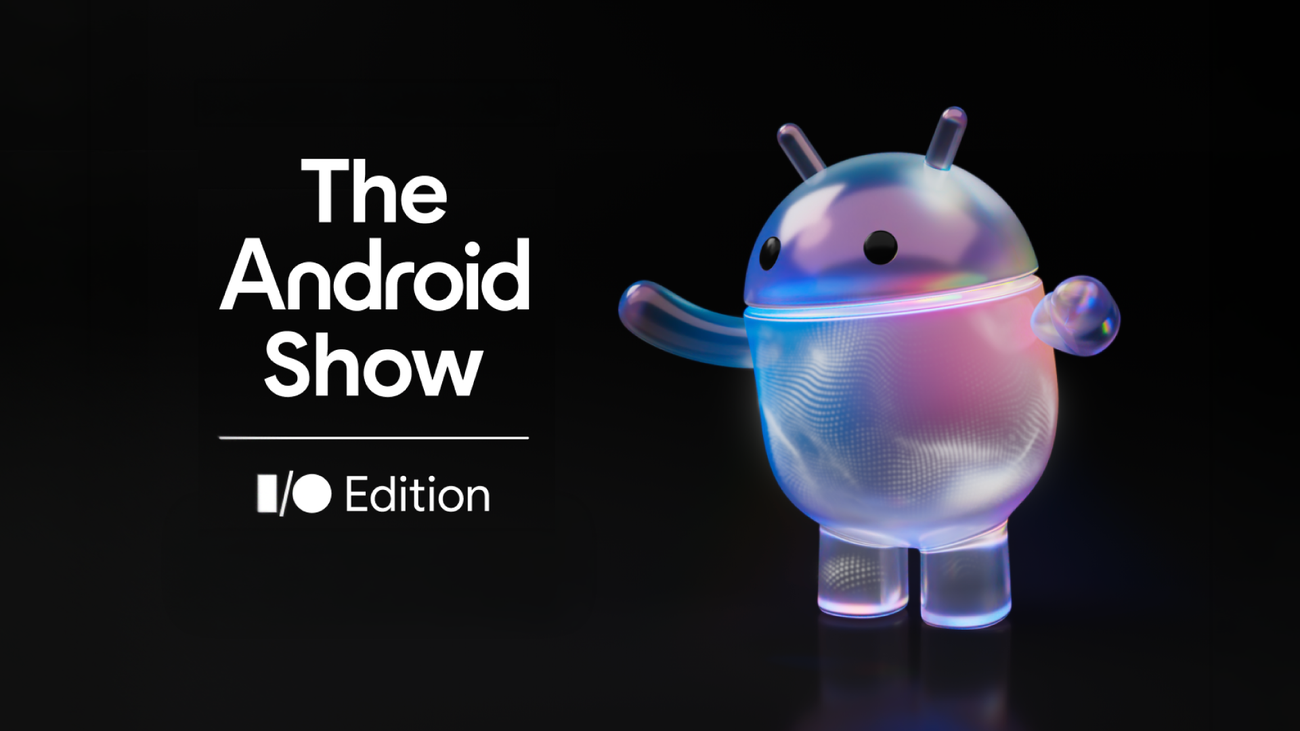
Googlebook looks like hardware with a thesis
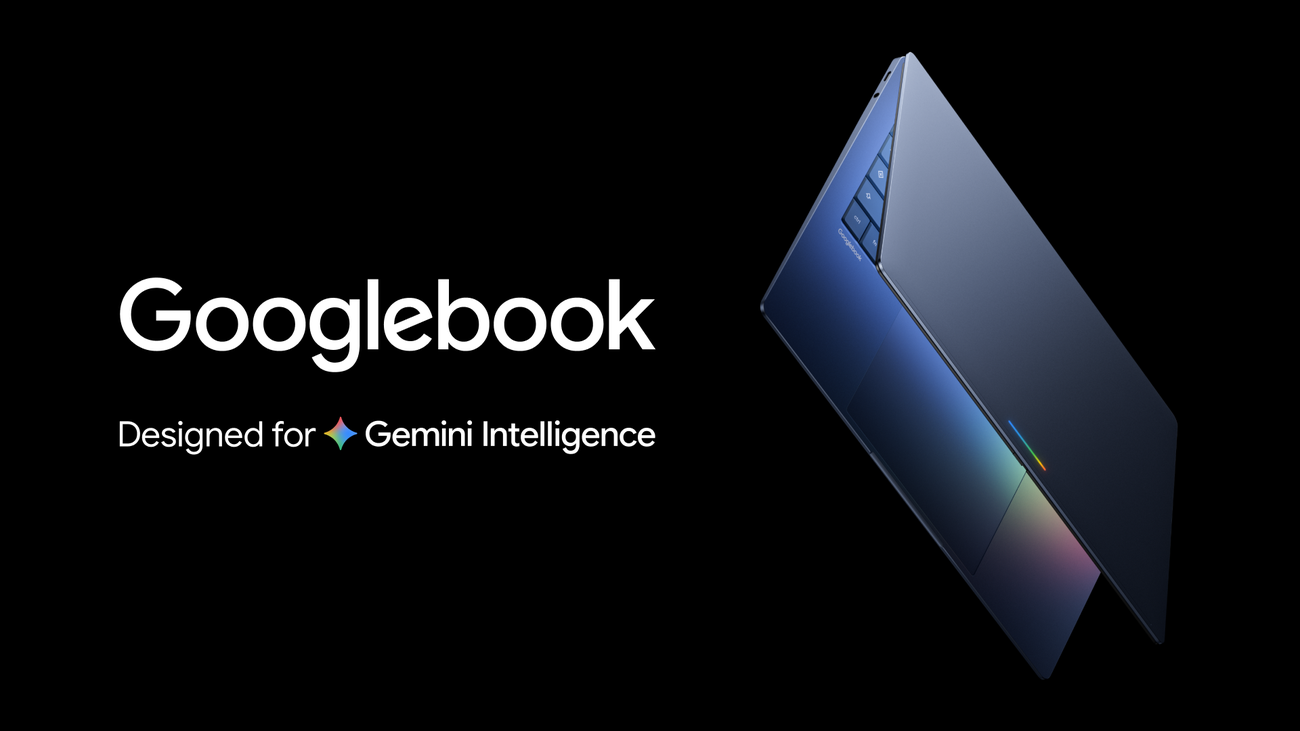
Googlebook is the most obvious hardware swing in the set. It is being sold around Gemini Intelligence, with Magic Pointer at the cursor and widgets you can spin up by prompting instead of hunting through menus.
The interesting part is not the spec sheet. It is the stance: this is a laptop designed around AI as the default interaction model. That is a much bigger claim than “AI features included.”
Android becomes the delivery network
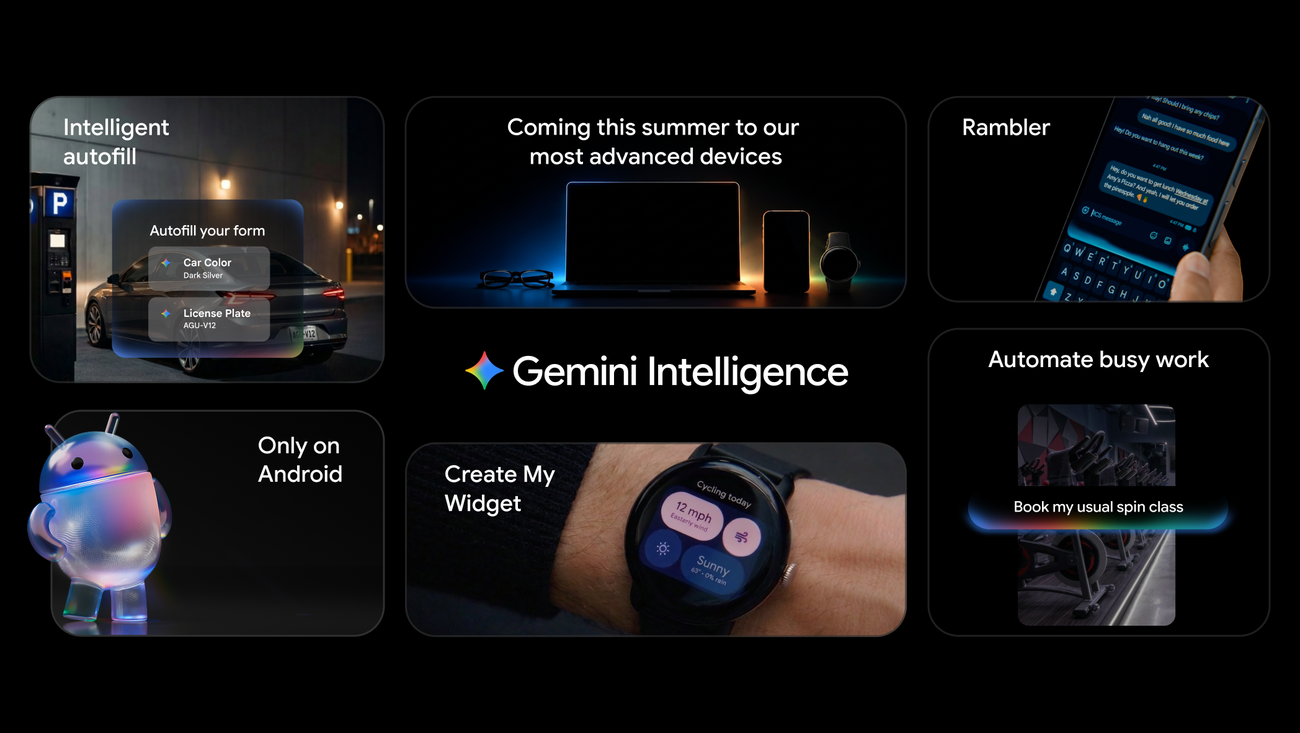
Gemini Intelligence is being threaded across phones first, then watches, cars, glasses, and laptops. That turns Android into a delivery network for the same assistant instead of a pile of separate demos.
The upside is simple: less relearning. The same intelligence follows you from pocket to wrist to dashboard, which is the kind of platform move that makes an ecosystem feel much larger than the screen in front of you.
The glasses tease is the real hinge
The XR and glasses story is where this gets fun in a slightly unsettling way. Once Gemini can sit in eyewear, it can respond to the scene instead of waiting for a tap.
That is still a platform story more than a finished consumer product, but the direction is clear: Google wants AI to feel ambient, helpful, and already there when you look up.

The whole event says one thing
The headline is not a single moonshot. It is the consistency. Chrome, Android, laptops, cars, watches, and glasses are all being pulled toward the same idea: fewer static surfaces, more action, more context.
So the fun version is that Google spent I/O showing a bunch of shiny things. The serious version is that it is trying to make Gemini the infrastructure behind all of them.
Build
Need a repeatable AI production workflow?
Mike designs the tools, review loops, and publishing systems that make it usable.
Launching a business of your own? Founder Launch OS connects the brand, offer, website and visual campaign in one guided Codex or Claude Code workspace.
Keep reading