The website is the last artifact
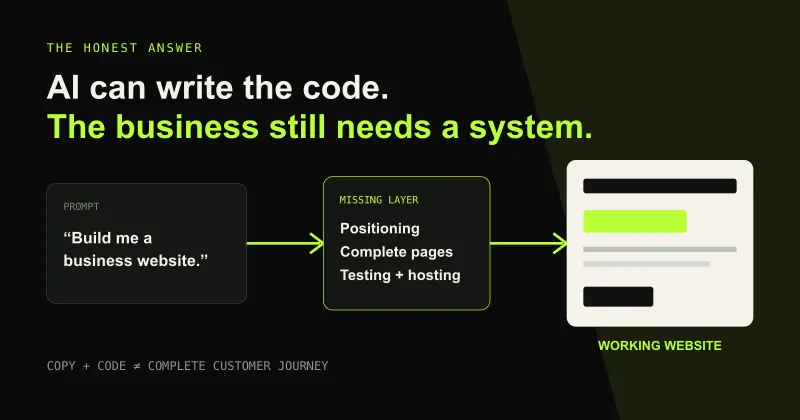
Most founder prompts fail because they start at the screen. Build me a website gives the agent no buyer, offer, proof, objections, pricing logic, visual constraints or publishing route. The model fills the vacuum with familiar layout patterns.
A better workflow starts with positioning. Who is the buyer, what painful job are they trying to solve, why should they trust this founder, what action should they take and what must the page never claim?
Only then should the agent write page copy, route structure, metadata and component code.
Use ChatGPT for thinking and Codex for files
ChatGPT is useful for interrogating positioning, generating alternatives and stress-testing copy. Codex and Claude Code are useful when the work needs to touch files, run commands, inspect errors and keep changes inside a repository.
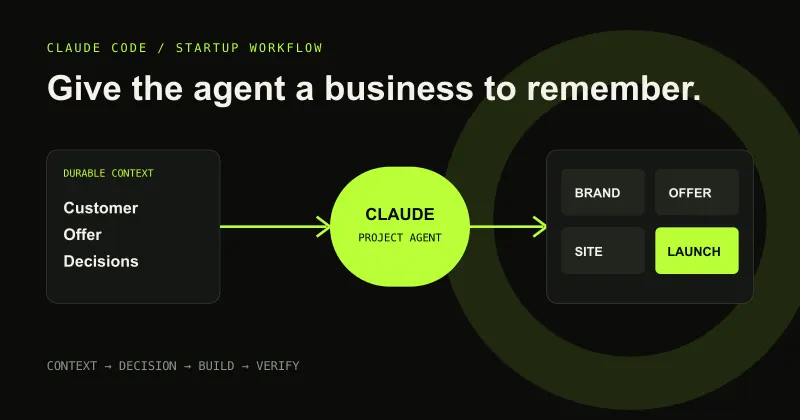
The handoff matters. Approved strategy should become source material in the project, not disappear inside a chat. Keep the customer avatar, offer, proof points, visual rules and SEO targets in files the coding agent can read.
That lets the site improve over time without restarting the brief.
Build the whole public path
A useful launch needs more than a homepage. It needs title tags, meta descriptions, social cards, sitemap, robots, contact route, analytics, privacy or licence pages where relevant, responsive checks and a deployment path.
Agents can handle much of that work if the repo has standards. They should also run the site locally, build it, check images, inspect links and explain anything that remains unverified.
The founder should keep final approval around payment, domains, production deployment and claims that affect customers.
Turn analytics into the next brief
After launch, Search Console and analytics should shape the next edits. High impressions with no clicks point to title and meta problems. Position 8 to 30 queries point to pages that Google already understands but does not fully trust. Zero-impression buyer questions point to missing content.
That is where a founder site becomes an operating system. Each week, the agent can inspect queries, separate internal testing from real visitors, recommend title fixes, propose internal links and draft posts around proven demand.
The site stops being a static brochure and becomes a compounding record of what the market is asking.
Build
Need a repeatable AI production workflow?
Mike designs the tools, review loops, and publishing systems that make it usable.
Keep reading