Start with the business decision, not the build
A common first prompt is “build my startup website.” Claude Code can produce a page, but it cannot infer a defensible customer, offer or reason to buy from that sentence. Begin by describing the problem, the intended customer, the proposed outcome and any evidence you already have.
Ask the agent to separate known facts, your decisions, its research and its inferences. That distinction matters: a confident paragraph generated by a model is not customer evidence. Resolve the positioning and flagship offer before polishing interfaces.
Create a project that can remember
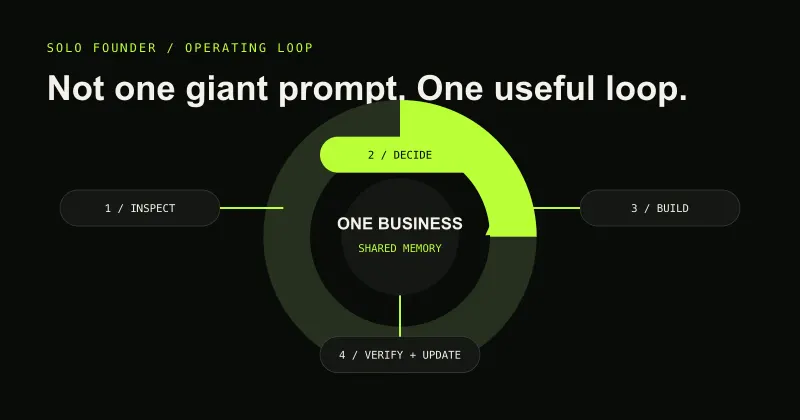
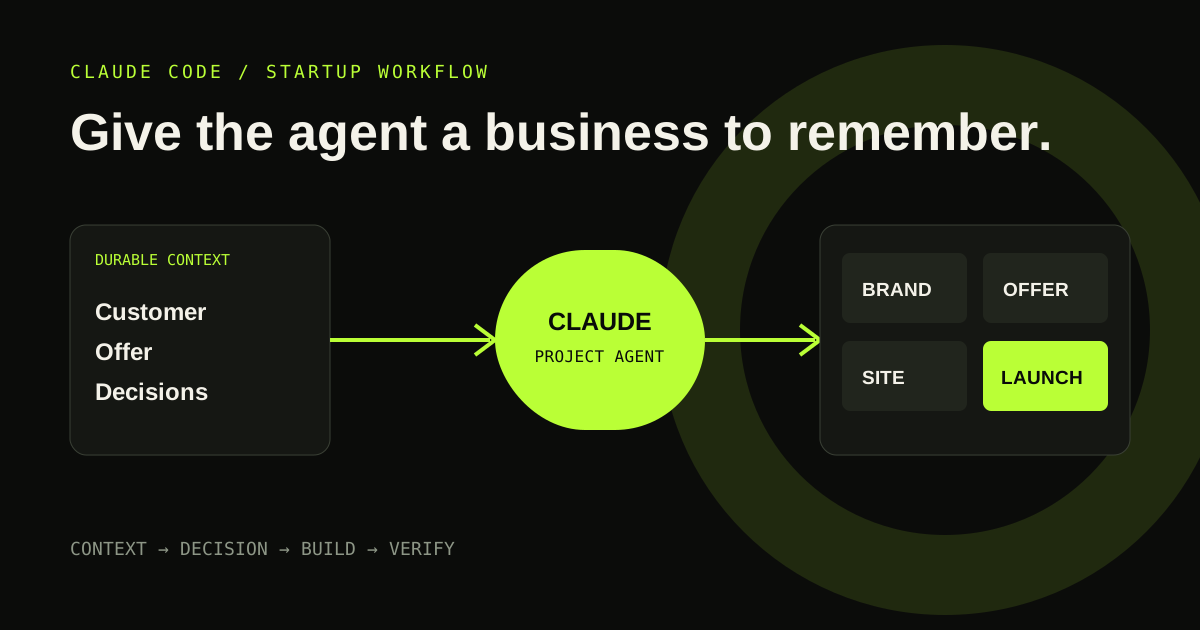
Store the accepted brief, customer definition, offer, brand rules and decision log inside the project. Give each document one job and tell the agent which files are authoritative. This reduces the need to paste the same explanation into every session.
Use a project instruction file to define behaviour: ask one important question at a time, challenge contradictions, inspect existing material before asking again and obtain approval before publishing, buying or deleting. The instruction layer turns a capable model into a more predictable collaborator.
Move from strategy to tangible launch assets
A sensible order is positioning, flagship offer, brand identity, landing page and campaign. Each stage should consume approved decisions from the previous one. The site should express the offer; the campaign should inherit the customer problem and visual language; neither should be invented in isolation.
Request actual deliverables rather than advice about deliverables: editable SVG brand assets, sales copy, a responsive local website, legal-page placeholders, a public deployment folder, a shot list and generator-ready visual prompts.
Use checkpoints instead of constant supervision
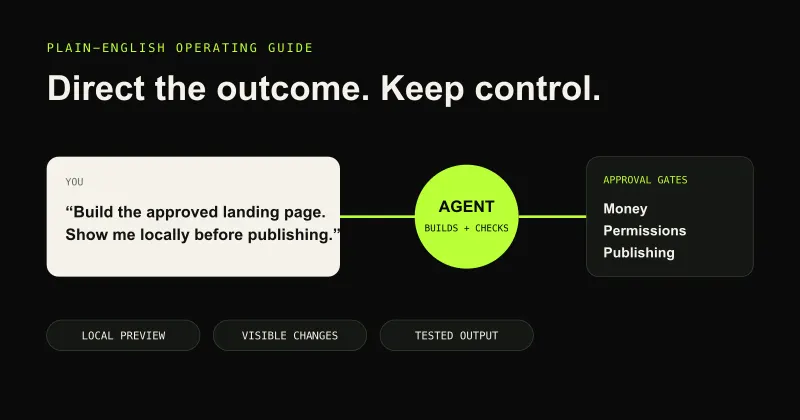
Agree the important choice, let the agent handle reversible implementation details, then review a working result. Ask it to run tests and explain failures. Keep paid services, account permissions, production publishing and destructive changes behind explicit approval.
Claude Code on the web can run well-defined repository tasks asynchronously and return changes for review. Work requiring local files or regular steering is better handled in a local project. Choose the mode based on the job rather than treating every task the same.
What a successful first launch looks like
Success is not the number of files generated. It is whether the founder can explain the offer, preview the website, identify what is private, publish the correct public files and continue editing the business without reconstructing the context.
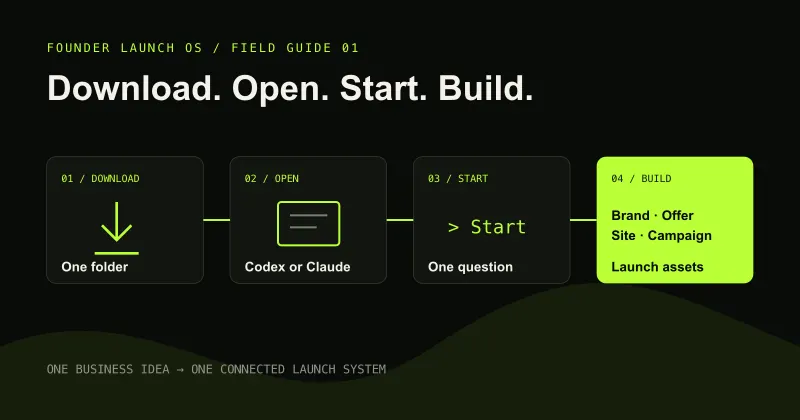
You can build this structure yourself. Founder Launch OS packages the question order, business memory, creative references and build checks so a founder can begin with Start instead of designing the operating system first.
Build
Need a repeatable AI production workflow?
Mike designs the tools, review loops, and publishing systems that make it usable.
Keep reading