What ChatGPT can create
A chat model can help define page structure, draft headlines, write FAQs and generate HTML, CSS or component code. A coding agent such as Codex can inspect a project, edit several files, run commands and test the result. That is enough to create a real local website.
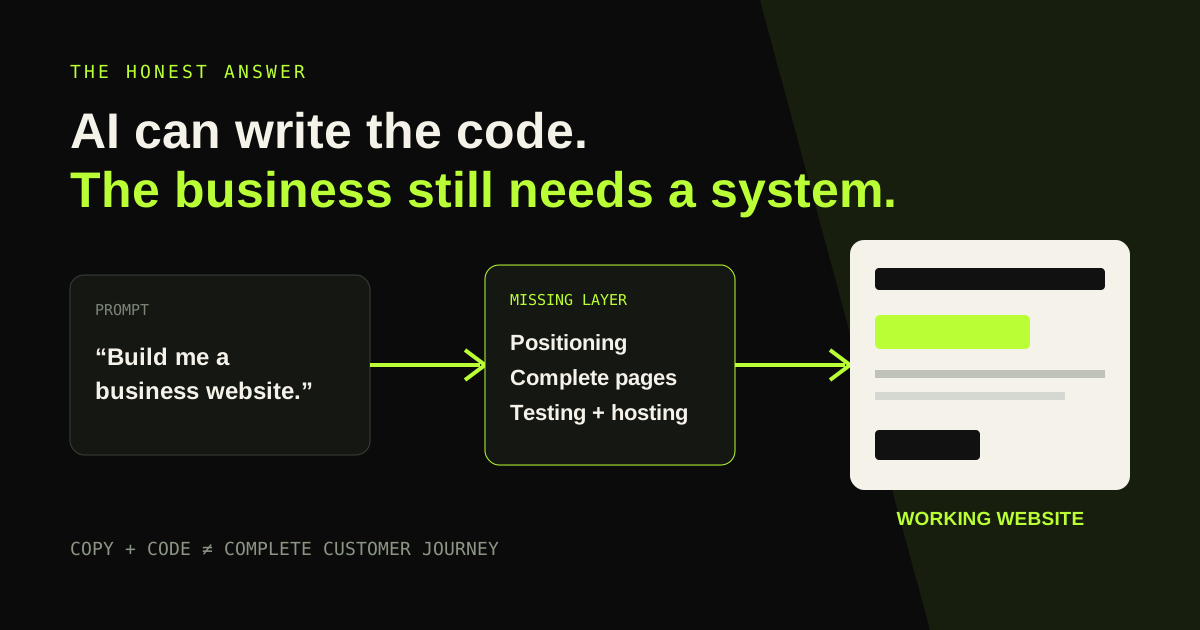
The capability is not the same as a finished business outcome. A technically valid page may still target the wrong buyer, make a vague offer, use generic visual language or omit the details that make publishing safe.
Why “build me a website” produces generic work
The prompt contains no positioning. The model fills the gaps with common patterns: broad claims, interchangeable benefits and familiar layouts. More adjectives rarely fix this. The agent needs an approved customer, one flagship offer, evidence, objections, brand rules and a specific conversion goal.
Ask it to recommend where information is weak rather than silently inventing facts. Business claims, testimonials, prices and legal details should come from the founder or verified sources.
A complete website is more than the homepage
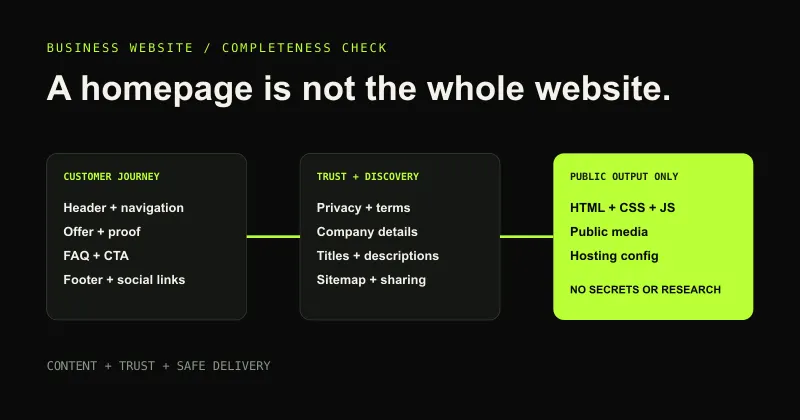
A launch-ready site normally needs navigation, a clear header, offer explanation, proof, calls to action, responsive behaviour, social links, FAQ and footer. Depending on the business, it may also need privacy information, terms, accessibility consideration, analytics consent, contact handling and clear ownership details.
Working source files should remain separate from the public deployment directory. Credentials, research notes, customer information and internal strategy must never be uploaded simply because they sit beside the website code.
From generated code to a live URL
First run the site locally and inspect it on desktop and mobile. Check links, forms, images, metadata and keyboard use. Then choose a domain registrar and hosting provider. Firebase Hosting can serve static or single-page apps over SSL and connect a custom domain; Cloudflare Registrar can manage the domain and DNS.
An agent can explain and prepare these steps, but account creation, purchases, permissions and the final production deployment should remain visible decisions. Keep the editable project after launch so future changes are controlled rather than patched directly on the host.
The better prompt is a better system
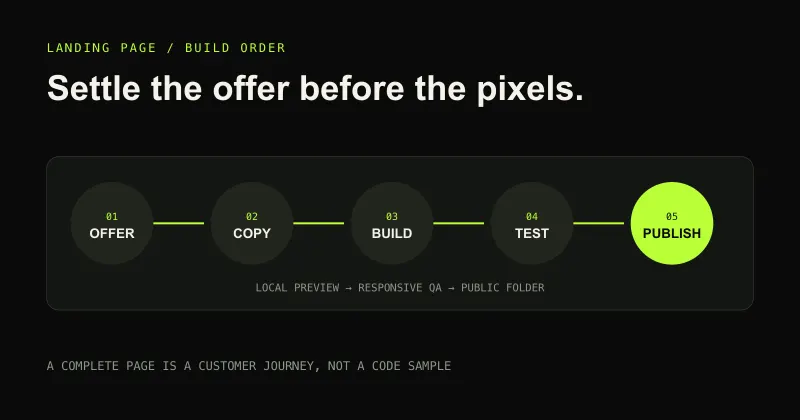
Instead of asking for a website in one sentence, give the agent an ordered process: learn the business, agree the offer, establish the visual system, build the complete page, test it and explain publishing. Store the answers so revision does not restart the brief.
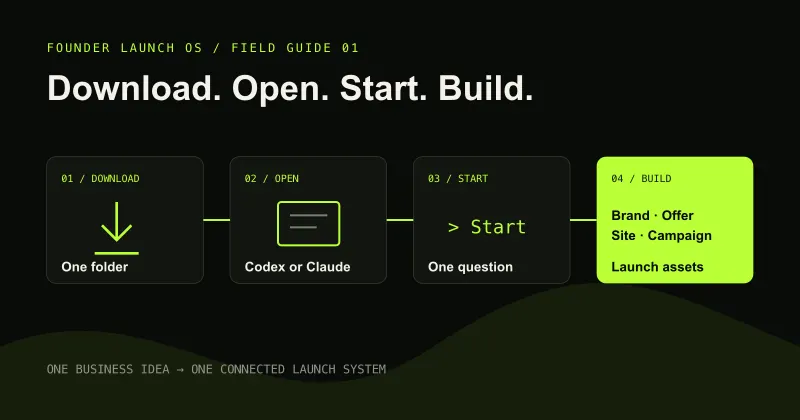
Founder Launch OS provides that process for Codex and Claude Code. It is not a hosted AI website builder; it is a local business workspace that produces a working website alongside the strategy that makes the page useful.
Build
Need a repeatable AI production workflow?
Mike designs the tools, review loops, and publishing systems that make it usable.
Keep reading