The essential customer journey
A focused landing page can serve an early business well. It should identify the business, explain the customer problem and outcome, present the offer, establish trust, answer objections and make the next action obvious.
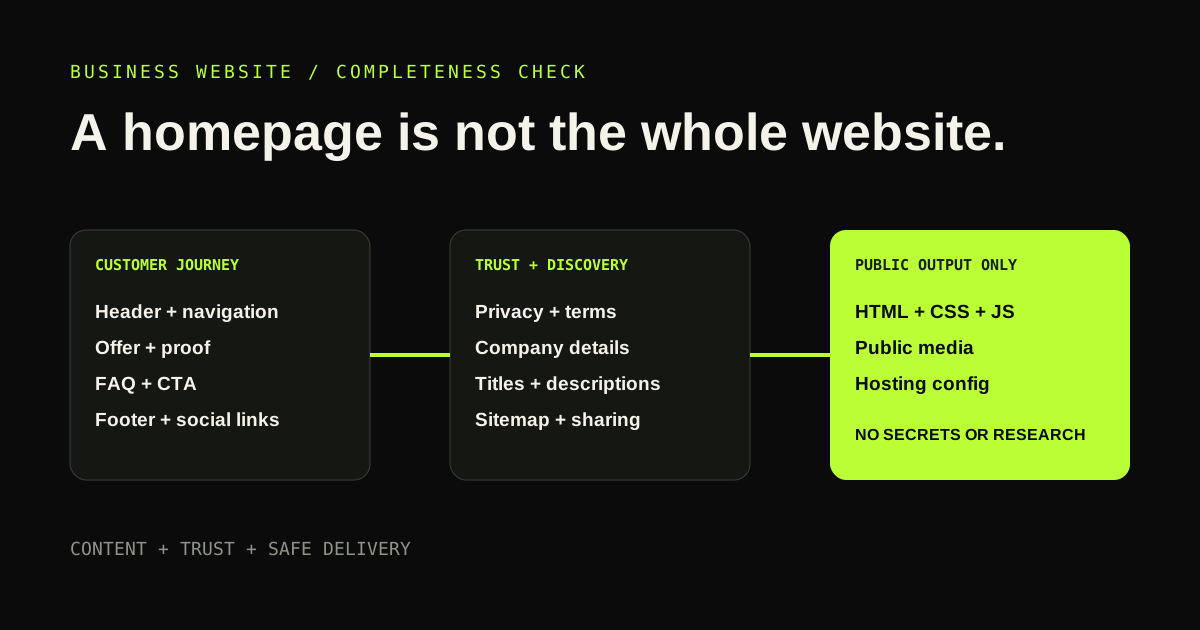
Include meaningful navigation even on a single page. A clear header, offer sections, proof, how-it-works explanation, FAQ, calls to action and footer help visitors understand where they are and what happens next.
Identity and contact information
State the business or trading name accurately. Provide an appropriate contact route and real social links rather than empty icons. Where applicable, include the legal entity, registration details and geographic information required for the business.
Do not expose personal contact data merely because it is available. Choose deliberate public channels and ensure form submissions have a real destination and response process.
Privacy, terms and cookies
A privacy notice should describe what personal data is collected, why, how it is handled and how a person can contact the business. Terms can clarify the website, offer, payment, delivery, licence and limitations. The exact content depends on the product and location.
If analytics, advertising or embedded services set non-essential cookies, consent requirements may apply. An AI-generated template is not evidence of compliance; review it against the actual tools and data flows.
Search and sharing metadata
Every public route needs a descriptive title, summary, canonical URL and useful heading structure. Supply a social-sharing image and accurate alternative text. A sitemap and robots policy help discovery but cannot compensate for thin or confusing content.
Write for the questions customers use. A product name builds branded demand later; early organic discovery often begins with “how do I,” “can AI” and “what do I need” searches.
Public files and private source material
The public directory contains only what a visitor should receive: compiled HTML, CSS, JavaScript, intended media and public metadata. Business research, prompts, source documents, customer data, credentials and unpublished assets stay outside it.
Hosting configuration should explicitly name the public directory. Founder Launch OS builds this separation into its website workflow and explains which output can be uploaded after the local preview is approved.
Build
Need a repeatable AI production workflow?
Mike designs the tools, review loops, and publishing systems that make it usable.
Keep reading