Signal 1: AI visibility is moving from screenshots to a measurement discipline
On August 3, IAB released Measuring Visibility in the AI Era, a framework for evaluating how brands and publishers appear in AI-powered discovery. It organises the problem into four linked layers: presence, whether an entity appears; prominence, where and how substantially it appears; portrayal, whether the framing is accurate; and persuasion, whether the answer drives a recommendation or action. IAB says more than 20 vendors already sell AI-visibility measurement, but their methods can return different answers for the same organisation.
Why it matters: AI search reporting is starting to look like early social analytics—plenty of dashboards, weak comparability and a temptation to treat any mention as business value. The useful addition is IAB's distinction between directional data and decision-grade measurement. A handful of repeated prompts may reveal a pattern; it should not automatically move budget, rewrite positioning or become an executive KPI. Presence without accurate portrayal can even be a liability.
What to do with it: build a fixed, versioned question set around the decisions customers actually make. Record market, language, account state, platform, model, date, citations, answer position, factual errors and the action offered. Run it on a stable cadence, preserve the raw answers and separate observed visibility from interpretation. Before buying a monitoring platform, ask for prompt coverage, sampling method, reproducibility, platform coverage and how it distinguishes a citation from substantive use. Connect any visibility movement to qualified traffic, enquiries or revenue before calling it performance.
Signal 2: AI transparency has crossed into live delivery
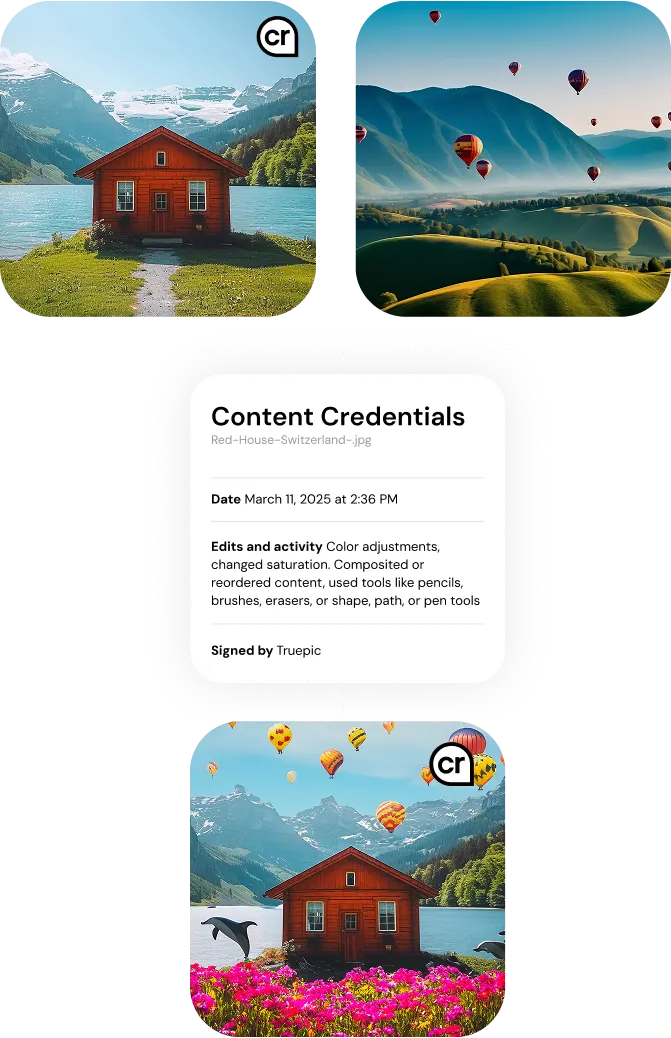
On August 2, the EU AI Act's Article 50 transparency duties began to apply. The European Commission's final Code of Practice on marking and labelling AI-generated content, published June 10, sets out a voluntary route for providers and deployers preparing for those duties. The Commission highlights clear labelling in key cases, including deepfakes and AI-generated or manipulated public-interest text, and disclosure when a person is interacting with an AI system. The exact treatment still depends on role, content, context and applicable exceptions; a generic AI badge is not a complete legal analysis.
Why it matters: transparency can no longer live in a policy deck detached from the master files. The provider may add a machine-readable signal, the agency may create the asset, the brand may publish it, and the platform may crop, transcode or strip metadata. Each party controls a different failure point. Meta's July 28 decision to sign the Code also shows that platform policy and regulatory implementation are starting to meet at the distribution layer.
What to do with it: inventory the customer-facing AI systems and synthetic media currently live in the EU, then map provider, deployer and publisher responsibility for each one. For every final asset, record the model, source material, human edits, represented person or event, intended context, classification decision, machine-readable marking test and audience disclosure. Test the delivered 16:9 master, vertical crop, thumbnail, localisation and platform transcode separately. Escalate difficult scope calls to counsel, but make production responsible for preserving the approved answer through delivery.

Signal 3: Conversational video editing is entering the shared work surface
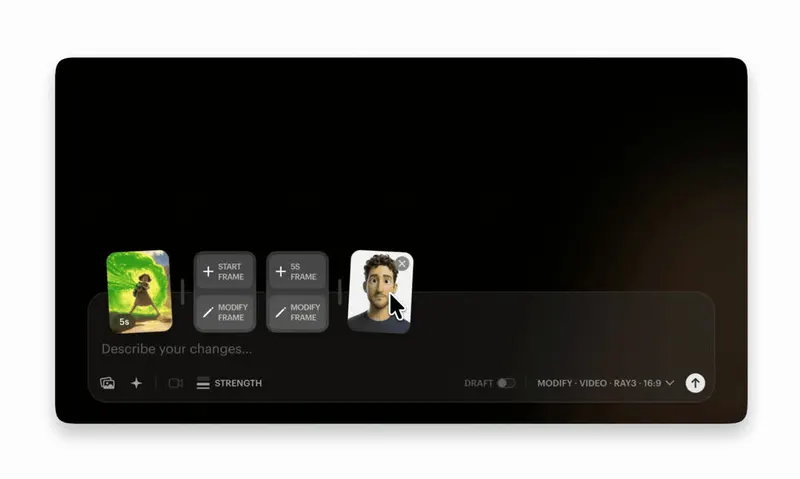
Google's July 16 Workspace update says Gemini Omni in Google Vids can generate clips and edit video through natural-language instructions, including changing colour treatment, restyling visuals or removing a siren from the soundtrack. Scheduled Release domains began their gradual rollout on August 5. Google lists broad Workspace and consumer-plan availability, but editing non-AI video is not available at launch in the UK, EEA, Switzerland, Texas or Illinois, and the feature has no separate admin control.
Why it matters: the video tool is moving closer to the document model. A communications or sales team can make a media change inside the same collaborative environment where it plans and reviews work, without opening a conventional finishing application. That can accelerate explainers, internal films and campaign versions. It also makes a text instruction capable of changing picture and sound in ways a casual reviewer may not notice, while UK teams initially receive a materially narrower product than the headline suggests.
What to do with it: split the pilot into generated clips and edits to captured footage; they carry different truth, rights and quality questions. Use non-critical material first, save the original and an approved baseline, and log the instruction, operator, model access date and resulting export. Review image, dialogue, ambient sound, music, captions and brand claims after every conversational edit. For UK production plans, verify the feature in the actual tenant before promising it in a schedule, and retain a conventional edit route for unavailable or precision-critical work.

Signal 4: Entertainment IP is becoming a controlled participation system
On July 31, Canva released its largest single-film template collection: more than 160 designs tied to Marvel Studios' Spider-Man: Brand New Day. The globally available digital set spans watch-party graphics, wallpapers, birthday materials, classroom resources, social posts, memes, fan art and personalised merchandise, with print limited to the US. Canva says Spider-Man was its most-searched entertainment character for years and drew nearly 10 million searches in 2025.
Why it matters: this is not simply a key-art upload. A studio release is being translated into a governed system that lets audiences produce their own adjacent media across domestic, educational, social and physical contexts. The commercial asset is the range: enough editable variation to invite participation while recognisable characters, marks and campaign timing remain inside an approved envelope. As generative tools make unofficial variation cheap, licensed template systems offer rights holders a way to channel some of that energy without trying to pre-author every finished object.
What to do with it: if a campaign depends on a world, character or visual property, define the participation kit alongside the hero launch. Specify the locked marks, editable fields, permitted copy, territories, print rights, expiry, prohibited contexts, disclosure and moderation route. Design for the real fan behaviours—watch parties, reaction posts, wallpapers, classroom use and small-format print—not only brand-channel assets. Measure reuse, completion, export and earned distribution separately from impressions on the original campaign.

Signal 5: Media coverage needs to test capability, not only describe conflict
An August 2 preprint, Copyright Is the Headline; Capability Is the Blind Spot, reviewed 89 items about AI and book publishing from November 2025 to August 1, 2026. It found a mixed field rather than uniformly hostile coverage: 30% of items were risk-framed, 42% mixed and 28% opportunity-framed. Its sharper finding is technical depth. Only ten items sustained technical scrutiny, and the review found little connection between model architecture, evaluation and publishing decisions such as retrieval, prompt injection, agent reliability, inference cost, drift and provenance.
Why it matters: creative industries can spend so much attention on legal positions and product announcements that they fail to build an operational account of what the systems can actually do. That creates two symmetrical errors: adopting a workflow on the strength of a launch claim, or rejecting a capability based on a category-level fear. The paper is a single-author purposive review with no intercoder reliability, and US and UK material is overrepresented, so its percentages are not a census. Its proposed evidence standard is still useful beyond publishing.
What to do with it: keep a claims ledger for every important model or workflow. Record who made the claim, the model and version, task, inputs, evaluation method, cost, latency, failure modes, rights position and date tested. Re-run a small benchmark set when the model, prompt, retrieval source or policy changes. For an agency, studio or founder, the valuable weekly briefing is not a list of launches. It is a short record of what changed, what was verified, what remains unknown and which production decision should move because of the evidence.
Build
Need a repeatable AI production workflow?
Mike designs the tools, review loops, and publishing systems that make it usable.
Launching a business of your own? Founder Launch OS connects the brand, offer, website and visual campaign in one guided Codex or Claude Code workspace.
Keep reading