Signal 1: The agent is becoming a recurring production service
On July 24, Meta announced that Meta AI can now plan, connect to email and calendar apps, generate slides and mood boards, and continue scheduled tasks without being prompted again. Examples include a daily briefing, a weekly plan and continuing research. Meta also says users can steer work while it is running and return to the resulting plans and presentations later. The features are beginning to roll out in selected markets, with broader availability promised; the announcement does not provide a complete integration, retention or audit specification.
Why it matters: the unit of AI work is moving from a reply to a durable service. A creative brief can become research, a deck, a scheduled update and a shared artefact inside one delegated task. That removes handoffs, but it also makes stale instructions and quiet permission changes more consequential. If the original owner leaves a project, a calendar changes, a client withdraws material or a campaign closes, the agent may still have a schedule and access unless the workflow explicitly retires them.
What to do with it: treat every recurring agent task like a small production service. Give it an owner, purpose, approved sources, connected accounts, output destination, cadence, review rule and expiry date. Separate read, draft and send permissions; require human approval before external messages, publishing, purchases or calendar changes; and review active schedules alongside campaign closeout. Preserve the instruction and each delivered output so a team can tell what changed between runs.
Signal 2: Advertising intelligence is moving from reports to recommendations
On July 27, Nielsen announced Ad Intel AI, describing a platform that combines fragmented advertising data and turns competitor strategy, spend, creative and market information into recommended action. Nielsen positions speed, accuracy, interoperability and decision support as the product's four tests. Its existing Ad Intel service covers TV, digital, social, audio, print, out of home and cinema across more than 90 international and 29 local markets. The launch claims come from Nielsen; no public model card, independent accuracy study or recommendation-level confidence framework accompanies the announcement.
Why it matters: campaign intelligence is no longer stopping at a dashboard. When a system can move from observed spend and creative activity to a suggested opportunity, it begins to influence the brief, channel mix and production queue. That may shorten research, especially across fragmented markets, but it can also turn incomplete coverage or an inferred competitor move into apparent strategy. A fast recommendation is not the same thing as a causal explanation of what made a campaign work.
What to do with it: require every AI-assisted recommendation to carry its market, period, channels, source coverage, observed facts, inferred claims and unanswered questions. Keep the recommendation separate from the decision and name the person who accepted, changed or rejected it. Pilot against one planning cycle without automatic budget movement, then compare forecast, actual performance and the conventional analysis. The useful metric is better decisions made sooner—not reports generated or prompts submitted.
Signal 3: The document is becoming a visual studio and review agent
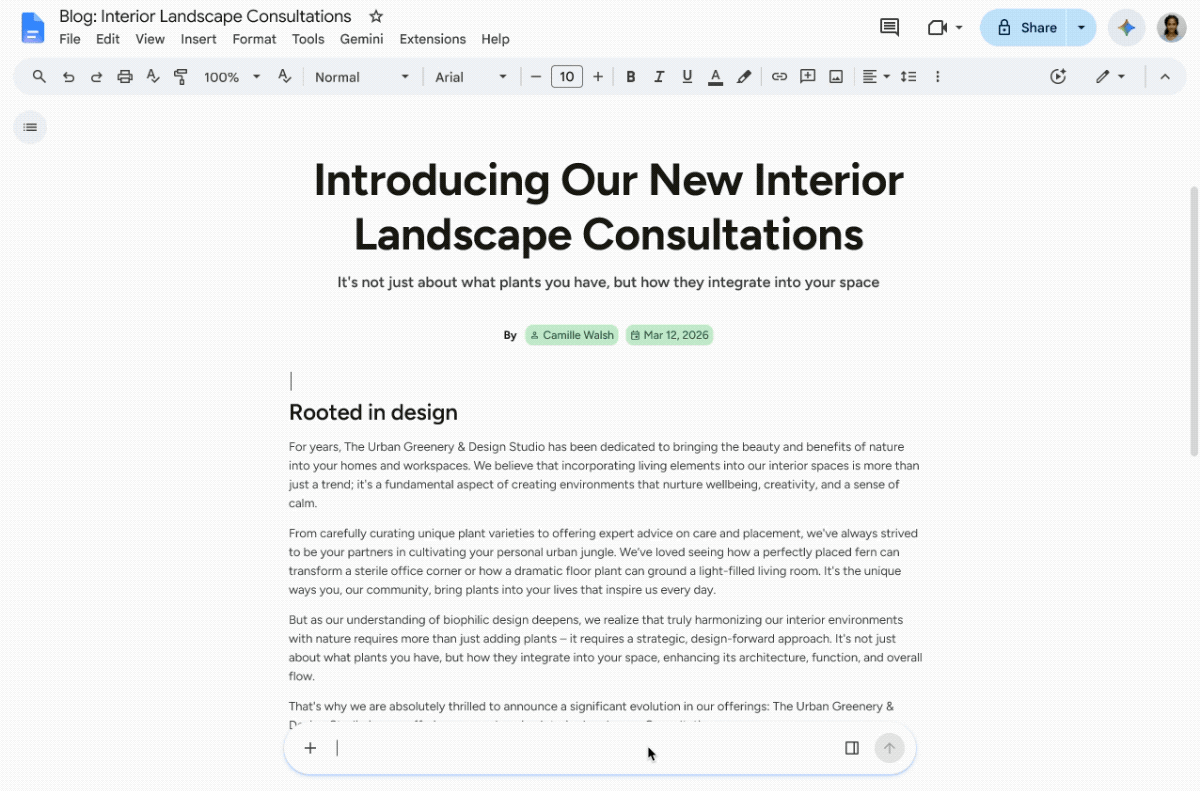
On July 28, Google added two connected capabilities to Docs. Gemini can now create and edit images, diagrams and infographics from document context, including batch changes across several visuals. It can also summarise comment threads, add comments, draft replies and suggest document edits. Suggested edits still require review and approval, and availability depends on Workspace edition and enabled smart features.
Why it matters: the brief and review record are becoming active production surfaces. A proposal can generate its own explanatory graphics, while the same system interprets feedback and proposes the next revision. That is powerful for founders and small teams, but it weakens an old assumption: that the document is a relatively passive record of what people decided. A batch visual restyle or an AI-drafted approval reply can change evidence, tone and perceived sign-off without entering a conventional design or change-control queue.
What to do with it: save an approved baseline before an AI pass and use suggested changes rather than silent replacement. Mark generated diagrams and infographics as working visuals until a subject owner verifies every fact, scale, label and implied relationship. Keep claims, source data, brand assets and final exports outside the generated layer; assign a named reviewer for comments the system summarises or answers; and inspect the whole document after multi-visual edits. Approval language should come from the approver, even when the first draft comes from Gemini.
Signal 4: A useful creative AI system encodes taste, not just output
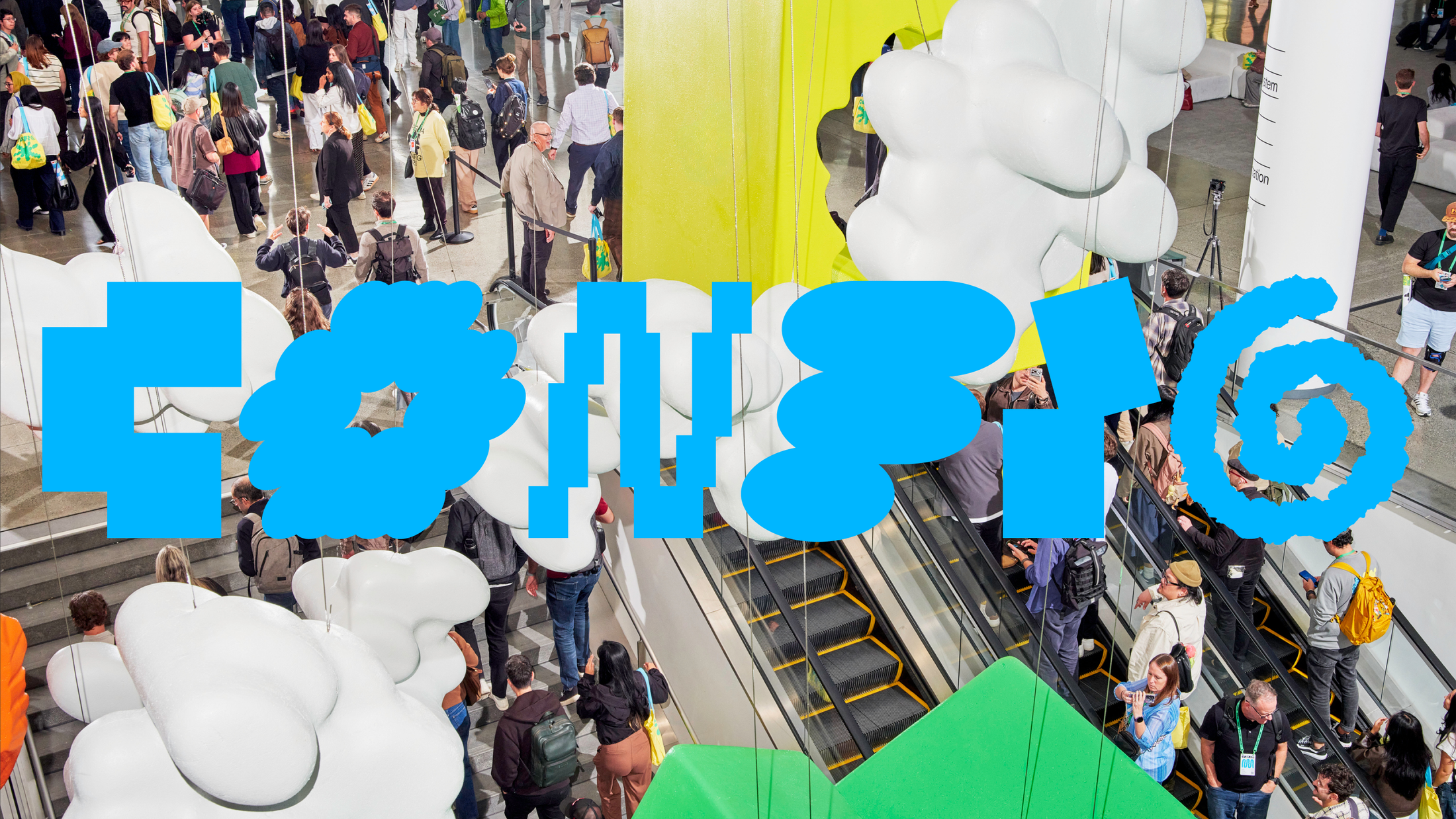
On July 27, Figma published a behind-the-scenes account of the Config 2026 visual identity. Its Brand Studio built tools in Figma Make to codify deliberately imperfect textures and created a dithering tool that could give hundreds of speaker portraits one consistent treatment. Static and motion work developed in parallel, while the system travelled into event graphics, animation, physical sculptures, interactive installations and print. Figma presents the case itself, so it is a craft account rather than an independent efficiency study.
Why it matters: the AI value here was not a finished style selected from a model. The team defined a visual thesis—evolution, fluidity and harmony—then built narrow tools that could extend that thesis across a large asset family. Repetition was automated without surrendering the irregularity the designers wanted. That is a more durable production pattern than asking a general model to improvise brand consistency one asset at a time.
What to do with it: write down the invariants and the permitted variation before building the tool. Choose one repeated transformation—portrait treatment, cutdown layout, caption styling, image preparation or delivery naming—and test it across awkward real assets, not only the clean demo set. Keep overrides visible, compare static and motion early, record the source and consent status of every portrait or input, and make an art director responsible for the system's output range. The reusable asset is the controlled transformation, not the prompt alone.
Signal 5: Television is asking for production cases, not product demos
On July 30, the Television Academy's Emerging Media Peer Group presented an AI Toolkit session built around production case studies. Jon Erwin and the Innovative Dreams team were scheduled to discuss work connected with House of David, The Old Stories: Moses and Young Washington. The Academy states that adoption is optional, understanding is essential, the programme does not endorse products and participants should make decisions with legal and business advisers. A recording is due to be made available after the event.
Why it matters: a craft institution is framing AI as a production-literacy issue. The names of models matter less than how a team moved from story intent through rights, labour, capture, generation, supervision and delivery. That is the level at which a studio can distinguish a transferable workflow from an impressive sequence whose hidden cost, access or risk cannot survive another show.
What to do with it: build an internal case-study template before copying anybody else's pipeline. Record the original production problem, conventional baseline, team and vendors, source assets and permissions, tools and versions, failed approaches, review gates, cost, elapsed time, approved output and downstream disclosure. Ask what remained difficult and what the published case omits. Then run the pattern on one bounded sequence with a named producer, legal route and stop condition before it becomes a slate-wide assumption.

Build
Need a repeatable AI production workflow?
Mike designs the tools, review loops, and publishing systems that make it usable.
Launching a business of your own? Founder Launch OS connects the brand, offer, website and visual campaign in one guided Codex or Claude Code workspace.
Keep reading