The news is operational, not cosmetic
OpenAI's May 2026 provenance update is easy to read as another trust-and-safety announcement. It is more useful to read it as a production operations signal.
The company says it is making its provenance signals easier for platforms and tools to recognise through C2PA conformance, adding Google DeepMind's SynthID watermarking to images generated through ChatGPT, Codex, and the API, and previewing a public verification tool for supported OpenAI-generated images.
For a brand, agency, studio, or production company, the interesting part is not the badge. It is the workflow pressure behind the badge. AI-generated material now needs a chain of custody that survives handoff: from prompt and reference, to generated asset, to edit, to review, to export, to platform upload, to client archive.

Metadata helps, but it is not the whole answer
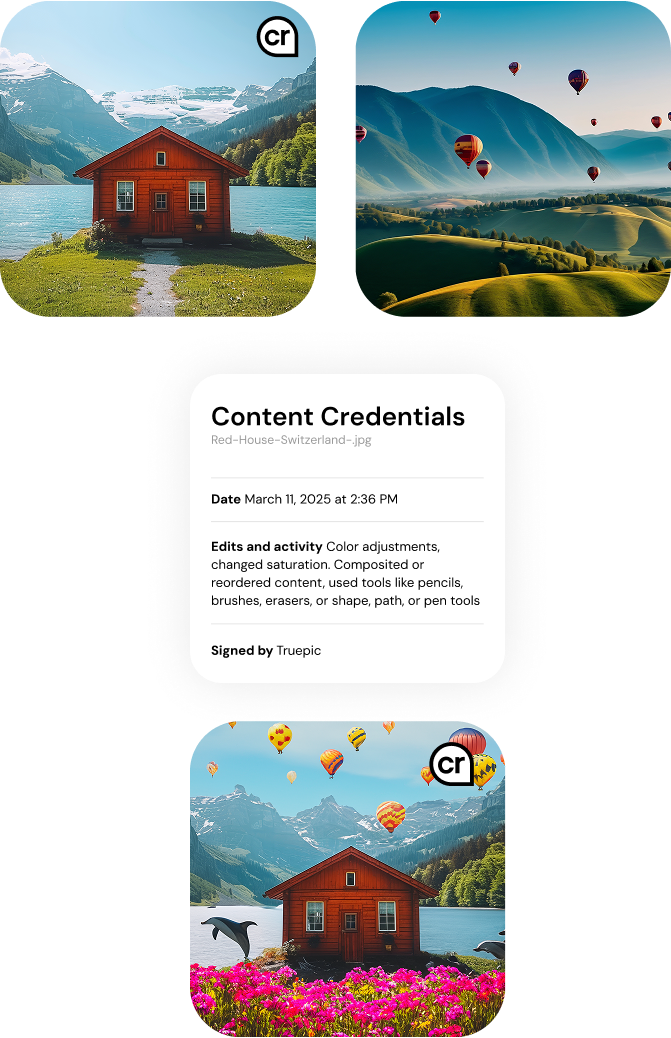
C2PA is important because it gives media a standard way to carry signed provenance information. That can help a reviewer understand where a file came from, whether AI was involved, and which issuer signed the record.
But OpenAI is explicit about the limitation: metadata can be stripped, lost, or broken by uploads, downloads, format changes, resizing, and screenshots. That is why pairing C2PA with SynthID matters. Metadata can carry richer context. Watermarking can preserve a signal when the file record does not survive intact.
The buyer-relevant lesson is simple. Do not treat Content Credentials as a magic certificate. Treat them as one layer in a production file that also contains human notes, rights decisions, source references, model information, approval status, and final usage limits.
The client review file needs a provenance tab
Most AI production risk shows up in review, not generation.
A team can produce good-looking boards, hero frames, social variants, product-motion tests, or synthetic B-roll quickly. The weak point comes later, when a client asks which reference image was used, whether the product packshot was altered, whether a performer likeness is involved, whether a third-party style reference was used, or whether the final output can run as paid media.
That is why every serious AI production review file should now include a provenance tab. At minimum: asset ID, model or platform, generation date, operator, prompt or direction summary, source references, consent or licence notes, edit history, reviewer comments, approval owner, intended channels, expiry or usage limits, and final export path.
This does not need to be heavy. It can live in a project database, a production tracker, a frame.io-style review note, a spreadsheet, or a custom internal tool. The point is that provenance should be visible at the same moment creative judgement is happening.
Verification does not decide context
OpenAI's verification preview is careful about what it can and cannot say. It can check supported images for provenance signals associated with OpenAI tools, including C2PA metadata and SynthID. It does not decide whether the image is accurate, misleading, legally cleared, brand-safe, or acceptable for a campaign.
That distinction is the mature one. Provenance answers origin questions. It does not replace producer judgement.
A verified AI signal can still be attached to an asset that is inappropriate for the channel, too close to a living artist's style, visually wrong for the brand, built from a weak reference, or missing consent. Equally, a missing signal does not prove that an asset is fake or unusable. It may have been stripped by the workflow.
The production standard should therefore be two-part: machine-readable signals where available, and human-readable approval notes where business risk is actually decided.
The prompt library becomes a rights surface
Prompt and reference libraries are becoming part of the rights surface of a production company.
That is uncomfortable because a lot of AI experimentation still happens informally. People paste a mood reference into a model, reuse a client asset in a test, borrow an image for style, export the best result, and leave the provenance trail scattered across downloads, chat histories, and private folders.
That behaviour does not scale into commercial work. If a prompt uses a named person, recognisable brand, copyrighted character, client asset, product design, location reference, or style direction, the production system needs to know. It does not mean every reference is forbidden. It means references need status: approved, licensed, internal-only, research-only, prohibited, or requires legal review.
The stronger agencies will turn that into a reusable operating system. Approved references, negative references, style boundaries, disclosure language, model rules, and export checks become part of the same production memory.
What buyers should ask for now
A buyer does not need to audit every prompt. They do need enough evidence to know the vendor is not improvising around rights and review.
Ask whether the team records model, prompt, source-reference, and approval data for every final AI-assisted asset. Ask how they handle client-provided references. Ask what happens when metadata is stripped by a platform. Ask who owns the final approval. Ask whether AI use is disclosed where required. Ask whether the delivery pack includes provenance notes beside the final files.
The answer does not have to be a grand governance document. It should sound like production: clear asset IDs, clear owners, clear review status, clear rights notes, and clear delivery paths.
That is the practical meaning of this week's provenance signal. AI content trust is becoming less about a visible label and more about whether the workflow can defend the work after the exciting generation moment has passed.
Build
Need a repeatable AI production workflow?
Mike designs the tools, review loops, and publishing systems that make it usable.
Launching a business of your own? Founder Launch OS connects the brand, offer, website and visual campaign in one guided Codex or Claude Code workspace.
Keep reading