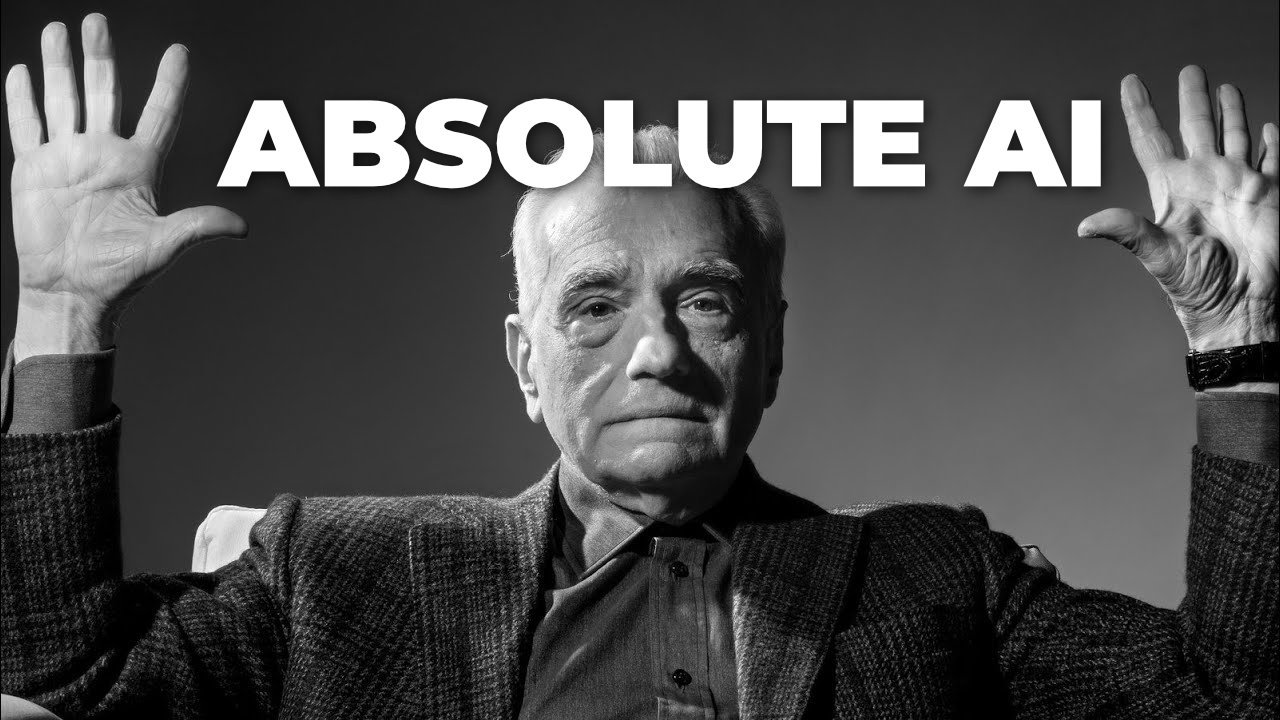
The meme is funny because the anxiety is real
The internet was always going to get to 'Absolute AI' quickly.
The original 'Absolute Cinema' reaction image turned Martin Scorsese into shorthand for taste, seriousness, and the sacred idea of cinema as something more than content. So when Variety reported that Scorsese had joined Black Forest Labs as an adviser and used FLUX to help visualise storyboards, the joke was sitting there waiting.
I laughed at it. I also understood why people were angry.
This is not Scorsese announcing an AI-generated feature or handing directing to a machine. Rolling Stone's report frames the use case around pre-production: a way of showing cast and crew the image inside his head. That matters. Storyboards live before the final image.
Still, the public reaction was never only about the narrow use case. It was about the signal. If Martin Scorsese, of all people, becomes part of the public face of generative AI, the industry hears more than one director testing a visualisation tool. It hears permission.
Why storyboarding is the perfect flashpoint
Storyboards are a strange place to draw the line because they sit between thought and production. They are usually not the final image. They are also not disposable.
A board translates rhythm, blocking, camera position, emotional emphasis, and production design into something the crew can argue with. In live-action, it might be rough. In animation and complex VFX, it can become the spine of the film.
That is why the backlash from artists has been sharp. TMZ covered fans and creatives feeling let down, with critics worrying that the partnership could take work away from storyboard artists. The comments in r/Storyboarding are more direct: people talk about work disappearing, boards needing human repair, and the difference between Scorsese experimenting privately and Scorsese helping normalise the tool commercially.
I think that distinction is the whole argument.
Scorsese has drawn his own boards for decades. If he is replacing his own rough sketching process with FLUX references, that is not the same labour question as a studio removing a storyboard department. The issue is that the industry rarely keeps those distinctions intact. A master filmmaker's personal workflow becomes somebody else's cost-saving slide.
The case for Scorsese's position
The best argument for Scorsese's position is boring in the right way: pre-production clarity.
If a director already has an image, a tone, and a staging problem, an image model can become a fast visual sketchpad. The useful version is not the machine inventing the scene. It is the director showing a thought earlier, faster, and in a form that production design, cinematography, art direction, VFX, and the cast can respond to.
That is not a small practical gain. Film production is expensive and brittle. A vague location reference, a misunderstood blocking idea, or a design direction that arrives too late can burn real money. Scorsese's statement, as quoted by Variety, links the tool to communication with designers and cinematographers. I understand why that would be attractive.
There is a lineage here as well. Scorsese has never been technologically static. 'Hugo' used 3D seriously. 'The Irishman' put de-aging inside a prestige drama. Cinema has always absorbed machines; the real question is whether the machine remains answerable to intent.
That is also why events like AI on the Lot matter. The industry is no longer treating these tools as side experiments. It is turning them into panels, pipelines, investor conversations, and production language.
The case against it
The strongest argument against it is labour.
Storyboard artists do not only draw attractive frames. They interpret staging, solve visual problems, catch continuity risks, and collaborate with directors, cinematographers, production designers, stunt teams, VFX supervisors, and editors. A good board artist is part of the thinking. That is why replacing them with a prompt box feels so insulting.
There is also the provenance problem. Generative image models still carry unresolved questions about what they learned from, who gave permission, and whether the output is aesthetically borrowing from living artists without consent. When a revered filmmaker endorses a model company, the endorsement can feel like a moral shortcut around a debate that is still open.
The other risk is corporate behaviour.
Scorsese may use the tool carefully, with an existing creative team and enough authority to reject weak output. Most productions are not Scorsese's office. A cost-cutting producer can hear the same story and conclude that storyboard artists, concept artists, and previs teams are optional. That is where the fear lives: in the industrial translation of curiosity into budget logic.
James Cameron is not anti-technology. He is anti-replacement.
James Cameron is the clearest example of why I do not buy the simple version of this debate. He sits on Stability AI's board, and he has also called AI actors horrifying.
The Guardian reported him saying that generative AI performance is the opposite of what he does with actors, because performance capture is a celebration of an actor-director moment. That is a useful boundary.
Cameron has spent his career bending technology toward authored spectacle: underwater photography, digital creatures, performance capture, virtual production, stereoscopic 3D, and worlds that could not exist without huge technical systems. It would be strange if he rejected AI as a category.
His line seems to be performance and originality. The tool can help execute or explore. It should not simulate the human event the film is meant to capture.
Spielberg is the caution inside the room
Steven Spielberg should not be flattened into the pro-AI camp either.
TechCrunch reported that at SXSW 2026 he said he had not used AI in his films, and that he was not for AI when it replaces a creative individual. He also said he was for the technology in many disciplines. The nuance matters.
Spielberg's position is not technophobia. His filmography is full of technical imagination: animatronics, digital dinosaurs, virtual production thinking, and a whole film literally titled 'A.I. Artificial Intelligence'.
His concern is the empty chair. A machine sitting where a writer, artist, actor, or creative collaborator should be.
That matters because it gives the industry a boundary language. AI might be useful in logistics, research, restoration, visual planning, accessibility, translation, or early exploration. That does not mean it should become the final author of creative work.
Nolan sees the power and the accountability problem
Christopher Nolan is often treated as the practical-effects purist, but his AI comments are more interesting than that label.
TheWrap reported him describing AI as a set of enormously powerful tools, while also warning that people cannot dodge responsibility by blaming the technology. That fits his wider career.
Nolan is not anti-machine. He is pro-authorship. IMAX cameras, large-format film, practical effects, complex sound systems, and rigorous production methods are all technologies. The point is that the filmmaker takes responsibility for the effect.
This is where the Scorsese story touches Nolan's Oppenheimer-era AI warnings. Powerful tools create moral distance. People start saying the system did it, the model decided it, the data produced it, the workflow required it.
Nolan's useful contribution is to pull responsibility back onto the human and institutional actors. If I use AI in a film workflow, I own the choice.
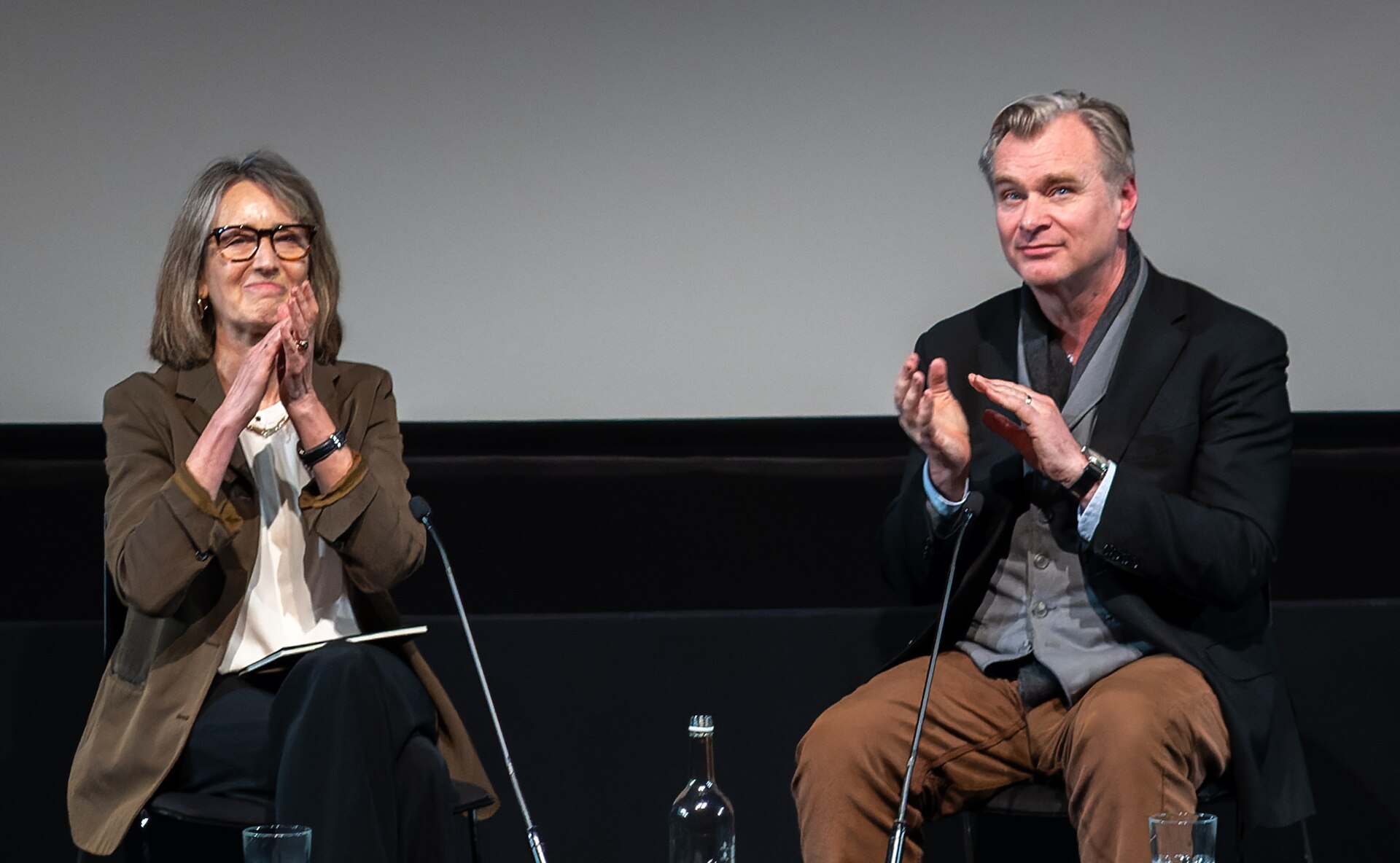
Deakins brings it back to the sentence that matters
Roger Deakins brings the whole thing back to taste.
FilmoFilia picked up the line that caused its own debate: he did not see AI use as cheating if the filmmaker has something to say. The Guardian's interview is more cautious around virtual production and AI, but the through-line is consistent. The image has to serve the story.
That is not permission for lazy AI work. It is a higher bar.
A model can generate an image that looks cinematic. It cannot decide whether the image belongs in the film. It cannot know when a simple frame is stronger than a pretty one.
For cinematographers, this is the most useful lens. AI can generate options, references, lighting studies, rough boards, and impossible pitch materials. It does not know why a face should be half-lit, why a camera should stay still, or why a frame should withhold beauty. That still belongs to the filmmaker.
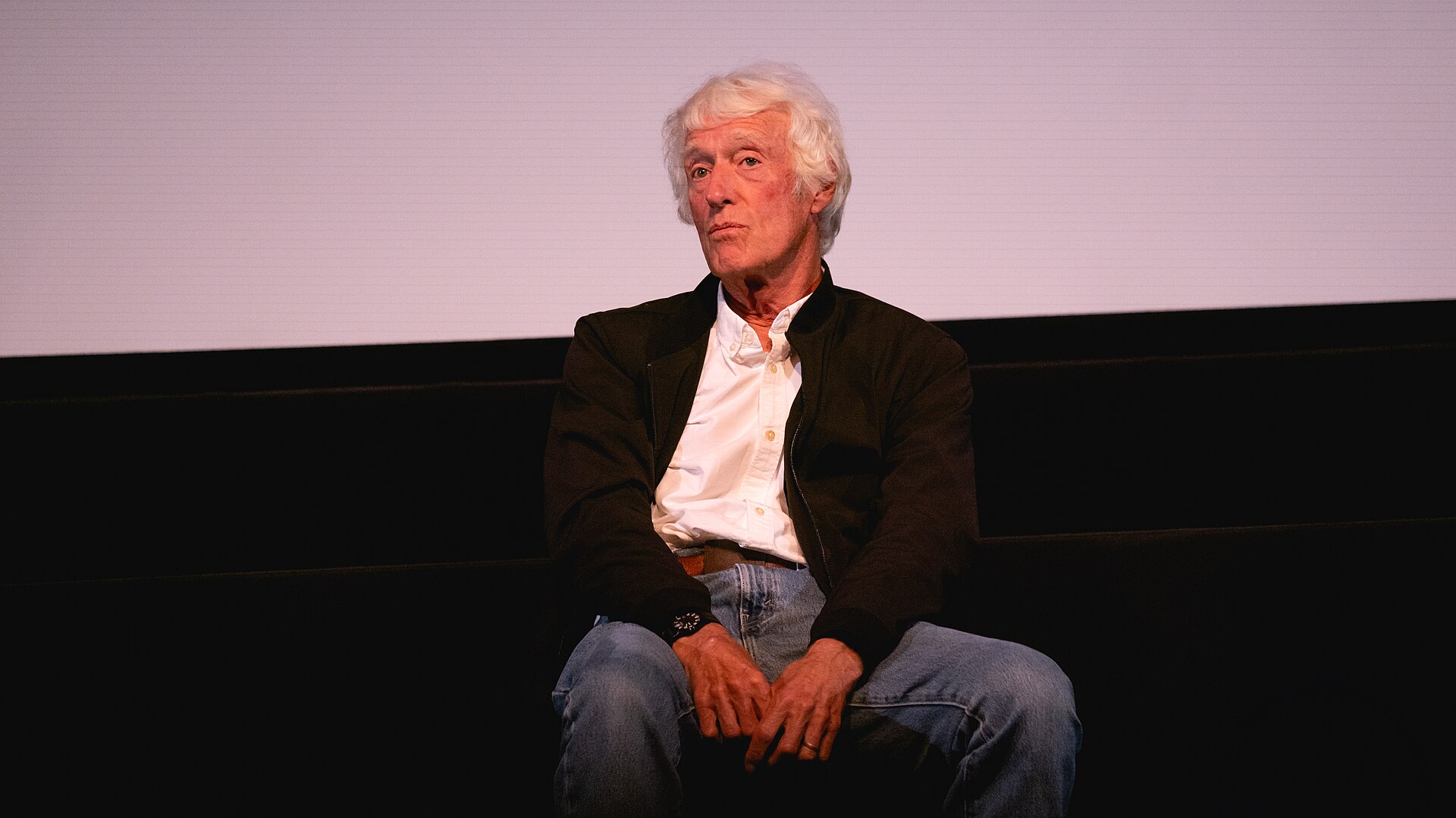
Why the best filmmakers are not simply rejecting AI
There is a reason major filmmakers are not all taking the same absolutist anti-AI stance.
The best directors have always been pragmatic about tools when those tools help them communicate, control, or expand a vision. Sound, colour, widescreen, Steadicam, motion control, CGI, digital intermediate, de-aging, performance capture, virtual production, volumetric scanning. Every one of those changes arrived with anxiety attached. Some fears were justified. Some were not. The industry changed anyway.
The difference is leverage.
Scorsese, Cameron, Spielberg, Nolan, and Deakins do not need AI to invent taste for them. They already have taste, visual memory, story instinct, collaborators, and authority. For them, AI can be a faster sketchbook, a previs machine, a research assistant, a restoration aid, a way to test possibilities before money locks the door.
That is also why their public positions are risky when copied badly. A master using AI to clarify a thought is different from an underfunded production using AI because it does not want to pay artists. A director with decades of craft can reject bad output. A committee chasing savings may not know the difference.
So, for me, the reason these filmmakers are not simply against AI is not that they worship technology. It is that cinema has always been a history of controlled technical change. The serious ones are trying to keep control in the right place: with people who have something to say.
The line Vertical Haus should care about
This is the line I care about for Vertical Haus.
I work between cinematography, AI systems, commercial campaigns, and online production. The Scorsese story is a useful stress test because it asks whether we can use new tools without surrendering the old responsibilities.
Can AI help visualise? Yes. Can it speed up pre-production? Sometimes. Can it help small teams show a world before they can afford to build it? Absolutely.
The same tool can also make bad habits cheaper: vague briefs, derivative visual language, missing credits, weaker collaboration, fewer apprenticeships, and the illusion that an image is the same thing as a decision. That is the danger I keep coming back to. Scorsese using FLUX is one story. Everyone else using Scorsese as permission to stop thinking would be another.
The response I want is fluency, standards, credit, consent, and authorship. Know the tools well enough to use them properly. Know the craft well enough to know when to leave them alone. Make the human role visible. Pay artists when the work is artistic. Treat AI-generated material as a draft, not a moral laundering machine.
The meme says 'Absolute AI'. The better line is less viral and more useful: accountable cinema.
Build
Need a repeatable AI production workflow?
Mike designs the tools, review loops, and publishing systems that make it usable.
Launching a business of your own? Founder Launch OS connects the brand, offer, website and visual campaign in one guided Codex or Claude Code workspace.
Keep reading
Related notes
 AI Filmmaking Industry / 9 min readAdrenaline Junkies Changes What an ‘Unproduceable’ Commercial Means
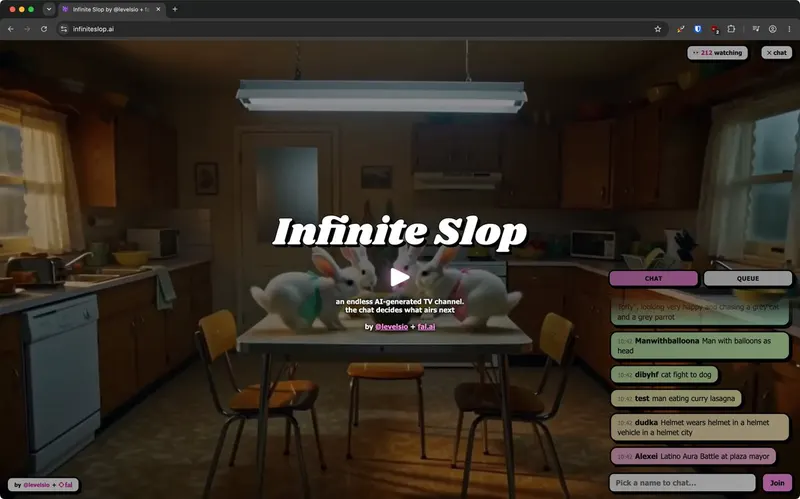 AI Filmmaking Industry / 7 min readHailuo H3 Max and Infinite Slop: What Happens When Video Never Ends?
 AI Filmmaking Industry / 10 min readXero’s AI-Generated Performers: What Commercial Localisation Has to Control