This is no longer an experimental edge case
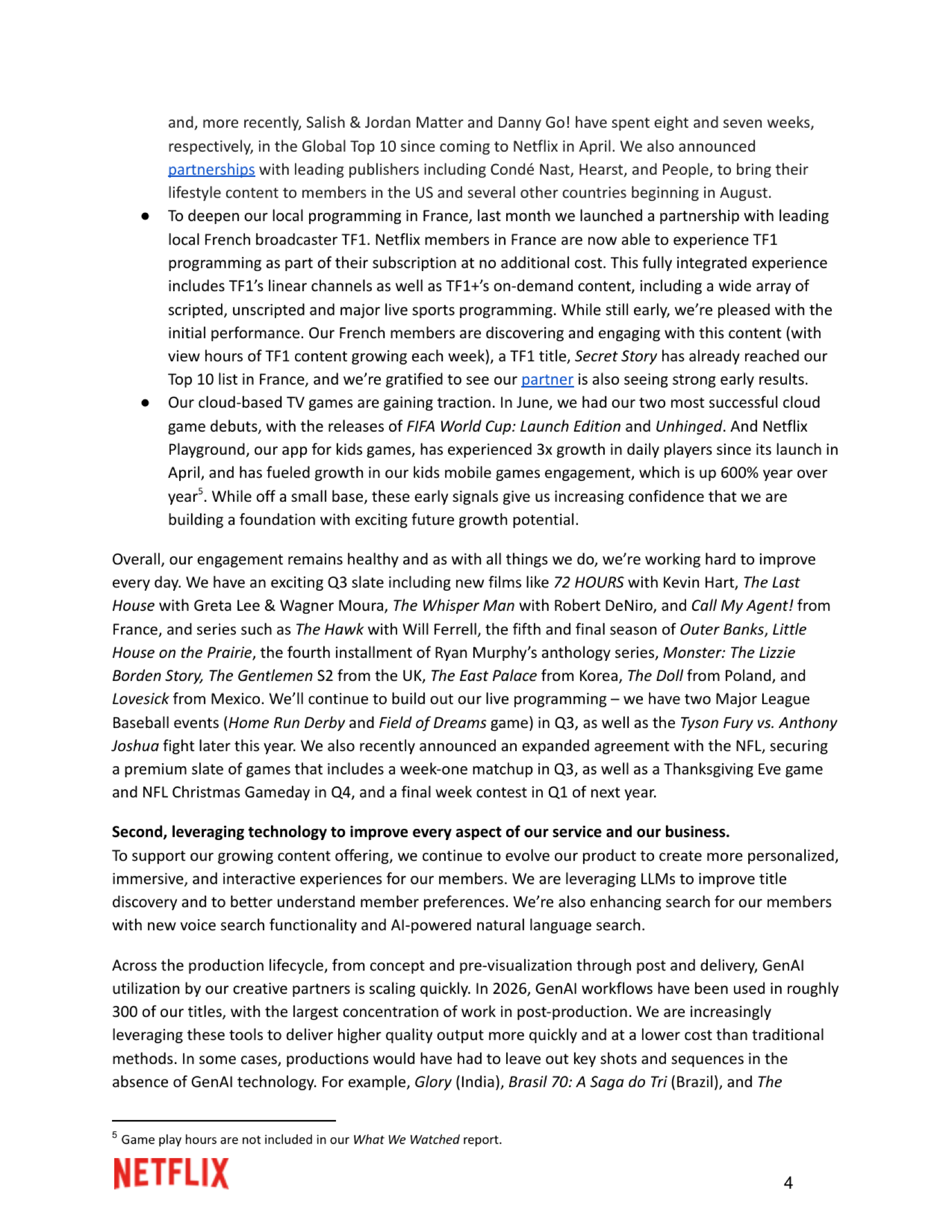
On July 16, Netflix told shareholders that generative-AI workflows had been used in roughly 300 titles during 2026, with the largest concentration in post-production. It named three projects using the technology for complex sequences: India's Glory, Brazil's Brasil 70: A Saga do Tri, and the US documentary series The American Experiment.
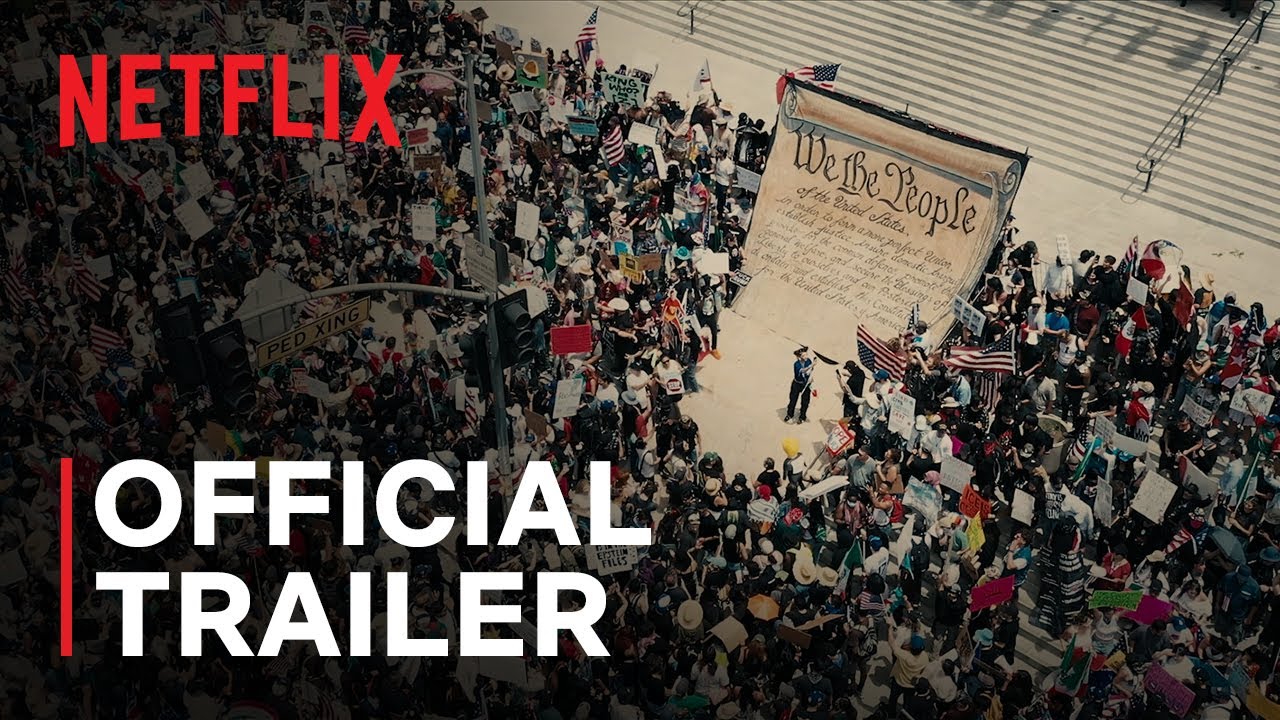
The last title makes the shift tangible. On Netflix's Q2 earnings call, co-CEO Ted Sarandos said the five-part documentary contained 17 minutes of AI-enhanced footage. He said those minutes were produced twice as fast and at half the cost of previous options, expanding the series beyond what would otherwise have been feasible.
Those are management claims, not an independently audited production study. Netflix does not publish the previous options, the baseline bid, the models used, the number of iterations, or the cost of supervision and review. The signal is still high: a global streamer is measuring AI at title scale and presenting one documentary's finished minutes as proof of production value.
The production was hybrid, not a prompt replacing a shoot
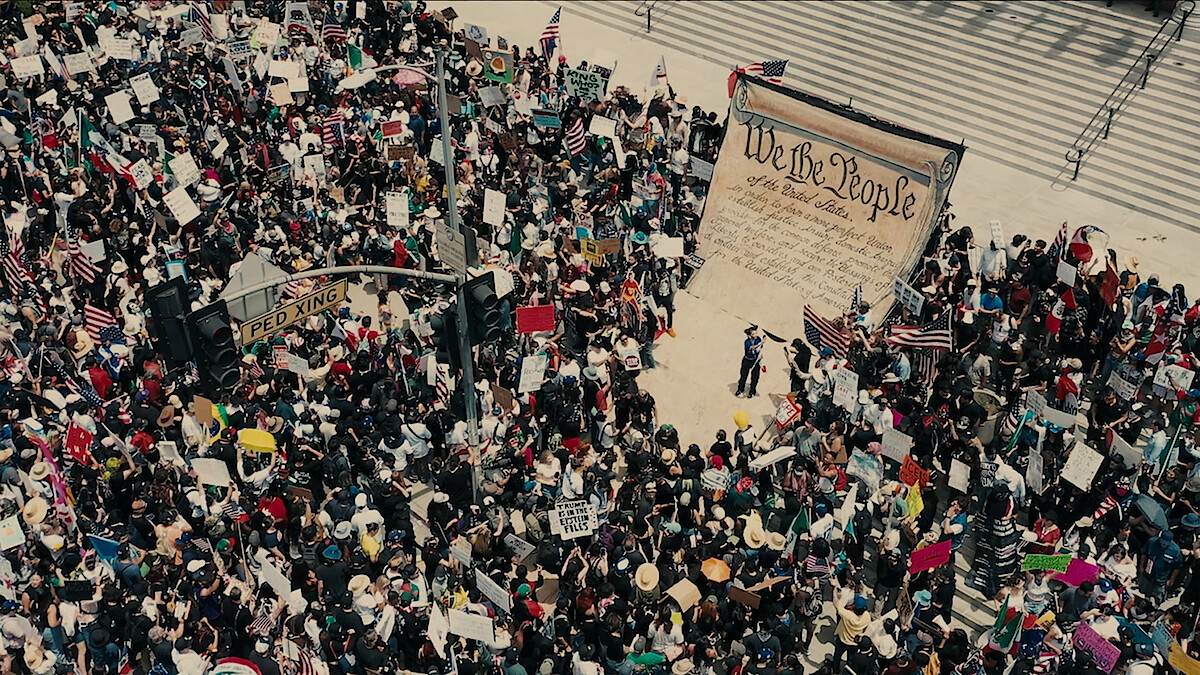
The most useful detail arrived before the earnings disclosure. In its America 250 production overview, Netflix says the team filmed recreations across nine US states and used more than 30 people to narrate historical figures, with Martin Sheen voicing George Washington. Eyeline Studios then combined fully generative work, volumetric capture, and hybrid generative/VFX workflows for ground battles, naval battles, towns and aerial views.
That description matters because 'AI-generated documentary' would flatten several different practices into one label. A shot might begin with photographed performers and locations, pass through volumetric capture, receive a synthetic crowd extension, replace part of an environment, or be constructed fully inside a generative pipeline. Those treatments carry different craft, rights and evidentiary implications.
The business case is therefore not that a text prompt replaced nine states of production. It is that controlled generation widened the scale of material the filmed and captured elements could support. That is closer to a new visual-effects layer than an automated documentary—but it is a visual-effects layer capable of inventing historically plausible evidence at speed.
Documentary images carry more than production value
A fictional battle scene is primarily accountable to story, style, rights and continuity. A documentary reenactment also sits beside interviews, archival records and historical argument. Even when nobody claims the image is literal archive, the sequence teaches the audience what an event looked and felt like: the number of people present, the terrain, the weather, the violence, the relationships of power.
Generation changes the scale of that inference. A conventional reconstruction is already selective, but its physical limits remain visible in the number of performers, locations and objects the crew could place before a lens. A model can extend those choices into a city, army or fleet with little visual distinction between photographed fact, designed reconstruction and synthetic completion.
The question is not whether documentaries may use visual invention. They always have. The question is whether the production can identify the boundary between record and representation after hundreds of small transformations have passed through post. If that boundary exists only in an artist's memory, it will disappear during versioning, localization, trailer extraction, social cutdowns and future licensing.
A single end-credit line is too coarse
Netflix disclosed the series-level method in a corporate newsroom article and the 17-minute figure during an earnings call. Those disclosures are valuable, but they do not tell a viewer which sequences were fully generated, which began with volumetric capture, which used generative crowd work, or which received conventional VFX only.
A permanent warning over every treated frame would be blunt and distracting. Silence is not neutral either. The practical answer is layered disclosure: plain-language context at the title level; meaningful sequence or chapter notes where synthetic construction could change the audience's interpretation; a detailed cue sheet in the production record; and machine-readable provenance attached to assets where the delivery chain supports it.
The Archival Producers Alliance tool kit already gives nonfiction teams a useful structure, including a GenAI cue sheet and crediting guidance. Sundance's updated Nonfiction Core Application similarly asks filmmakers to describe how generated material represents the intended story, subject or style. The field does not need to invent disclosure from zero; it needs to make these practices survive commissioning and delivery.
The cue sheet should become part of editorial
Treat every AI-touched shot like a rights-bearing source, not a late technical effect. The shot record should state its edit ID and timecode; original camera, archive or capture ingredients; the human-authored historical reference; model and service; generation or transformation type; prompt and version where contractually retainable; performer and contributor permissions; copyright status; intended factual claim; and the producer, historian or legal approver.
The distinction between enhancement and creation must be explicit. 'Enhanced crowd' could mean adding bodies beyond the photographed group, altering the identity or clothing of captured performers, changing scale and density, or generating the complete plate. 'Worldbuilding' could mean environmental cleanup or the invention of an entire settlement. Those phrases are useful for an earnings summary and inadequate for a production record.
This ledger should travel with the edit decision list and rights bible. If a trailer producer lifts eight seconds six months later, the treatment and disclosure requirement should arrive with the media. If a distributor requests a territory-specific compliance report, production should be able to export it without reverse-engineering the final master.
Provenance supports trust but does not decide truth
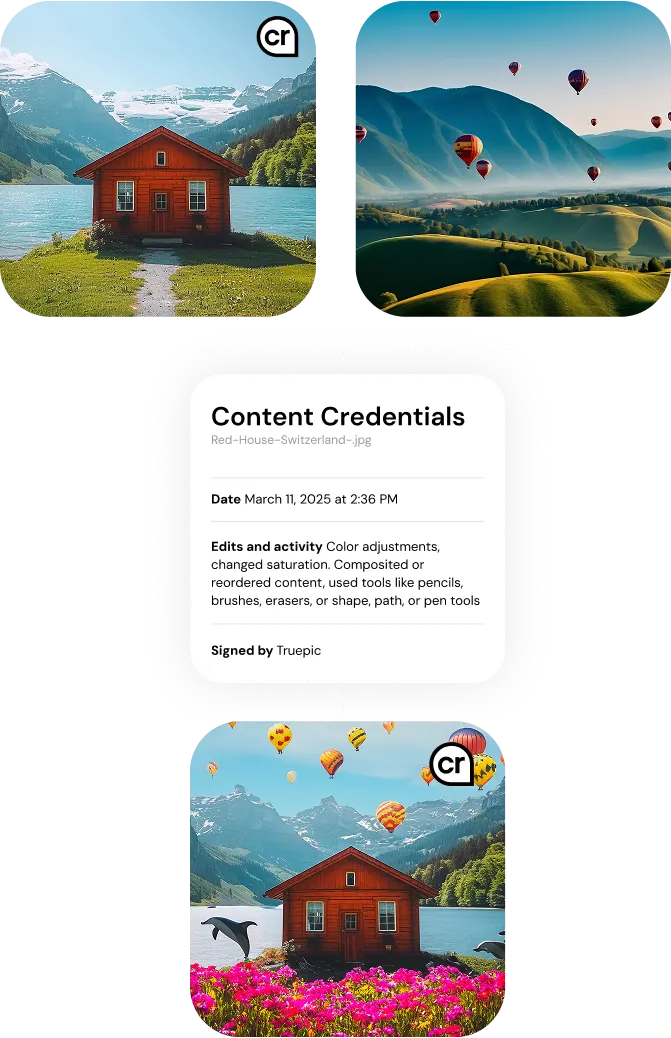
Technical provenance can make parts of this system portable. C2PA provides a standard for recording the source and history of digital media. In a well-designed workflow, capture credentials, source ingredients and declared AI actions can remain connected as an asset moves between departments and platforms.
That record cannot certify that a battle reconstruction is historically accurate. It can show who asserted the provenance, what transformations were declared and whether the signed history remained intact. Historical judgment still belongs to filmmakers, researchers, advisers and commissioners. Audience language still needs an editor.
The useful combination is therefore editorial evidence plus technical evidence. The cue sheet explains why the image is appropriate and what it asks the audience to accept. Provenance helps demonstrate how the file reached that state. Neither should be mistaken for an automated 'real or fake' verdict.
Half the cost changes what commissioners will expect
Once a commissioner sees 17 minutes delivered twice as fast at half the previous cost, the result becomes more than a case study. It becomes a reference price. Future documentary teams may be asked why a battle, crowd or period environment cannot be achieved on the same basis, even when their subject, source material, rights position, schedule or tolerance for synthetic reconstruction is completely different.
Producers should separate the saved shot from the saved budget. Measure the full sequence: concept and research, capture, generation, artist time, failed iterations, historical review, legal review, continuity repair, disclosure, versioning and archive. Then compare the audience and editorial value of the sequence with a smaller physical reconstruction, archival treatment, illustration, map or deliberate absence.
Netflix's case proves that hybrid generative work can put images on screen that a documentary might otherwise lose. It does not prove that every missing image should be manufactured. The production decision remains strongest when the team can show why this image is necessary, why this method is proportionate, and how its constructed nature will remain visible to the people who inherit and watch it.
The real scaling problem is accountability
The number 300 is more consequential than the number 17. At that volume, disclosure cannot depend on a director remembering to mention AI in an interview or a streamer selecting three examples for shareholders. The platform, production company and vendor need shared fields, delivery rules and review gates that make treatment data routine.
For commissioners, the minimum questions are straightforward. Which final shots contain generated or materially synthetic visual information? Which tools and source assets created them? Whose work, likeness or performance entered the process? What factual claim does each sequence make? Who approved it? What will viewers, archives and downstream buyers be told? Can the answers survive a new cut or a new distributor?
The American Experiment is a useful test because the technology appears to have done exactly what production wanted: more scale, more complex imagery, less time and less cost. That success removes the excuse to treat provenance as an optional brake on innovation. When synthetic reconstruction works, the evidence trail matters more, not less.
Build
Make the evidence survive the delivery
Design an AI production system that keeps sources, rights, transformations, approvals and audience disclosures attached to every finished sequence.
Launching a business of your own? Founder Launch OS connects the brand, offer, website and visual campaign in one guided Codex or Claude Code workspace.
Keep reading