Camera words are not camera direction
AI video tools have made it easy to ask for a push-in, pan, tilt, orbit, handheld drift, dolly move, or crane-style reveal. That vocabulary is useful, but it is also where a lot of generated video becomes weak.
A camera move is not valuable because it moves. It is valuable because it changes the audience's relationship to the subject. A push-in can pressurise a decision. A lateral track can reveal geography. A retreat can make a character look abandoned. A handheld drift can put instability into the frame. The same movement, copied without intention, becomes decoration.
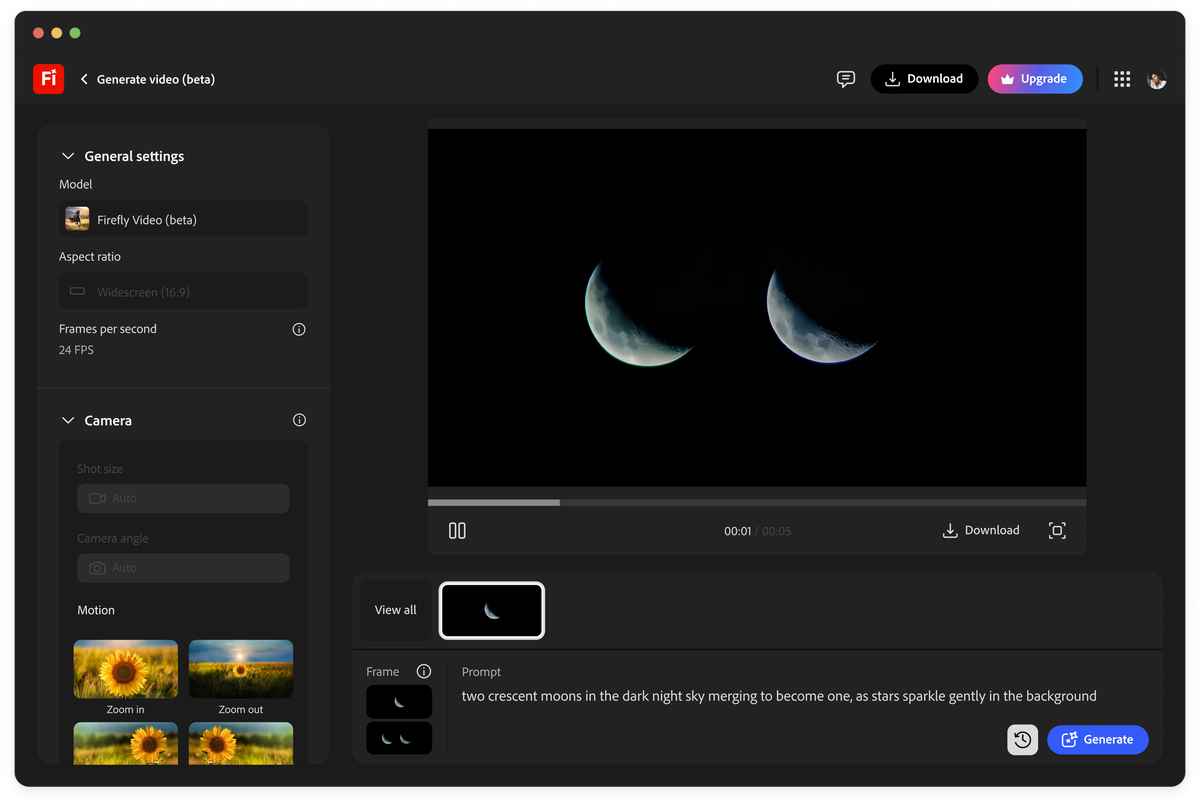
That is why Adobe Firefly's current motion reference control is a useful production signal. Adobe's June 16, 2026 Firefly Help page says users can upload a 5-10 second reference video so Firefly can extract camera movements such as pans, zooms, tilts, and a motion path to guide a generated clip. The feature is not only another control surface. It is a reminder that camera movement can be rehearsed before it is generated.
Build a small camera-movement library
The useful cinematographer workflow is not to upload random impressive footage and hope the model borrows its energy. Build a small camera-movement library with clear labels: slow reveal left to right, restrained push toward decision, static frame with subject crossing foreground, handheld follow from behind, vertical rise to expose scale, locked-off product parallax, low lateral move across texture.
Each reference should carry three notes: the emotional job, the physical path, and the failure to watch for. For example: a slow push should feel like pressure, travel straight toward the face, and fail if the model changes lens feel, drifts off-axis, or invents action to justify the movement.
This is where the craft comes in. Camera motion reference is not just a technical input. It is a shot-language asset. If the movement library is authored well, the AI pass has a better chance of preserving intent instead of producing generic 'cinematic' motion.
Blocking still comes before the move
A motion reference cannot rescue unclear blocking.
Before uploading a reference, decide where the subject begins, where they end, what they are doing with their hands, where the eyeline sits, which side of the axis matters, where the motivated light is, and what should remain off-screen. A camera move without those rules gives the model permission to solve the shot cosmetically.
The stronger prompt is not simply 'match this dolly move.' It is closer to a production note: static start frame, subject seated camera right, practical window light from camera left, slow push-in only as she notices the unopened envelope, no change in wardrobe, no new props, no camera roll, hold the eyeline off-screen left.
That kind of direction lets the reference do one job. It carries movement. It does not have to invent the scene.

Use references to compare takes, not chase luck
The practical value of a motion reference is comparability.
If a team runs five versions from the same start frame and the same movement reference, the review conversation becomes more useful. Did the model preserve the subject? Did the camera path hold? Did the lens feel change? Did the movement reveal new information or simply glide? Did the shot cut with the previous and next frame?
That is a better review than picking the clip that looks most expensive. It is also closer to how cinematographers and directors already work. A rehearsal is not there to be pretty. It is there to expose what the shot needs.
Runway's Gen-4.5 positioning around realism and prompt adherence, and Google's Veo material around camera controls, point in the same direction. The competitive model story is control. The working cinematographer story is whether that control produces a shot the sequence can use.
Motion reference is also a rights surface
There is one discipline point that should not be left until delivery. A motion reference is an input asset, so it needs a status.
If the reference comes from a shot you filmed, a camera test, an internal plate, a purchased stock clip, a client-owned asset, or a public tutorial, those are different usage situations. The reference may not appear in the final output, but it still guided the asset. Commercial teams should track where it came from, whether it is approved for use, and whether it can be reused on another job.
This is not a reason to avoid the workflow. It is a reason to professionalise it. A clean motion library can become an advantage: approved moves, known rights, consistent language, faster review, and less dependence on borrowing style from whatever clip happens to be nearby.
The buyer implication is disciplined previews
For clients and producers, the buyer implication is not that Firefly or any other model removes the need for cinematography. It is that previsualization can become more disciplined.
A cinematographer can now bring a movement argument into an early conversation: this is the slow reveal, this is the locked-off version, this is the uneasy handheld option, this is why the push-in is wrong, this is the shot we should not spend a half-day chasing on set.
That can save time, but the more important benefit is clarity. A buyer is not just purchasing an AI clip. They are buying a decision process around movement, blocking, continuity, and review.
The good version of AI camera motion reference is therefore modest and powerful: rehearse the move, learn from the failure, then decide whether the real shot, the generated shot, or a hybrid route is the right answer.
Build
Need a repeatable AI production workflow?
Mike designs the tools, review loops, and publishing systems that make it usable.
Launching a business of your own? Founder Launch OS connects the brand, offer, website and visual campaign in one guided Codex or Claude Code workspace.
Keep reading