The production change is the shorter chain
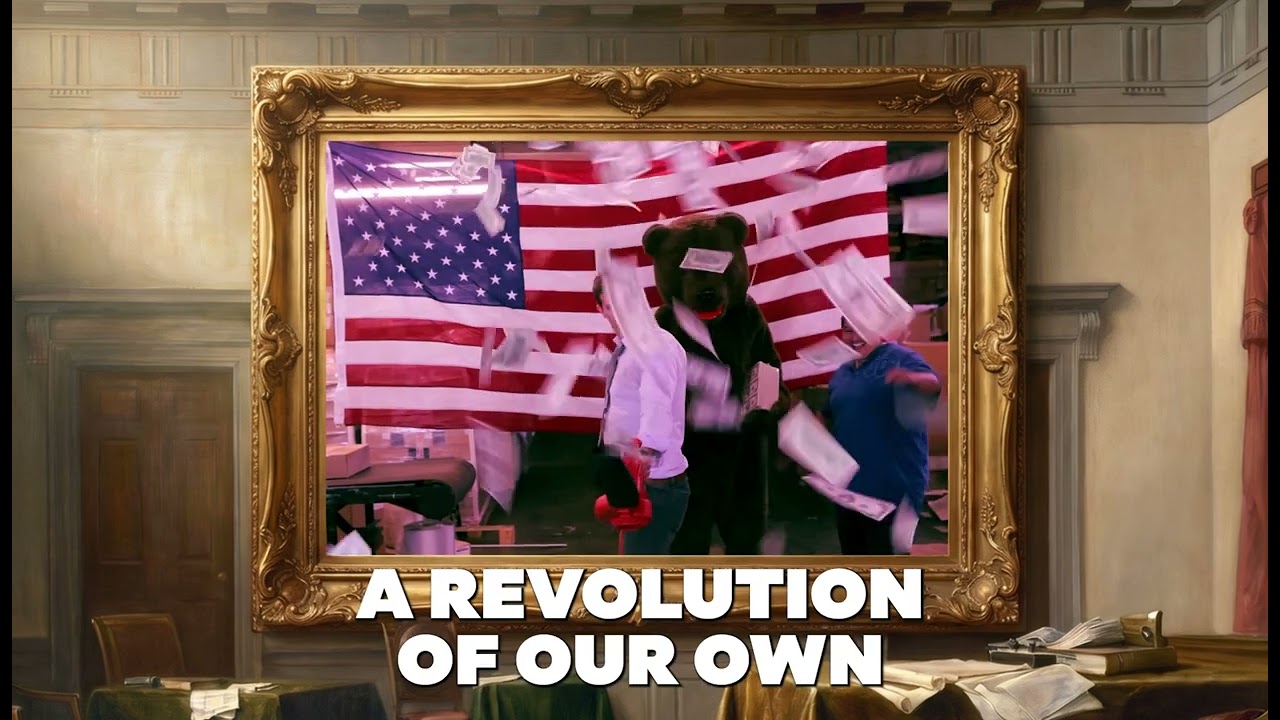
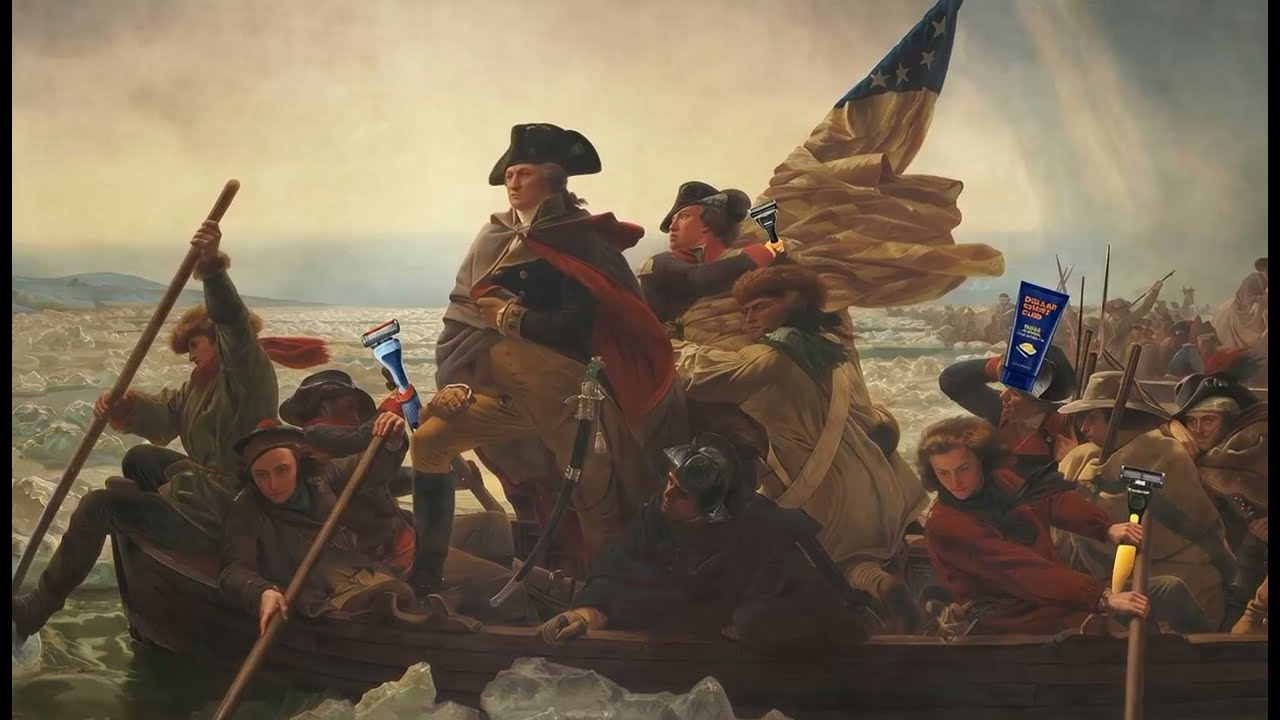
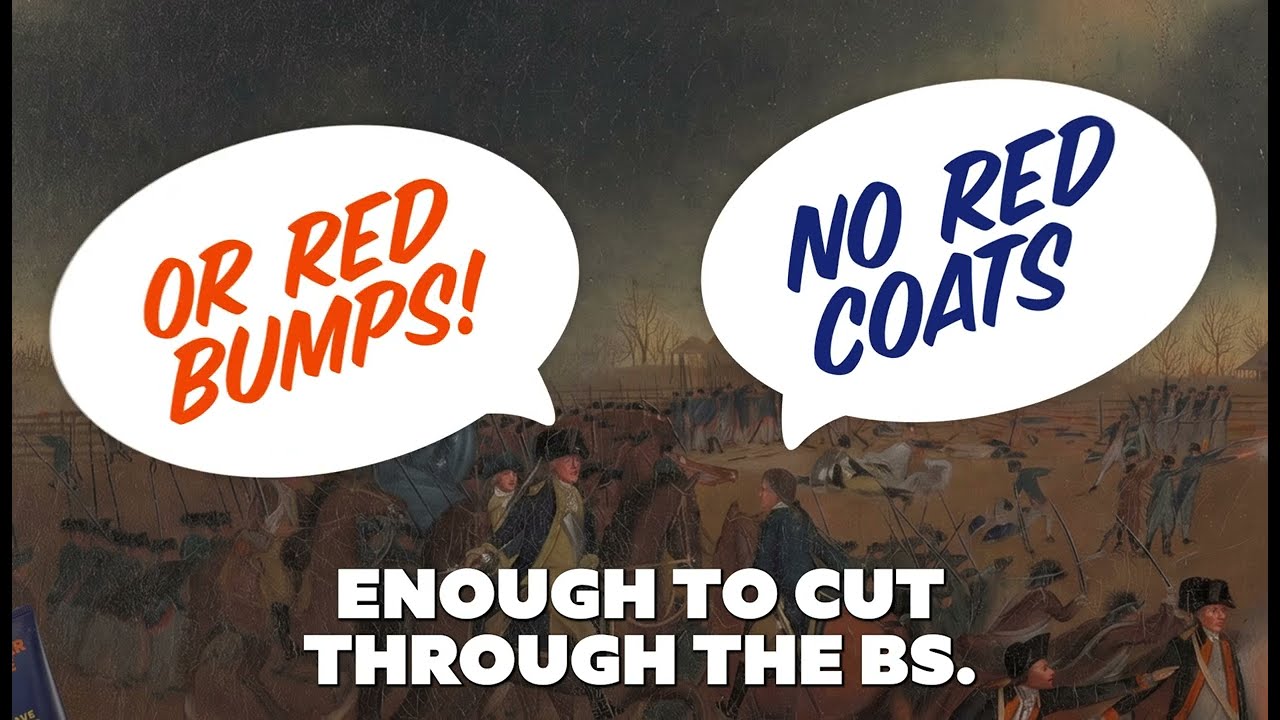
On July 1, 2026, Dollar Shave Club published a 30-second film called Revolutionary Deals for our 250th Bday. The wider campaign, "250 Years. No BS. Still Free," put razors, shave butter, competitors, an eagle, a hot dog, and the brand's anti-markup voice inside a deliberately synthetic version of American Revolutionary imagery. It tied the country's 250th anniversary to Dollar Shave Club's original challenger position and a starter-kit offer.
The useful fact is not that Claude and Higgsfield touched the work. It is that one internal chain held the brief, concept, copy, storyboard, generation, edit, offer, versioning, and approval. This was a finished campaign in market, not a speculative model demo or a single shot made for a prompt thread.
Chief Brand and Innovation Officer Laura Higgins told Digiday that she wrote the brief, the small in-house team reached a first draft in two to three days, and the finished 30-second cut took about a week. Digiday reported multiple asset sizes live within a month; Modern Retail described the end-to-end route as roughly three weeks. The exact boundary differs, but the operating signal is consistent: days to a film and weeks to a campaign system.
The brief became the production system
Dollar Shave Club already made about 90% of its advertising in-house, according to Higgins. That distinction matters. AI did not suddenly create an internal agency from nothing. The brand already had copywriters, comedians, conceptors, and marketers close to the offer and close to the voice. The tools reduced an execution and capacity constraint inside a system that already knew who could decide.
The approval route was equally compressed. Higgins described briefing the team herself, walking them through the idea, then making the final call when creatives brought work into her office. That proximity can protect a specific comic voice from being diluted through layers of presentation. It can also concentrate risk. If the brief is weak, the senior taste is wrong, or the review misses a rights problem, speed simply gets the mistake to market faster.
So the reusable asset is not the prompt. It is the brief plus the decision path: the commercial problem, the audience, the offer, the joke, the brand boundary, the product details that cannot drift, the human-only zones, the reviewer, and the definition of done. Once those fields are clear, AI can accelerate iteration. Without them, it accelerates ambiguity.
Speed moved the bottleneck upstream
A three-day concept sprint changes what production has to solve first. When images and rough sequences are cheap to make, the scarce work becomes choosing the right argument. Dollar Shave Club had one: expensive razor systems are the new establishment, and the brand is still the insurgent. The historical paintings, product Easter eggs, competitive swipes, and deliberately oversized jokes all serve that position.
That is why the case is more useful than a claim about photorealism. The film does not ask viewers to believe they are watching documentary history. It asks them to recognise a cultural image quickly, understand the brand's role inside it, and move toward an offer. The generated surface is doing commercial work because the idea tells it what to carry.
The delivery pack has to reflect that. A modern in-house campaign needs an approved master idea, locked product references, safe character and logo ranges, copy variants, aspect-ratio plans, caption-safe crops, offer checks, disclosure status, file naming, landing-page alignment, and a performance hypothesis for each asset. As I argued in The Camera Is Not the Campaign, the hero film is only one component of the commercial route.
Agency value moves toward the difficult parts
Higgins told Digiday that Dollar Shave Club still goes outside when the internal team lacks capacity or an idea needs specialist external craft. AI has started closing the capacity gap. That is more precise than saying agencies are finished. The default execution brief is becoming easier to keep inside the brand; the work worth buying outside has to contribute a point of view, capability, relationship, or production standard the internal system cannot reproduce.
That pressure is real for agencies and production companies. If routine concept expansion, rough storyboards, synthetic plates, copy variations, and multi-format iteration can happen beside the brand manager, charging for distance and handoffs becomes harder. External partners have to be clearer about where their value lives: insight, direction, performance, cinematography, production design, sound, complex post, legal diligence, cultural knowledge, or the taste to reject an efficient but forgettable route.
The public reporting proves speed, not a complete cost comparison. It does not disclose every labor hour, rejected generation, model charge, edit pass, music or voice cost, legal review, media budget, or opportunity cost. I would not compare a headline tool bill with a live-action bid and call the difference savings. The useful production question is where the brand reinvests the time and money: better human performance, stronger craft, wider testing, or simply more output.
Realness is now a budgeted creative decision
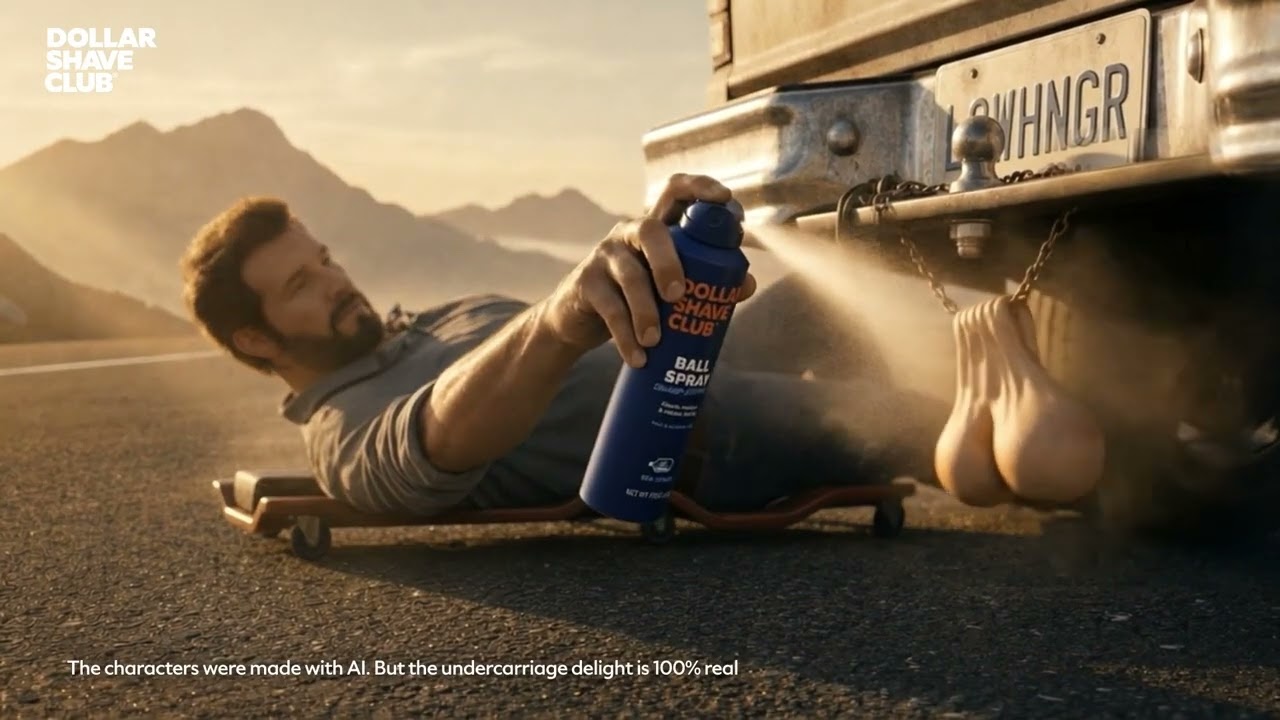
The strongest part of Higgins' framework is the work she says should not be synthetic. A campaign honouring military members uses real footage of real service members because lived service is the meaning of the piece. A Ball Spray campaign can use an absurd, fully synthetic world because exaggeration is the joke and asking a performer to embody it would create a different production problem.
That is a better boundary than a fixed percentage of AI content. Ask whether realness carries testimony, trust, vulnerability, physical proof, or performance. If it does, budget for people and a camera. Ask whether artificiality can safely carry metaphor, comic impossibility, rapid variation, or a world the production could not responsibly stage. If it can, a synthetic route may be the more honest form.
Cinematography still belongs in both decisions. A generated commercial borrows blocking, lens distance, light, camera movement, production design, and edit rhythm to make its joke readable. The absence of a physical set does not remove those choices. It removes some constraints and adds new ones: continuity, product fidelity, temporal coherence, source rights, and the risk that the image looks expensive while the scene says nothing.
Obvious AI is not a disclosure workflow
Dollar Shave Club says it leans into obviously artificial images rather than trying to pass synthetic scenes off as reality. That is a good creative instinct. It is not enough operationally. Obviousness changes with the viewer, the crop, the sound-off feed, the thumbnail, the cutdown, and the platform. A disclosure that survives one 16:9 master can disappear from the six-second vertical version.
New York's synthetic-performer advertising law took effect on June 9, 2026. The state's guidance says producers or creators of an advertisement must identify when it includes AI-generated synthetic performers that appear as real people. It is a targeted rule, not a blanket label for every AI-assisted edit, but it makes the production duty clear: disclosure belongs in the asset record and delivery matrix, not only in the creative team's intention.
For every version, keep the model and source-reference record, note any real likeness or voice, log the human approvals, record where the disclosure appears, and verify that the platform transcode or crop did not remove it. If a famous painting, public figure, product pack, competitor, voice, or performer informs the frame, rights and claims review should be attached before the edit multiplies.
The operator standard is stricter than a fast cut
Start with one page that a creative and a buyer can both use: problem, audience, offer, proof, brand voice, competitive claim, realness boundary, prohibited references, product locks, channel list, and success metric. Name the person who can approve the idea and the person who can stop it for rights, safety, or disclosure.
During production, log the selected references, model versions, key prompts or control settings, approved character and product frames, material human edits, and rejected routes that revealed a risk. That record is not bureaucracy for its own sake. It lets the team reproduce a useful choice, explain the work to a client or platform, and retire a model without losing the campaign logic.
At delivery, map every aspect ratio and duration to its hook, copy, CTA, disclosure, landing page, tracking, budget, and kill rule. Review the actual exports, not only the master. The in-house advantage is a tighter learning loop; it disappears if nobody can tell which asset ran, what changed, or whether the result came from the idea, the offer, the edit, the audience, or the spend.
The case is a model and a warning
Dollar Shave Club's case shows the prerequisites for useful in-house AI advertising: a clear brand voice, senior access to the brief, creative people who can write and judge comedy, product knowledge, fast approvals, and a willingness to keep certain subjects human. The software did not supply those conditions. It made their absence more visible.
The case also needs to be read at the right level of proof. The reporting gives credible production timings and describes the internal workflow. It does not publish an audited effectiveness study, full production ledger, media spend, or a controlled comparison with an agency route. Faster is demonstrated. Better and cheaper still have to be measured campaign by campaign.
That is the real shift. Brands cannot outsource a missing point of view to a model, and agencies cannot defend every handoff as craft. The valuable team is the one that can define the idea, choose where reality matters, direct the synthetic work, protect rights and disclosure, ship the whole commercial system, and learn from what the audience actually does next.
Build
Move the advantage upstream
Founder Launch OS gives a solo founder the same connected route: settle the offer and brand voice, build the landing page, then create campaign direction without starting each stage from zero.
Keep reading