The headline number is a delivery map
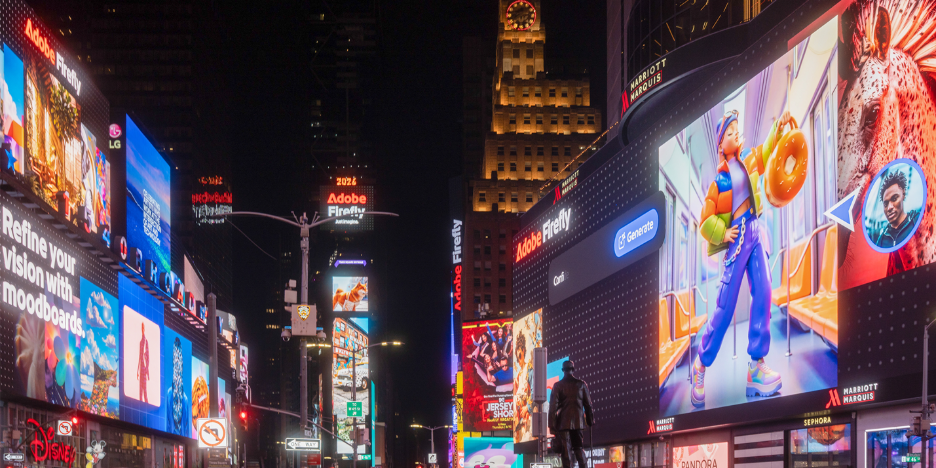
Adobe’s account of its spring Times Square takeover is one of the more useful recent AI campaign case studies because it describes the delivery problem as well as the generation tools. The company reports 38 individual screens, 30 aspect ratios and six city blocks. The show used 392 unique Firefly images and videos, 3.8 hours of unique content and more than three million rendered frames, producing 20 terabytes of data.
Those quantities should not be collapsed into ‘392 AI videos’. Adobe describes a mixed set of images and motion assets that became a much larger render and playback package. One creative idea can require different crops, compositions, durations, codecs, resolutions and timing for different displays. Three million rendered frames is evidence of delivery volume; it does not tell us how many concepts were generated, rejected or repaired before approval.
That distinction matters for anyone pricing AI production. Count at least six things separately: source concepts, generated candidates, selected masters, technical derivatives, files delivered and assets confirmed live. Otherwise a large derivative count can make the creative process look more productive than it was, while the finishing and distribution work disappears from the estimate.
Thirty aspect ratios change the creative unit
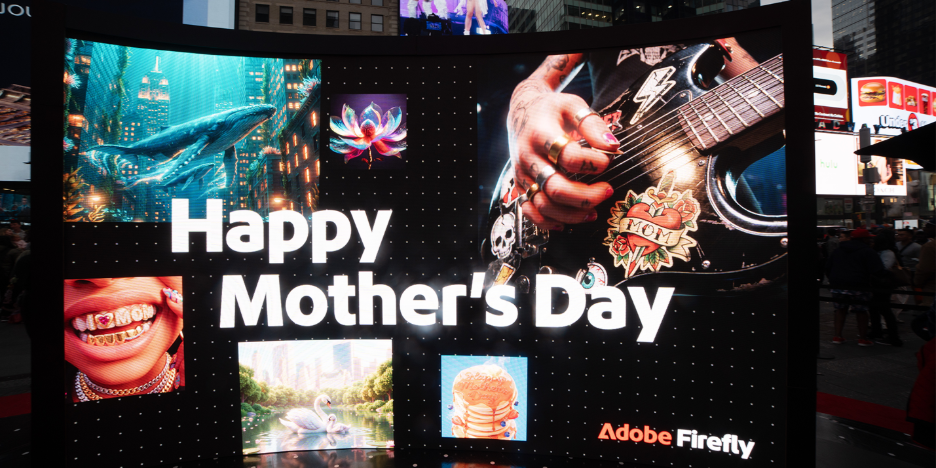
A conventional campaign often begins with a hero film or key visual and adapts it down. Thirty display shapes make that centre-out model fragile. A composition that works on a wide fascia can become illegible on a tall tower; a face that survives one crop can disappear behind typography on another; motion that reads on a nearby screen can become visual noise two blocks away.
The creative unit therefore becomes a family rather than a master. Give each family a fixed idea, palette, type rule, safe area, motion grammar and relationship to neighbouring screens. Then create a destination record for every version: screen ID, pixel dimensions, aspect ratio, duration, frame rate, codec, colour target, audio status, loop point, file-size limit and scheduled cue.
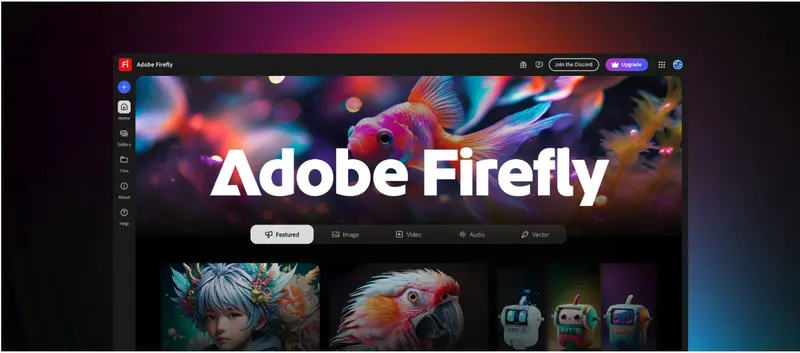
Adobe says much of the work began with existing campaign assets, then expanded into location-specific imagery, new motion and new compositions. Firefly Boards supported wider visual exploration; text to image produced bespoke assets; image to video added motion; editing tools enabled remixing and replacement. The important production move was not choosing one generator. It was keeping that changing material attached to a coherent identity while the delivery matrix multiplied.
The live camera turned the campaign into a publishing product
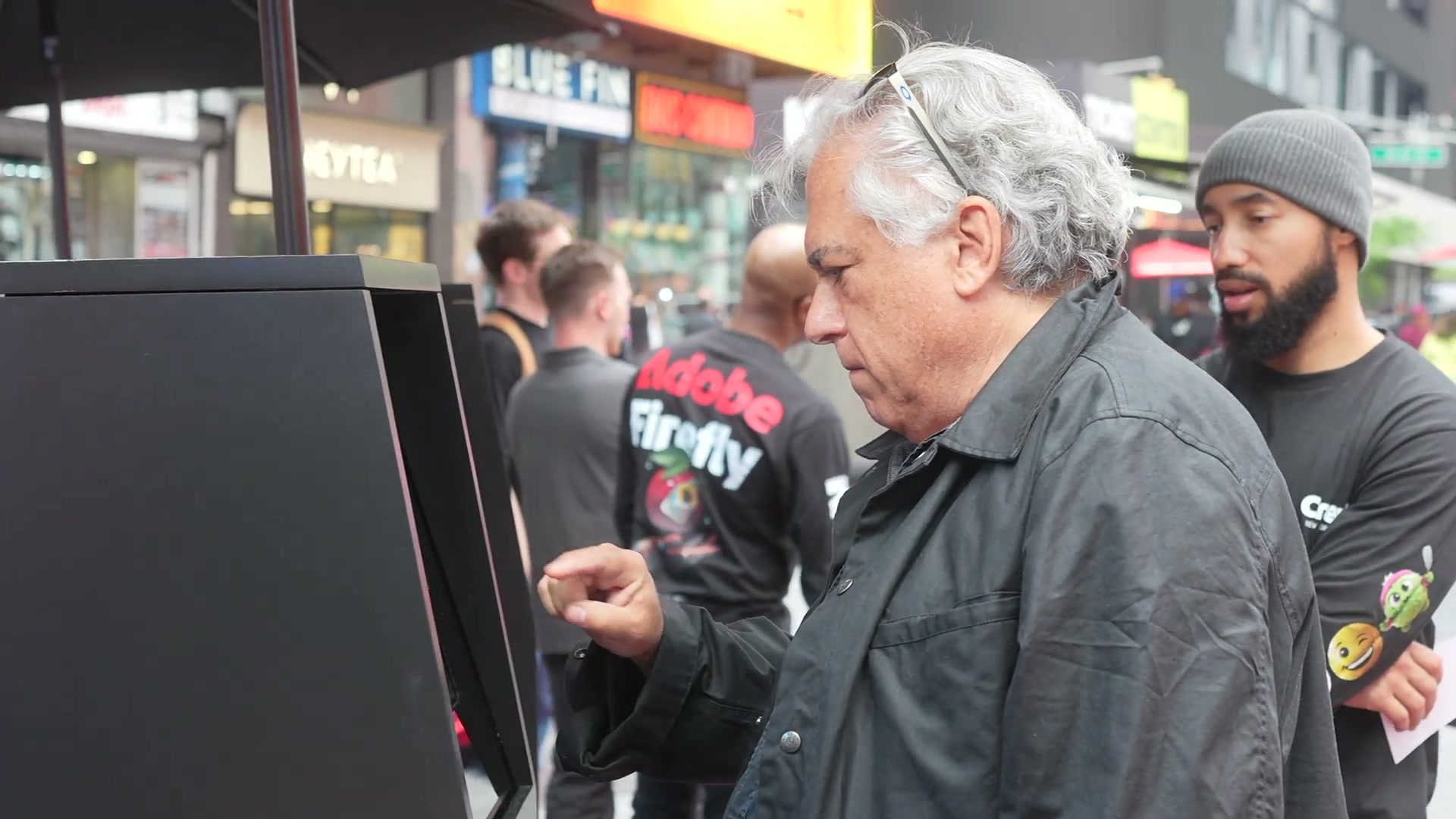
The street-level activation made the system more consequential. Adobe installed 20 self-service stations where visitors could make a personalised selfie using one of 16 New York-inspired styles. Adobe reports that an output could be generated in under a minute and then published to 12-foot Dream Board displays around the activation.
Once audience input can reach a public screen, the workflow is no longer just post-production. It is a live publishing product. The operational brief needs consent language for the participant, an age policy, moderation before display, identity and likeness checks, blocked content rules, a human override, rate limiting, a failure state, a removal route and an incident log. The screen should never be the first place a risky output is reviewed.
The public case says the Firefly API powered the custom camera experience, but it does not detail moderation, rejection rates, staff intervention or the exact consent journey. That absence is not evidence those controls were missing. It is a boundary on what the case allows an outside production team to learn. A replicable case study would publish the operating safeguards as clearly as the output speed.

Approval is the part that makes speed usable
Adobe says screen-specific production began only weeks before the event and that topical material was still being added days before launch. That compression is a stronger test of the approval system than of image generation. A faster first draft creates value only if feedback, version ownership and final sign-off can move at the same pace.
Frame.io was used to share assets, route feedback and manage approvals across Adobe teams and outside partners. For this kind of job, the review record should connect creative and technical acceptance. A stakeholder can approve the image while an engineer rejects its dimensions; legal can clear the subject while the show caller rejects the loop; a topical version can be approved for Sunday but unsafe to replay on Monday.
Use named gates: creative direction, brand, rights, likeness, claims, technical specification, venue safety and final playback. Lock the approver for each gate, preserve version numbers and record expiry where content is time-sensitive. ‘Approved’ without a destination and validity window is too broad for a campaign that changes by screen and by hour.
Provenance has to survive the render farm
Adobe says its own Firefly models are trained on licensed material including Adobe Stock and public-domain content where copyright has expired, and not on customer content. It also automatically applies Content Credentials to assets whose pixels are entirely generated with Firefly. Those policies are relevant procurement evidence, but a campaign still needs its own asset-level record.
The Times Square work combined existing campaign material, employee and community work, contributions from 23 influencers, output from eight on-site artists and audience-generated portraits. That is a rights graph, not a single AI label. Each source needs an owner, permission, territory, duration, editing allowance, likeness status and permitted destination. A model policy cannot answer whether a creator submission was licensed for a six-block takeover or whether a participant agreed to public display.
Keep the original Content Credential where it exists, but do not assume it will remain attached through compositing, transcoding and venue playback. Store an external provenance manifest beside the delivery package: asset ID, source files, contributor and consent references, model and account, generation date, human edits, approval chain, derivative IDs and final screen assignments. The audit trail should survive even if the display file loses its embedded metadata.
The published metrics stop before effectiveness
Adobe’s figures describe scale: screens, formats, creators, assets, frames, data and generation time. They do not disclose production cost, people or hours, raw generation count, rejection rate, render failures, approval-cycle time, audience participation, moderation blocks, dwell time, brand lift or downstream conversion. The campaign may have measured some or all of these internally; they are simply not in the published account.
That makes the case strong evidence that a coordinated AI-assisted takeover can be delivered, but not proof that AI made it cheaper or more effective than another production route. Even the statement that the work was completed in a fraction of the usual time is not paired with a baseline. Treat it as Adobe’s assessment, not a transferable saving.
A buyer should build the comparison before production: cost and elapsed time per approved creative family; candidates per accepted master; human review minutes per output; technical rejection and re-render rates; percentage of delivered files verified live; activation attempts, safe completions and publishing latency; audience attention; and the commercial action that follows. Speed, scale and effectiveness are three different claims.
Build the control plane before generating at scale
Start with a screen matrix and a source register. Assign stable IDs to every concept, master and derivative. Define which elements may be generated, which brand assets are fixed, which people or references require consent and which models or editing routes are permitted. Agree the review gates and name the person who can stop the show.
Then run one creative family through the entire chain: board, generation, selection, edit, rights review, format adaptation, render, transfer, venue ingest, playback test and evidence capture. Test the live activation separately with adversarial prompts, recognisable people, minors, network loss, queue spikes, moderation failures and emergency removal. A successful image is not a successful system test.
Only after that rehearsal should output volume increase. Adobe’s Times Square case is persuasive because the visible spectacle rested on an invisible coordination layer. That is the transferable lesson for film marketing, experiential work and multi-market advertising: AI can widen the field of possible material, but production value arrives when every variation remains traceable, reviewable and playable at its destination.
Build
Need a repeatable AI production workflow?
Mike designs the tools, review loops, and publishing systems that make it usable.
Launching a business of your own? Founder Launch OS connects the brand, offer, website and visual campaign in one guided Codex or Claude Code workspace.
Keep reading