Were Xero’s campaign performers AI-generated?
Yes, with an important evidence boundary. Published descriptions say AI was used to customise actors, accents, shopfronts and product details, and campaign frames reproduced by MediaPost explicitly identify examples as using AI-generated performers. The official Argonaut films confirm the released creative, but the public material does not identify the model chain, source performances, training inputs or a performer-by-performer clearance record.
That means the confirmed fact is narrower than either extreme: this was not merely conventional footage with translated supers, but the evidence does not show that every person in every asset was wholly synthetic. A buyer should classify each face, body, voice and accent treatment separately and require the supplier to state whether it is generated, filmed, licensed, composited or transformed.
Before approval, attach five fields to every performer variant: source and consent basis; permitted territories, media and duration; prohibited derivatives and training reuse; required audience or platform disclosure; and the named human approver. If the supplier cannot complete that record, the version is not ready for delivery, however convincing it looks.
The case is 600 variations, not one AI commercial
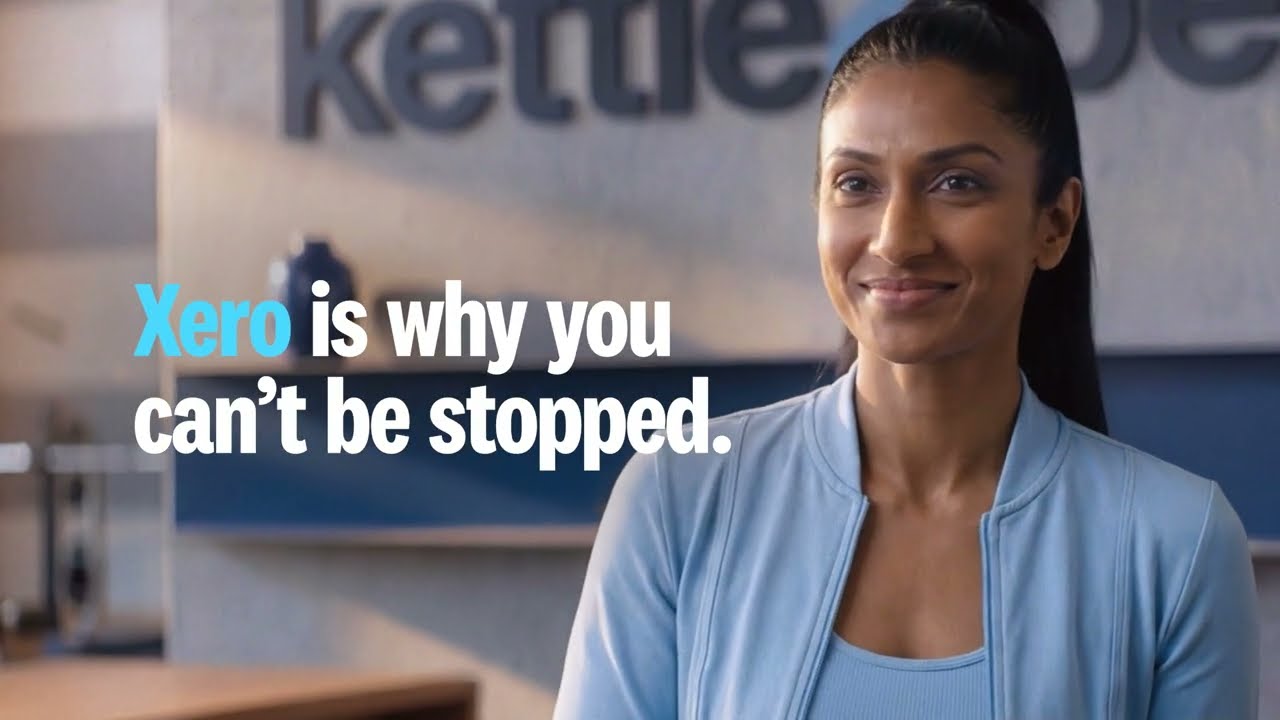
Xero's ‘Love Changes Everything’ campaign follows a florist, café, contractor, gym and architect to connect financial control with the parts of a small business its owner actually loves. Industry reports published in August credit Argonaut with the creative platform, ArtClass and Overture with production and post, and Stewart Hendler with direction. The reported output was more than 600 customised assets across eight markets in eight weeks, with distribution spanning channels including television, YouTube, Reddit and Amazon.
That number is useful only with its boundaries. The public case material does not provide a model list, generation count, cost comparison, percentage of synthetic footage or a complete map from inputs to final assets. It does say AI was used throughout production to change elements including performers, accents, shopfronts and product details. So this is evidence of a scaled AI-enabled campaign system, not evidence that 600 finished commercials came from one prompt or that every asset was wholly generated.
The production lesson sits between those two extremes. A global campaign no longer has to begin with one expensive master and a set of compromised local cut-downs. It can begin with a common idea, visual grammar and approval logic, then generate market-specific executions inside that frame. The scalable unit becomes the controlled variation.
Localisation has moved inside the image
Traditional localisation often arrives late: translate the supers, replace the voice-over, trim for a media length and hope the master remains culturally legible. Xero's case moves localisation upstream into casting, setting, language, product presentation and the type of business being portrayed. That changes production design and performance, not only finishing.
This is commercially important because ‘global’ imagery can become strangely placeless. A shopfront, uniform, till, menu, street, electrical fitting, unit of currency or pronunciation can locate an image as decisively as a landmark. If those details are generic or wrong, the audience reads the campaign as imported even when the copy is translated correctly.
A useful brief therefore separates the invariant campaign idea from the variables a market may change. Lock the emotional turn, brand behaviour, visual tone, product promise and legal claim. Then identify controlled fields for performer profile, language, accent, business category, architecture, props, interface state, offer, aspect ratio and duration. Generative production earns its place when it can vary those fields without dissolving the idea.

Build a variant matrix before generating anything
Six hundred assets can be a compact campaign or an unreviewable pile. Before production, create a matrix with one row per intended deliverable and explicit fields for market, language, audience, business story, performer treatment, product screen, claim, offer, channel, duration, aspect ratio, safe areas, captions, audio mix, disclosure and approver. Give every row an identifier that survives into filenames, review links and the media plan.
Next, distinguish a true creative variant from a technical derivative. A different performer or shop environment needs creative and cultural approval. A nine-by-sixteen crop derived from an approved master may need composition and subtitle checks but not a new strategy review. A product UI change needs product and legal sign-off. Without this classification, every tiny export either receives too much scrutiny or a material change receives too little.
The matrix also keeps the headline honest. Report planned, generated, reviewed, approved, delivered and activated assets as separate numbers. A system that generated 600 files but placed 80, or required hundreds of manual repairs, has a different commercial value from one that reliably supplied the full media plan.
Synthetic performers make rights a per-market production task
The published case descriptions say AI enabled the teams to customise ‘actors’, while frames reproduced by MediaPost label examples as using AI-generated performers. That clarity matters because a synthetic person is not simply another visual parameter. Their face, voice, apparent age, accent, occupation and behaviour can imply a real testimonial or a culturally specific identity even when no individual was filmed.
The rights pack should record how each performer was created, which source material was used, whether any recognisable person or licensed voice contributed, what territories and media are cleared, and whether a label is required in the asset or platform metadata. Treat a change of face or voice as a new rights event, not a harmless render variation.
Brands also need a policy for authenticity. Xero says real customer voices remain part of its wider storytelling alongside the campaign. That distinction can be useful: synthetic performers can carry an illustrative brand world, while named customer testimony remains tied to a documented person and experience. The audience should not have to guess which contract they are being shown.
Cultural QA needs people who can reject the image
Language review is necessary but insufficient. A local reviewer should inspect the complete scene: whether the business feels plausible, the accent belongs, signage is coherent, gestures are appropriate, money and measurements are correct, and the product claim matches what exists in that territory. They need authority to reject the version, not merely annotate it after the delivery deadline.
Review in three passes. First, judge the story with the sound off: performer continuity, hands, products, signage, screen direction and brand readability. Second, listen without watching: pronunciation, cadence, music, synthetic-voice artefacts, mix and caption agreement. Third, watch the real placement at delivery size, where a plausible desktop master can become unreadable or uncanny inside a vertical feed.
Log the rejection reason against the variant ID. Over time, the failure data becomes more valuable than a prompt library: it shows which markets, scene elements and models create repeated repair costs, and where a conventional shoot, licensed library or human performance is the safer choice.
Delivery evidence is part of the creative workflow
Every approved file should resolve back to the variant matrix. Keep the prompt or edit instruction, model and version, source references, seed where available, generation date, human changes, music and voice licences, disclosure decision, approver and checksum beside the master. If a platform recompresses or renames the asset, retain the relationship between the uploaded file and the approved source.
This is how the production remains editable after launch. A legal claim can change, a market can request a different voice, a performer treatment can be withdrawn or a product interface can update. The team should be able to identify affected versions and regenerate the smallest valid set instead of searching through folders or rebuilding the campaign.
It also protects measurement. Media results need to join the same IDs: market, story, performer treatment, hook, duration and placement. Otherwise AI increases asset count while the reporting collapses everything back into one campaign average, leaving the team unable to learn which local choices actually changed response.
Judge scale by approved usefulness, not generation speed
A buyer assessing this approach should ask for the ratio of approved assets to generated attempts, human review time per variant class, repair hours, cost per activated asset, delivery error rate and performance lift against a simpler localisation method. Speed matters, but only after rights, cultural accuracy, brand consistency and media usefulness have survived review.
Run a smaller pilot before promising hundreds of versions. Choose two markets with meaningful differences, two business stories, two formats and one product variation. Build the matrix, produce the set, send every asset through local, legal, product and technical review, then trace the approved files into a test media plan. The pilot should expose where the process breaks before scale turns the break into hundreds of defects.
Xero's case is significant because the claim is not that AI wrote a clever commercial. It is that a brand, agency, production company and post team used AI to keep a campaign specific while expanding across markets and channels. The competitive capability is therefore not access to a generator. It is the operating system that decides what may change, proves what did change and delivers only the versions a market can safely use.
Build
Need a repeatable AI production workflow?
Mike designs the tools, review loops, and publishing systems that make it usable.
Launching a business of your own? Founder Launch OS connects the brand, offer, website and visual campaign in one guided Codex or Claude Code workspace.
Keep reading