Old books, current problems
A modern filmmaker can shoot a cinema-quality image on a small mirrorless camera, previsualise a sequence with generative tools, edit on a laptop and publish the result to several audiences before a traditional production would have finished striking the set. Access has improved. The volume of images has exploded. The difficult part is still deciding which image deserves to exist.
That is why these five books remain on my shelf. They are not a list of current cameras, codecs or platforms. Some of their diagrams, working practices and assumptions clearly belong to another production era. Read literally, parts will feel dated. Read for the thinking underneath, and they become unusually relevant to a creator who may be directing, shooting, editing and distributing the same piece of work.
Together they cover five connected disciplines. Steven D. Katz turns a script into spatial decisions. John Alton makes light expressive. Joseph V. Mascelli explains the grammar that keeps shots intelligible. Andrey Tarkovsky asks what cinema does with time. Andrew Laszlo shows how a cinematographer adapts craft to the particular problem in front of them. That combination matters whether the final work is a feature, documentary, commercial, YouTube film or thirty-second vertical story.
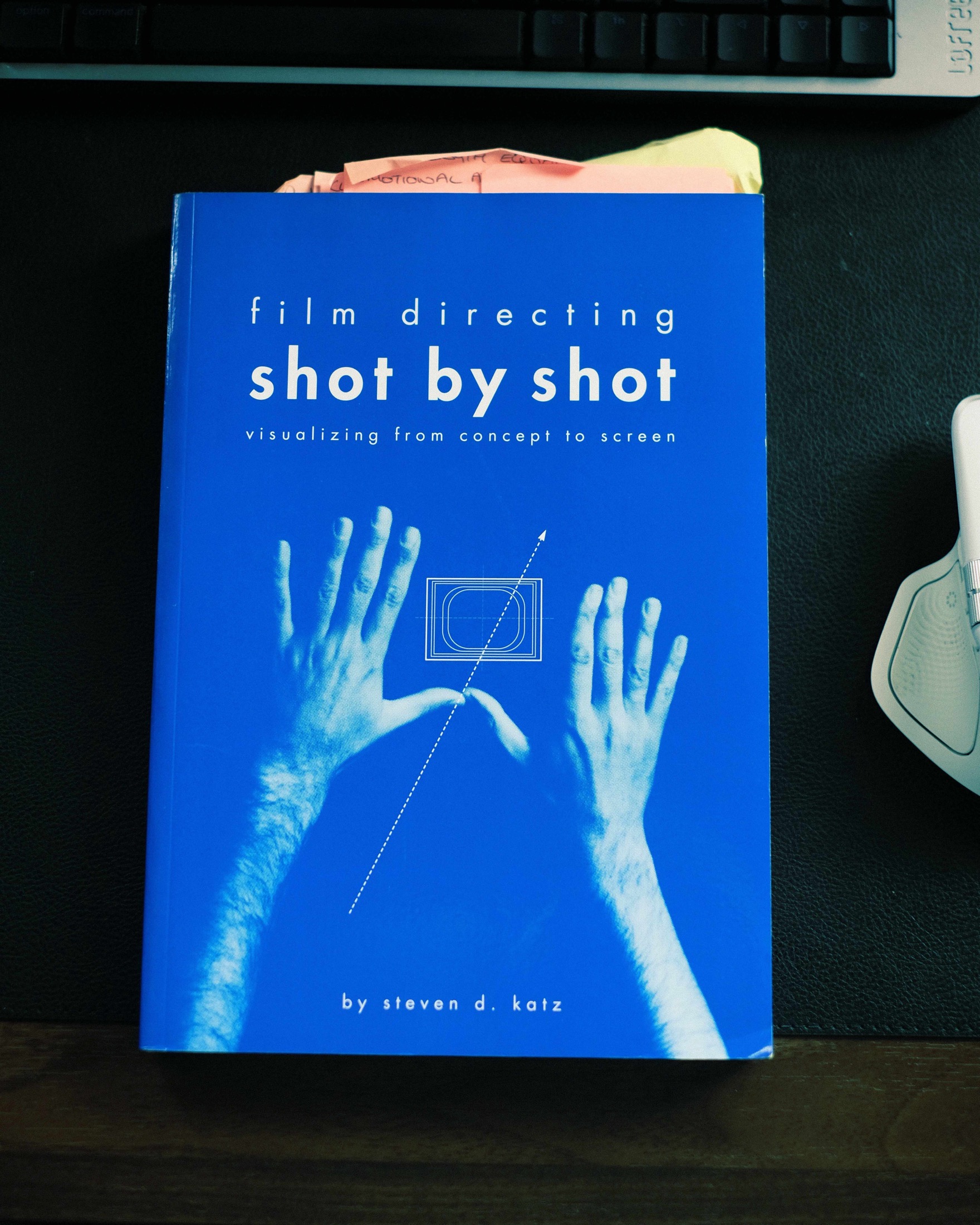
1. Film Directing: Shot by Shot — Steven D. Katz
Katz's book is fundamentally about visualisation before production. It connects story analysis, blocking, composition, lens position, camera movement and editing through diagrams and storyboards. The value is not in copying a catalogue of established shots. It is in learning that coverage is a set of narrative choices made in space, not insurance gathered by pointing several cameras at a performance.
That distinction is more important now, not less. A solo creator working quickly can easily record a wide, two mediums and two close-ups without deciding where the scene's power sits. A brand team can generate an immaculate storyboard that contains no coherent geography. An AI video model can return striking fragments that refuse to cut together. Katz gives you a way to test the sequence before those problems become expensive: whose point of view leads, how movement crosses the frame, where the axis sits, and what new information each cut delivers.
Use it today by storyboarding one short scene twice. Build a safe version around conventional coverage, then design a second version around the emotional turn. If the same setup appears in both without a clear reason, question it. The exercise works with pencil sketches, photographs, 3D previs or generated frames. The software is secondary; the discipline is deciding the scene before accumulating images.
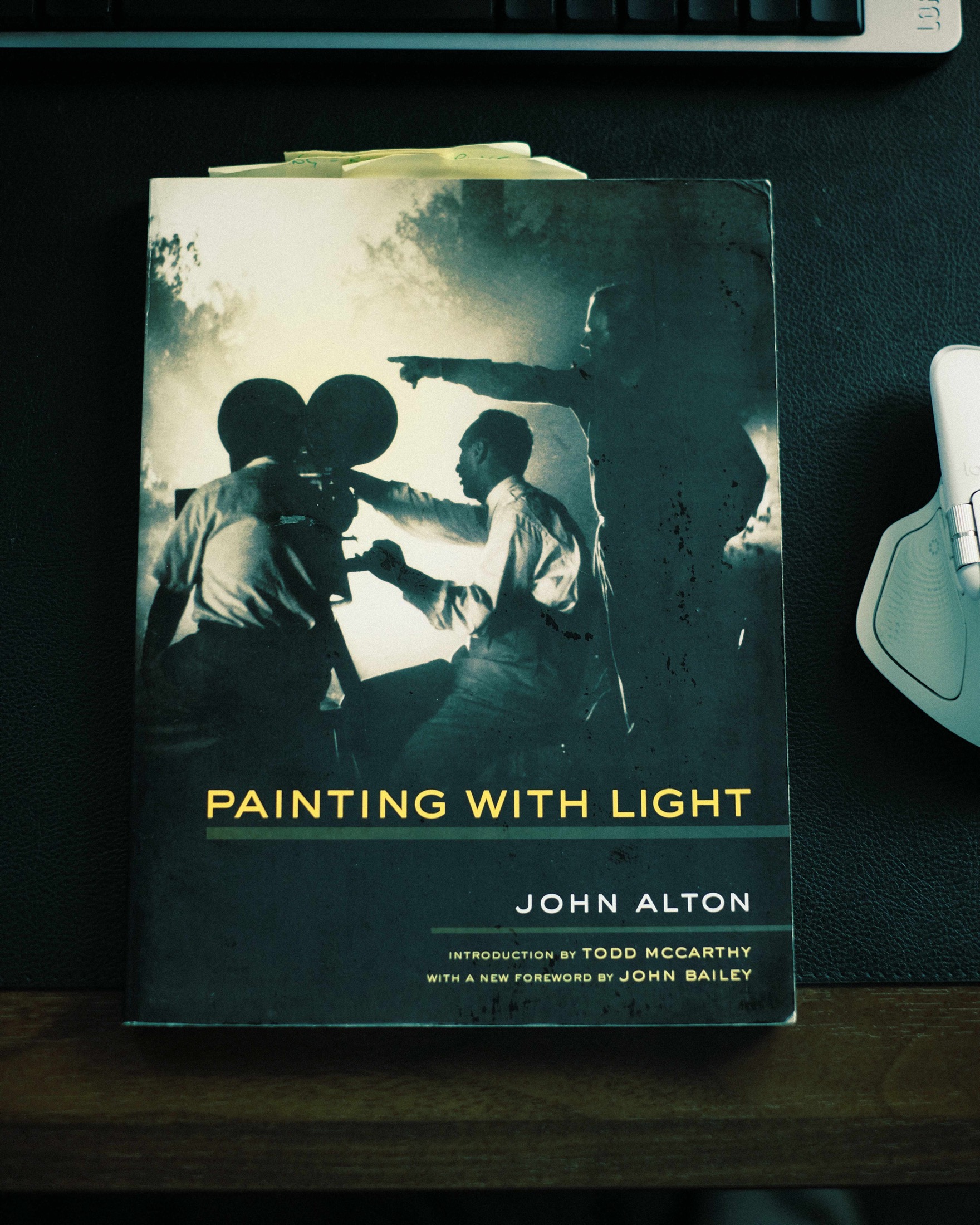
2. Painting with Light — John Alton
First published in 1949, Painting with Light comes from a studio system, film stocks and lighting technology very different from ours. Its continuing force is Alton's refusal to treat illumination as simple exposure. Light is story architecture. It can reveal a face, withhold a room, separate planes, direct attention and make an ordinary location carry psychological weight.
Modern cameras can see deeper into low light, LEDs can change colour instantly and post-production can rescue images that once would have failed technically. Those advantages create a new temptation: accepting whatever is already visible. Alton reminds the contemporary cinematographer that enough light to record a subject is not the same as a designed image. His celebrated shadows are not a preset. They are evidence that subtraction, direction and contrast can say more than blanket softness.
For a creator working with a small kit, the practical lesson is liberating. Start by switching lights off. Decide what should remain unseen, then build the frame around one motivated direction—a window, practical lamp, screen or streetlight. Flags, negative fill, distance and blocking may do more than another fixture. The same thinking improves a documentary interview, a product film and a phone-shot short because it begins with attention rather than equipment.
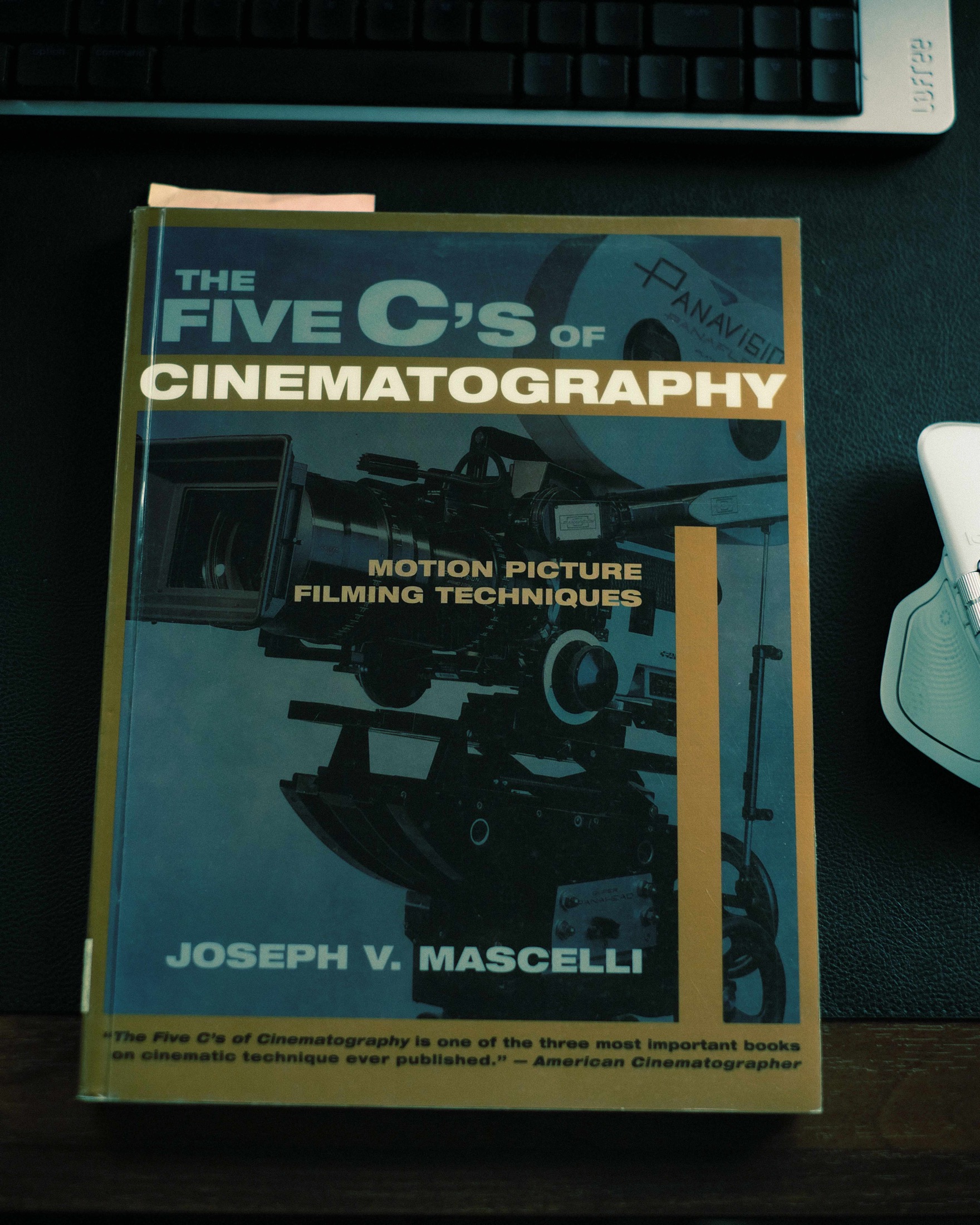
3. The Five C's of Cinematography — Joseph V. Mascelli
Mascelli organises visual storytelling around camera angles, continuity, cutting, close-ups and composition. It is a grammar book: detailed, sometimes prescriptive and grounded in the conventions of continuity filmmaking. That can make it easy to dismiss in an era of jump cuts, discontinuous edits, mixed aspect ratios and creators speaking directly to a lens. It is more useful to see the rules as causes and effects.
Screen direction, eyelines and matching action still shape what an audience understands, even when a film deliberately breaks them. A vertical creator may compress a sequence into six fast shots, but those shots still establish or confuse space. A documentary editor still needs cutaways that carry meaning as well as conceal joins. A virtual production team still has to align lens, perspective and movement across physical and digital elements. Continuity has not vanished; it has become one option inside a wider visual language.
The modern exercise is to audit an edit with the sound off. Track where attention moves at every cut. Note when the viewer must rebuild geography, when a close-up genuinely changes intimacy and when composition is doing no work beyond centring the subject. Then decide whether each disruption is expressive or accidental. Mascelli gives you the baseline that makes intentional rule-breaking legible.
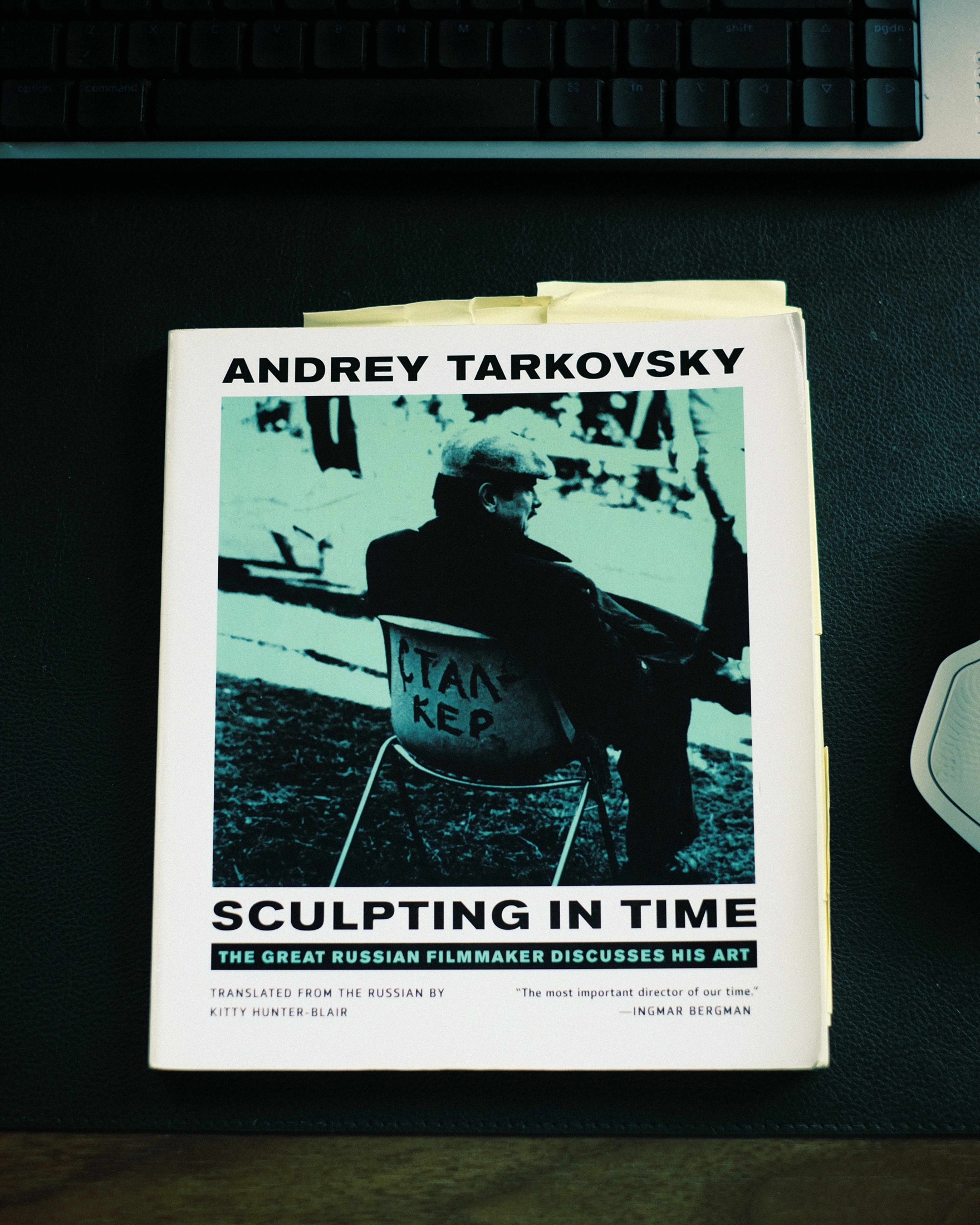
4. Sculpting in Time — Andrey Tarkovsky
Sculpting in Time is the outlier here. It is not primarily a manual but an artistic argument assembled from Tarkovsky's films, memories and methods. His concern is cinema's unique relationship with recorded time: the pressure within a shot, the rhythm created across a film and the responsibility of an artist to pursue something more demanding than surface effect.
That makes the book especially relevant to a culture organised around retention graphs, hooks and constant compression. Short-form platforms do not automatically produce shallow work, and duration is not a virtue by itself. The useful challenge from Tarkovsky is to feel time rather than treat it only as a container. Does a shot end because its information has been delivered, because a metric says attention may drop, or because its emotional pressure has changed? Those are different editorial decisions.
Try applying this to the shortest work you make. Let one image hold a beat beyond efficiency and see whether anticipation, discomfort or tenderness appears. Record real duration—a person listening, weather moving through a location, a task being completed—before covering it with music and cuts. Tarkovsky's cinema cannot be reduced to slow shots, but his thinking can help a modern creator recover rhythm from an edit that has become mechanically fast.
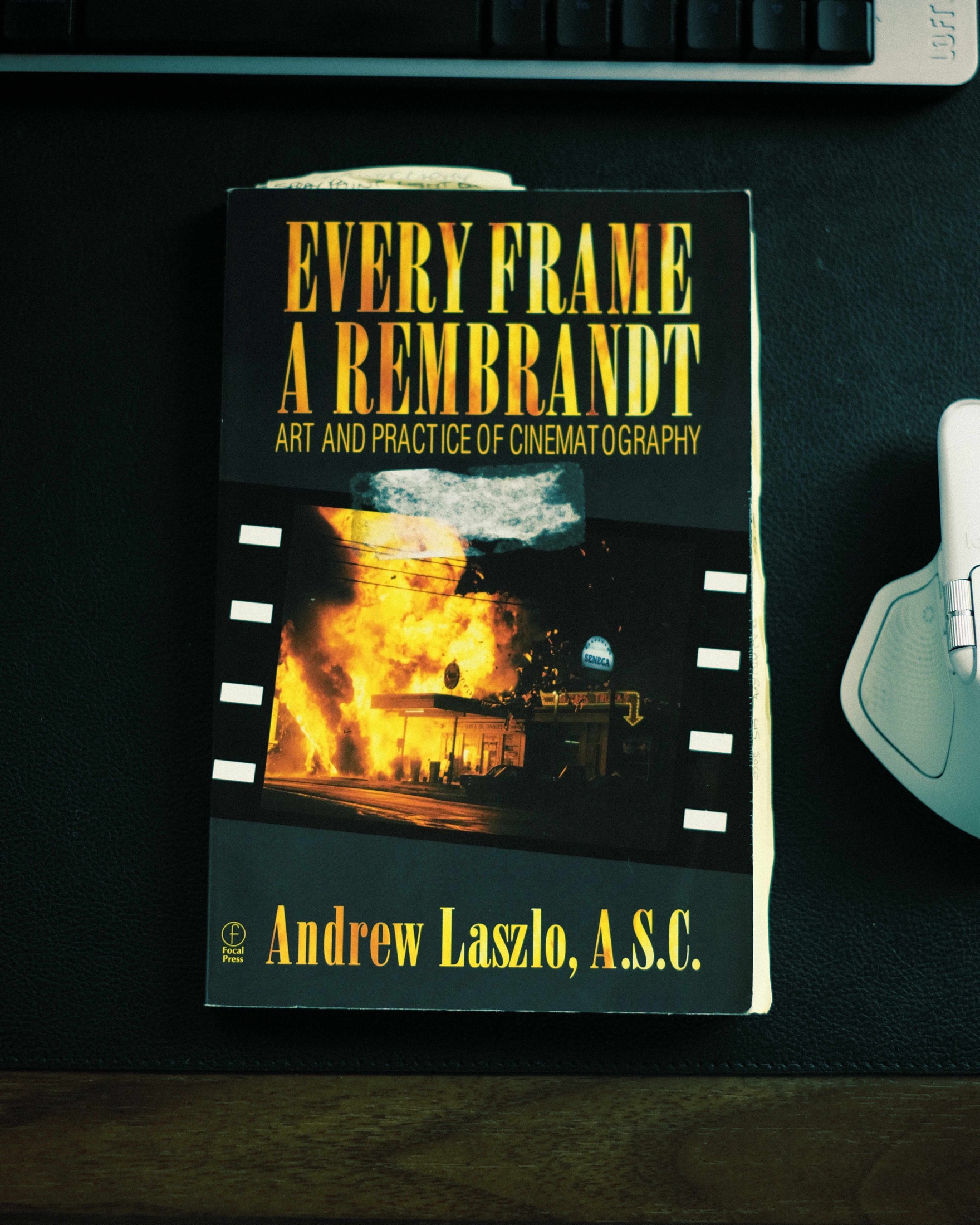
5. Every Frame a Rembrandt — Andrew Laszlo
Andrew Laszlo's book is built around production experience. Rather than presenting one universal visual system, it examines the different challenges posed by five films and the practical reasoning used to solve them. The title sounds like a demand for constant beauty, but the deeper lesson is about appropriateness: cinematography has to serve the particular story while surviving weather, locations, schedules, effects, safety and the thousand compromises of a set.
That production intelligence translates directly to current work. Today's constraints may include a two-person crew, a client review over a live link, an LED volume, a creator performing while operating the camera, or synthetic shots that must match photographed material. The cinematographer's role is not to protect one preferred look from reality. It is to design a coherent approach, communicate it clearly and adapt without losing the dramatic intention.
After reading it, write a one-page visual strategy for the next project. Define the emotional purpose, contrast, colour, lens behaviour, movement, texture and rules for exceptions. Then list the actual constraints and the fallback for each one. A cloudy exterior, lost location or smaller lighting package should change the method without erasing the idea. That is the difference between collecting attractive frames and practising cinematography.
Read them as a connected workflow
These books are strongest together. Start with intention and time: what experience should the sequence create, and how long does it need to breathe? Use Katz to translate that intention into blocking and shots. Use Mascelli to check the spatial and editorial logic. Use Alton to control attention through light. Use Laszlo to pressure-test the whole design against the production you can actually mount.
The sequence also works for AI-assisted filmmaking. A prompt can describe a lens, lighting style or camera move, but the model does not share your complete understanding of the scene. These books give you a vocabulary for evaluating outputs and assembling them into something coherent. They help you reject a beautiful frame that breaks geography, a dramatic light source with no story function, or a fast montage with no internal rhythm.
Most importantly, they move the conversation away from equipment. The modern filmmaker has more image-making power than the authors could have anticipated. That does not make their thinking obsolete. It makes judgement the scarce resource—and these five books are still very good at training it.
Build
Turn visual thinking into a repeatable system
I help filmmakers, brands and creative teams connect cinematic craft with modern production systems—from shot design and previsualisation to AI-assisted workflows and final delivery.
Launching a business of your own? Founder Launch OS connects the brand, offer, website and visual campaign in one guided Codex or Claude Code workspace.
Keep reading