What the public record actually establishes
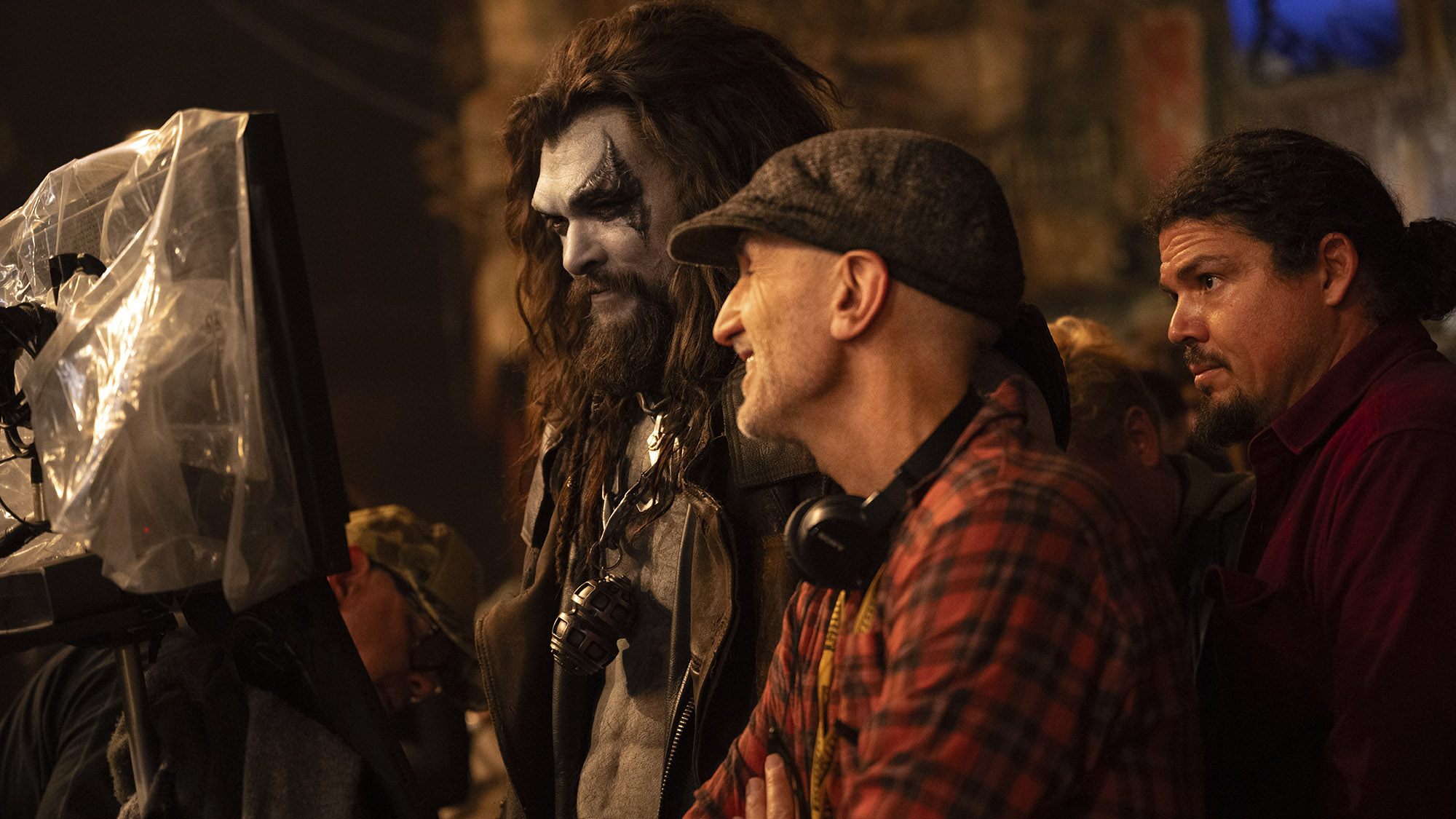
On 13 August, viewers circulated frames from an official Warner Bros. behind-the-scenes featurette about Supergirl. The sequence showed director Craig Gillespie and Jason Momoa looking at a laptop containing several Lobo images. Commenters identified visual irregularities they associated with generative AI and the claim spread as a statement that AI concept art had been used on the film.
GamesRadar reported the following day that the featurette had been removed from public view and that it had asked Warner Bros. whether the imagery was AI-generated and why the video was removed. The original YouTube URL returned a private-video status when I checked it on 19 August. I have found no public studio response that confirms the tool, artist, source assets or reason for the video's changed availability.
That leaves three different things which should not be collapsed. The video was official. The frames prompted a plausible AI-use allegation. The allegation is not, by itself, verified production history. Compression artefacts, rough compositing, paint-over, photobashing and generation can overlap visually. A studio removing or privating a video after criticism is relevant evidence about the communications event; it is not technical proof of how the images were made.
Why one laptop mattered
The disputed images were not presented as finished pixels from the film. They appeared inside the development process of a recognisable character. That is precisely why the reaction matters. Concept work sits upstream of costume, makeup, performance, photography, VFX and marketing. It can determine which version receives money and labour long before the audience sees a final frame.
Gillespie told SFX that he arrived with about 120 pages of images distilled from thousands of references. He also said he had hundreds of versions of Lobo on his laptop and that Momoa participated in narrowing the armour, boots, knee pads and overall approach. The interview does not identify the disputed featurette images or establish that generative AI was used. It does establish that image selection was a material part of creative development rather than incidental desktop clutter.
A production therefore needs to know what each image is doing. Is it licensed reference, a comic panel, a commissioned sketch, a photo composite, a generated exploration, a costume test or a paint-over? If all of those arrive in one unlabelled deck, the director may still make a decision, but the production loses the ability to credit the work accurately, clear downstream use and explain the route later.
A visual hunch is not provenance
The internet has become reasonably alert to synthetic imagery and unreliable at proving it from appearance alone. Extra forms, inconsistent details and smeared textures can be useful reasons to ask a question. They are not a chain of custody. Conventional concept art may be deliberately loose. A compositor may place images onto a recorded screen for legibility. A human drawing can resemble the visual average produced by models trained on decades of entertainment artwork.
This creates risk in both directions. Undisclosed AI-assisted work may pass through a production because nobody records it. Human artists may be falsely accused because audiences have learned a set of unstable visual tells. The remedy is not a better guessing game. It is an internal record tied to the selected asset and a public response based on that record.
The Direct separately reported that concept artist Andrei Riabovitchev published commissioned early Lobo costume illustrations. Those credited works are evidence that human concept-art labour existed around the character. They do not prove the origin of every image in Gillespie's development deck, just as the disputed frames do not erase the credited artists, costume department, makeup team, performer and VFX crews that brought the final Lobo to screen.
The finished character is a chain of departments
The official record describes Momoa's Lobo as a physical construction. DC's own interview centres costume and performance: Momoa talks about how putting the costume on changed the way he moved. The Credits describes a production that leaned into practical effects, sets, locations and captured texture. Gillespie credits the depth of the UK wardrobe, production-design, set-decoration and craft departments.
That context prevents a misleading conclusion. Even if a generated image were confirmed somewhere in development, it would not mean 'AI made Lobo'. It would mean a particular synthetic asset entered a much larger human pipeline. The useful questions would be where it entered, who selected and transformed it, whether its source and tool terms were acceptable, which artists it informed, how it was credited and whether the use changed labour or rights obligations.
Credits and disclosure operate at different levels. Screen credits recognise people and companies. An internal asset log explains what happened to the image. A public statement tells an audience enough to understand the disputed use. None can substitute completely for the others.

Build the concept-deck register
Every image entering a decision deck should carry a compact record: asset ID, creator or source, commissioning status, creation method, model and account where applicable, source references, rights or licence status, material human edits, intended use, approval owner and credit treatment. The slide itself needs a visible status—reference only, cleared for internal development, cleared for publicity or approved final design.
Do not turn the register into prompt surveillance. A studio does not need every abandoned phrase to answer this case. It needs the route for the assets that influenced an approved choice or appeared in a public deliverable. Preserve the original file, an approved derivative, its hash and the decision that moved it forward. Link the final costume or VFX design back to the development records that materially informed it.
Give contributors a disclosure route that does not rely on embarrassment. If a director, concept artist, vendor or production designer introduces generated material, the production should know where to declare it, who reviews tool terms and source inputs, and whether the asset may proceed. A policy that only says 'ask legal' pushes the decision into private messages and makes the evidence harder to retrieve.
Treat behind-the-scenes media as a delivery surface
A featurette is not neutral documentation. It is an approved commercial asset distributed to deepen audience interest in the film and its makers. Laptop screens, walls, boards, edit timelines and rehearsal audio can reveal confidential material, uncleared references, personal data or disputed workflow evidence. The marketing review therefore needs more than spoilers and music clearance.
Before publication, freeze the exact cut and inspect every visible creative asset. Resolve each one against the production register. Confirm artist permission and credit, tool and source status, whether a screen was replaced in post, and whether the caption or interview context could overstate what the image represents. If the communications team cannot explain a visible development asset, either obtain the record or remove that shot before release.
Prepare the response at the same time. Name the production, legal, labour and communications owners. Define what evidence they can retrieve in the first hour. Decide which claims require investigation and which can be answered directly. A private video with no explanation leaves the audience to treat disappearance as the explanation.
Measure the response, not the outrage
The practical scorecard is operational. Can the team identify the questioned frame within one hour? Can it name the source and human contributors? Can it distinguish reference, generated exploration and final design? Can it confirm whether the asset appeared only in development, materially influenced the screen result or was inserted into the featurette during post-production? Can it issue a bounded answer without speculating about the rest of the film?
Track evidence-retrieval time, unresolved assets in approved decks, missing credits, publicity cuts released without screen review, correction time and whether the final statement matches the internal record. Run the exercise on an existing project before the next campaign: choose one concept deck, one behind-the-scenes cut and one finished character or environment, then attempt to reconstruct the chain.
The Supergirl dispute is useful because it resists a clean verdict. A few frames should not be enough to convict a department, and a studio's silence should not be the only record available. Generative AI has made development imagery commercially and reputationally legible. The production practice now has to catch up: label the asset, credit the humans, preserve the decision and be ready to explain exactly what entered the film-making chain.
Build
Make the production decision retrievable
I help studios, production companies and creative teams connect AI-assisted development to source records, human credits, review gates and delivery evidence that can survive client, press and audience scrutiny.
Launching a business of your own? Founder Launch OS connects the brand, offer, website and visual campaign in one guided Codex or Claude Code workspace.
Keep reading