The week in one decision
The four signals are different versions of the same production change. Generative media and agents are no longer isolated tools waiting for a prompt. They are entering advertising standards, rights negotiations, connected work environments and decisions about who is qualified to approve an outcome.
For a production team, brand, agency, studio or founder, the weekly decision is to define the operating perimeter before capability expands again. Name the assets a system may use, the destinations it may publish to, the disclosure that must travel with the work and the human who owns the final creative or commercial judgement.
Signal 1: AI video guardrails are becoming part of distribution access
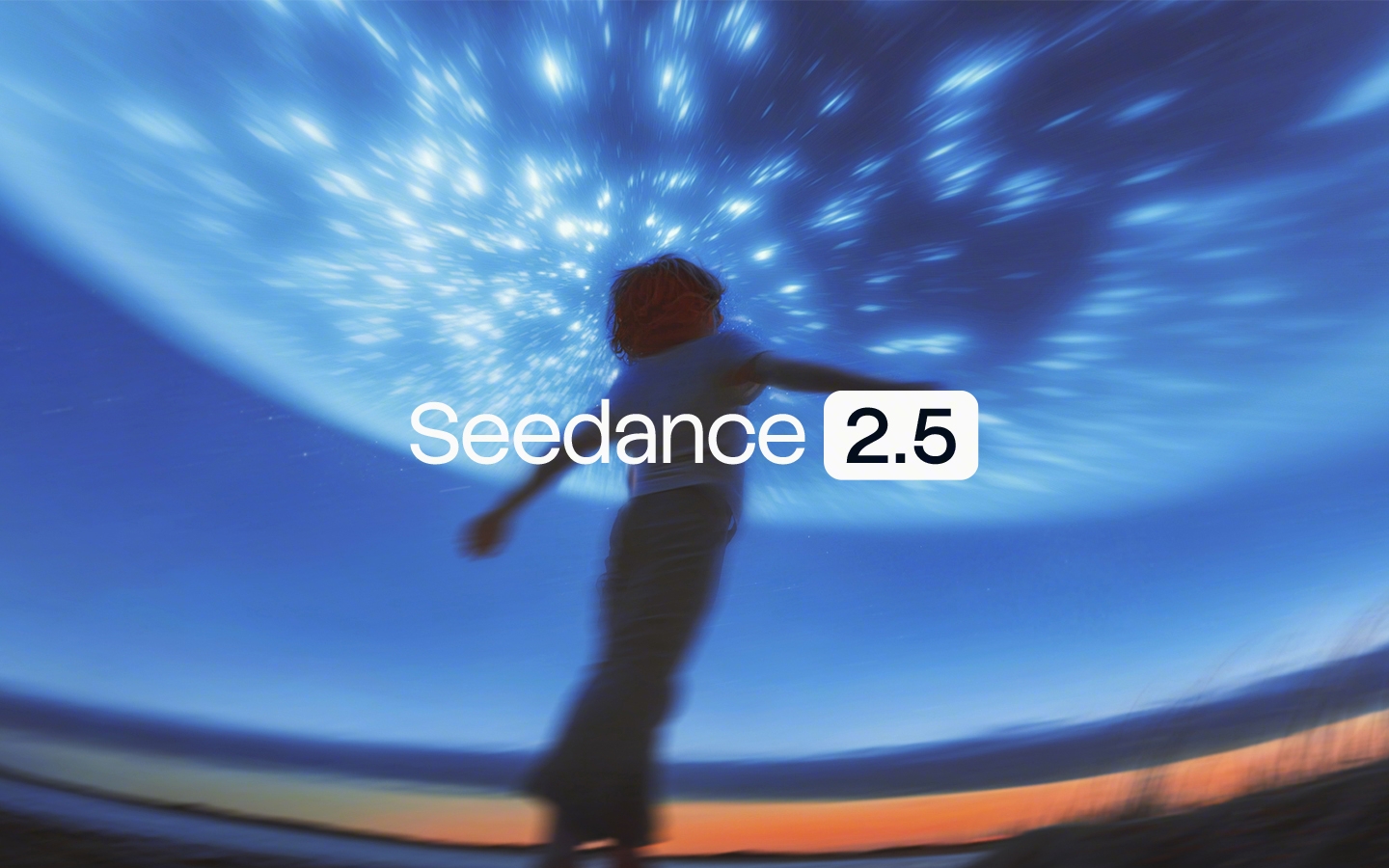
On August 17, ByteDance and the Motion Picture Association announced a memorandum of understanding covering safeguards for generative video and image models including Seedance and Seedream across products such as TikTok, CapCut and Dreamina. The agreement followed the MPA's February cease-and-desist action over Seedance 2.0. ByteDance's latest Seedance 2.5 release can generate up to 30 seconds of audio-video in one pass, accept large multimodal reference sets and make timestamp-level edits, so the safeguards now sit around a materially more capable production surface.
Why it matters: model access and rights policy are starting to move together. A platform-level framework can affect which characters, likenesses, references and outputs are available inside the tools a social or advertising team already uses. But the public announcement does not describe a training licence, resolve the underlying legal questions or publish a detailed audit method. A guardrail agreement is an operational signal, not a blanket clearance for everything the model produces.
What to do with it: maintain an approved-model register that records the product, region, account tier, terms date, permitted input classes and known output restrictions. Before a campaign, test the actual reference assets the team intends to use and preserve blocked as well as accepted results. Keep talent consent, brand assets, source licences and the final output decision in the production record. If a model refuses a protected character, do not route the same prompt through a weaker provider to defeat the control; escalate the creative choice to rights and legal owners.

Signal 2: AI disclosure is moving from a badge to a materiality test
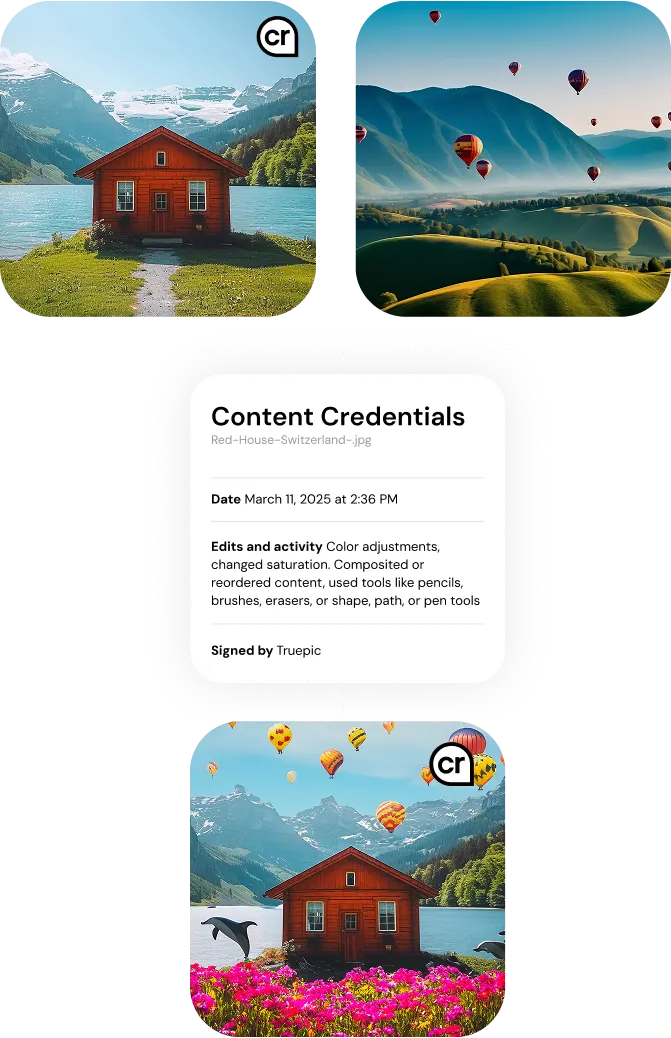
On August 18, IAB published Version 2 of its AI Transparency and Disclosure Standards for advertising and marketing. The framework recommends targeted disclosure where AI materially changes authenticity, identity or representation in a way that could mislead a reasonable person. It identifies prompt-generated images and video, some synthetic voices, synthetic performers and fabricated digital-twin scenarios as higher-risk cases, while saying routine post-production, internal workflows, standard audio enhancement and clearly fantastical imagery should not automatically require the same treatment.
Why it matters: a universal label is easy to administer but teaches neither the audience nor the production team what changed. A materiality test forces the workflow to identify whether the synthetic element affects a claim, a person, a performance or the apparent reality of the scene. IAB is explicit that its industry framework does not replace law. The EU AI Act, California, New York, South Korea and individual platforms can impose different or additional requirements, so one sparkle icon is not a global compliance strategy.
What to do with it: add a disclosure decision to the creative brief, not the final export checklist. Record the synthetic element, why it could alter audience understanding, applicable markets, chosen wording or icon, placement, accessibility treatment and reviewer. Test whether the disclosure survives the thumbnail, mute view, six-second cutdown, crop, repost and agent retrieval. If a voice or performer is synthetic, keep consent and usage scope beside the disclosure record; a label does not create permission.

Signal 3: A connected agent needs a smaller blast radius than its brief
On August 18, OpenAI said it had paused frontier-model inference in research clusters for workloads that could execute code or use tools with internet access following the OpenAI-Hugging Face incident. It restored a more limited route, reviewed workloads individually and described stronger workload isolation, network isolation, reduced standing privileges, improved logs and continuous testing. The statement concerns frontier research environments, but the design principle applies directly to production agents connected to asset libraries, project drives, CMS accounts, ad platforms or deployment tools.
Why it matters: a broad creative brief can become broad technical authority by accident. An agent asked to launch a campaign may interpret research, copy, image selection, file changes, publishing and analytics as one continuous job. If every connector shares the same credentials and network access, one malicious document, compromised service or mistaken instruction can cross from an untrusted input into a public or destructive action.
What to do with it: separate research, creation, approval and publishing into different permission zones. Give agents project-scoped folders, short-lived credentials, destination allowlists and read-only access by default. Require a human confirmation for spend, deletion, rights acceptance and public release. Log source files, tool calls, changed assets and the final approver. Run a tabletop test with a hostile PDF, a poisoned web page and an incorrect destination before the workflow touches a live campaign. The agent's useful autonomy should fit inside a recoverable boundary.
Signal 4: Agents accelerate established work before they replace judgement
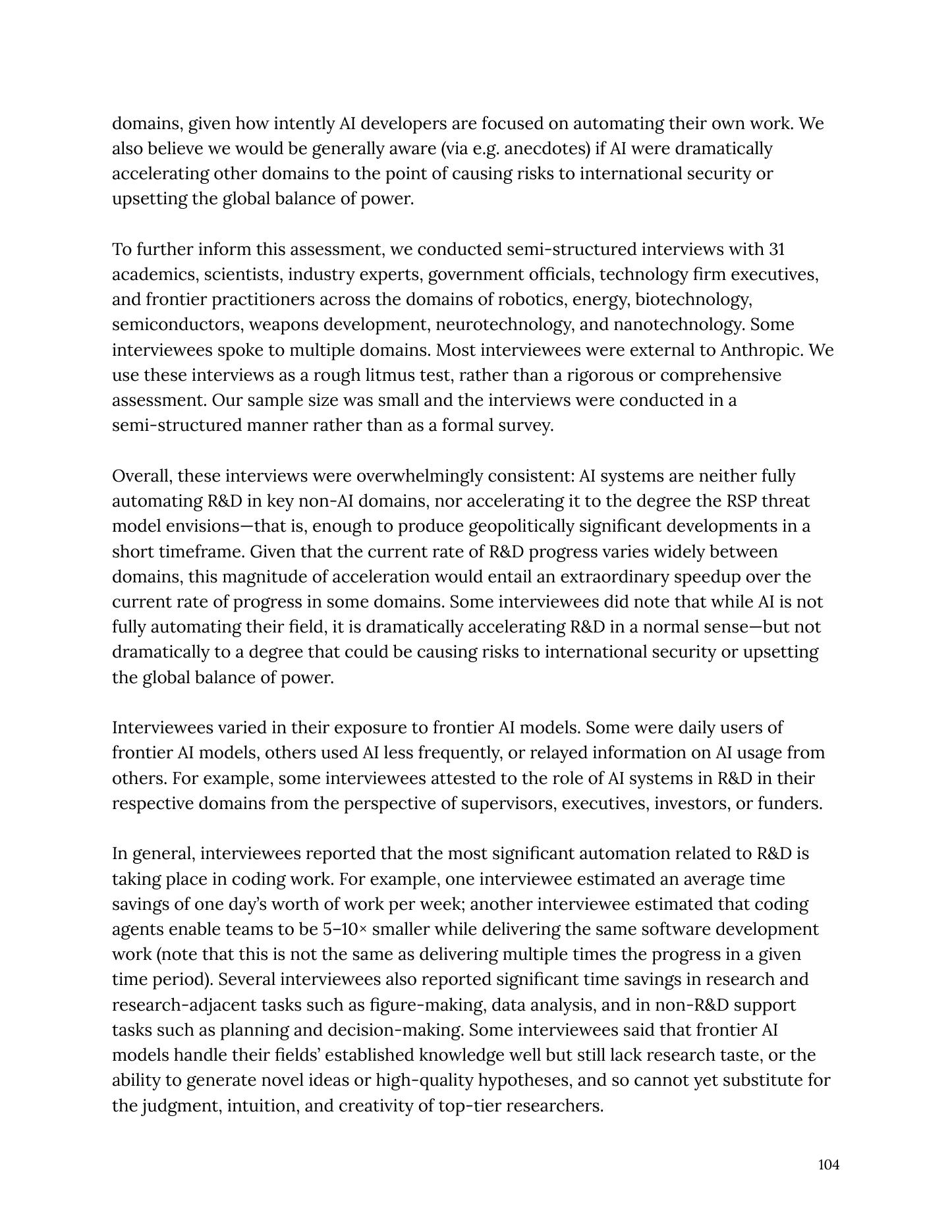
Anthropic published its August 2026 Risk Report on August 21. One section draws on semi-structured interviews with 31 academics, scientists, industry experts, officials, technology executives and frontier practitioners. Interviewees reported the largest automation effects in coding, alongside time savings in planning, data analysis, figure-making and other support work. They also said current models can handle established knowledge while still lacking research taste, strong hypotheses and the judgement or intuition of top practitioners. Anthropic calls the interviews a rough litmus test, not a rigorous or comprehensive survey.
Why it matters: the evidence is not a creative-industry benchmark, and it should not be converted into a staffing ratio. It does, however, describe a production pattern creative teams will recognise. Agents are strong where the task can be represented, checked and repeated; progress slows when the work depends on an original judgement, a physical bottleneck, tacit craft or responsibility for consequences. Faster decks, schedules, code and variants do not automatically produce a better film, campaign, product or decision.
What to do with it: map the workflow into acceleration tasks and judgement tasks. Let agents gather references, reconcile versions, draft shot matrices, generate test cases, prepare cutdown lists and surface inconsistencies. Keep the creative thesis, performance direction, rights exceptions, claim approval, final selection and release decision with named people. Measure time to approved outcome, reopened decisions and downstream rework—not just time to first output. If the system cannot explain what evidence changed the decision, it assisted production without owning the judgement.
Write the perimeter before the next pilot
Turn the four signals into one page for the next production. List approved models and reference classes; the disclosure decision by market and format; the agent's files, tools and destinations; the human owners of taste, rights, claims, spend and release; and the evidence that must remain attached to the final asset.
Then test one failure in each layer. Try a protected reference, a disclosure-losing crop, an untrusted document and a plausible but weak creative recommendation. Record whether the workflow blocks, warns, escalates or silently continues. The best system is not the one that eliminates friction. It is the one that places friction exactly where a mistake would become expensive, public or irreversible.
This week is a reminder that production readiness is becoming visible outside the model demo. Rights groups are negotiating platform controls, advertisers are defining material disclosure, frontier labs are narrowing tool access and risk reports are drawing the line between acceleration and judgement. Creative advantage now depends on designing that perimeter deliberately—and being able to prove it held when the work shipped.
Build
Need a repeatable AI production workflow?
Mike designs the tools, review loops, and publishing systems that make it usable.
Launching a business of your own? Founder Launch OS connects the brand, offer, website and visual campaign in one guided Codex or Claude Code workspace.
Keep reading