The week in one production decision
These signals do not share a model category. They share proximity to decisions. A sponsored agent can shape a buyer's understanding after an ad. A live voice model can act while a conversation continues. A training-data policy can turn a creator's catalogue into model input. An assistant director agent can coordinate systems inside a control room.
That proximity makes a familiar procurement question more important: what is the system authorised to represent or change? A fluent answer is not automatically an approved brand claim; a benchmark score is not a service-level agreement; a payment is not a complete rights record; and a successful proof-of-concept is not a safe transmission workflow. This week's practical move is to write the authority boundary beside the capability test.
Signal 1 — September 16: The ad becomes a conversation
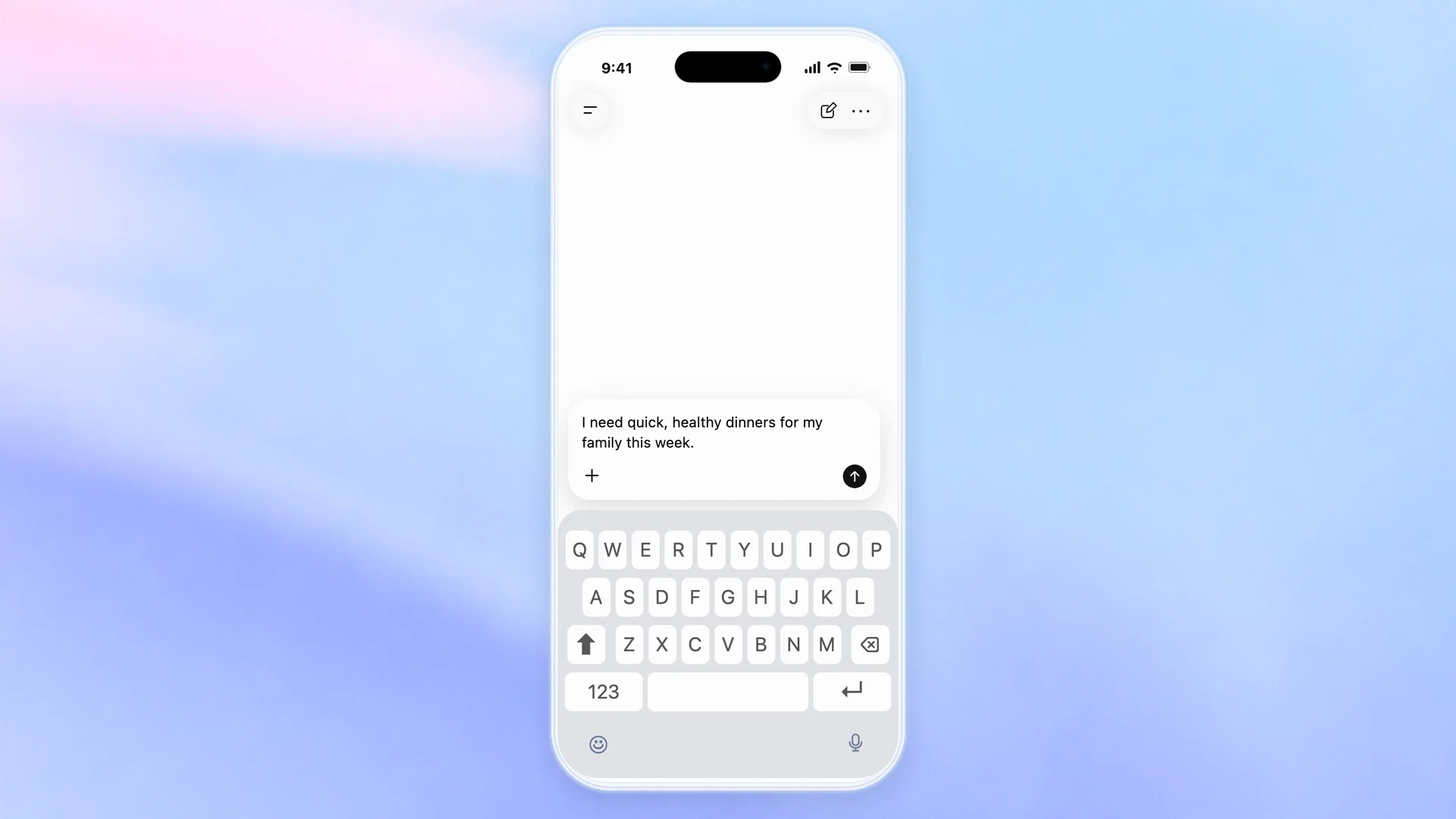
OpenAI announced Sponsored Agents on September 16, allowing people who click a ChatGPT ad to enter a clearly labelled conversation with the advertiser's agent. The test is limited to selected US advertisers. OpenAI also added natural-language campaign creation, updating and analysis through an Ads Manager plugin, suggested copy and imagery inside Ads Manager, optional contextual text customisation, and integrations with HubSpot and Shopify.
Why it matters: the creative unit is no longer only an impression, headline or landing page. It can be a sequence of questions whose answers affect consideration before the buyer reaches the advertiser's site. That gives a brand more room to explain a complex product, but it also turns product data, exclusions, availability, claims and escalation behaviour into advertising material. OpenAI's launch describes the format and controls; it does not publish independent conversion, accuracy or brand-safety results.
What to do with it: write an approved-answer set before writing the agent's personality. Connect only current product, price, territory and policy data; make uncertainty and human escalation explicit; block unsupported comparisons; and log the question, retrieved evidence, answer, disclosure, click-out and downstream outcome. In a pilot, compare qualified visits and assisted conversion with a conventional ad while separately scoring factual errors, unsafe claims, abandonment and human handoffs.
Signal 2 — September 15–17: Voice agents gain inspectable benchmarks
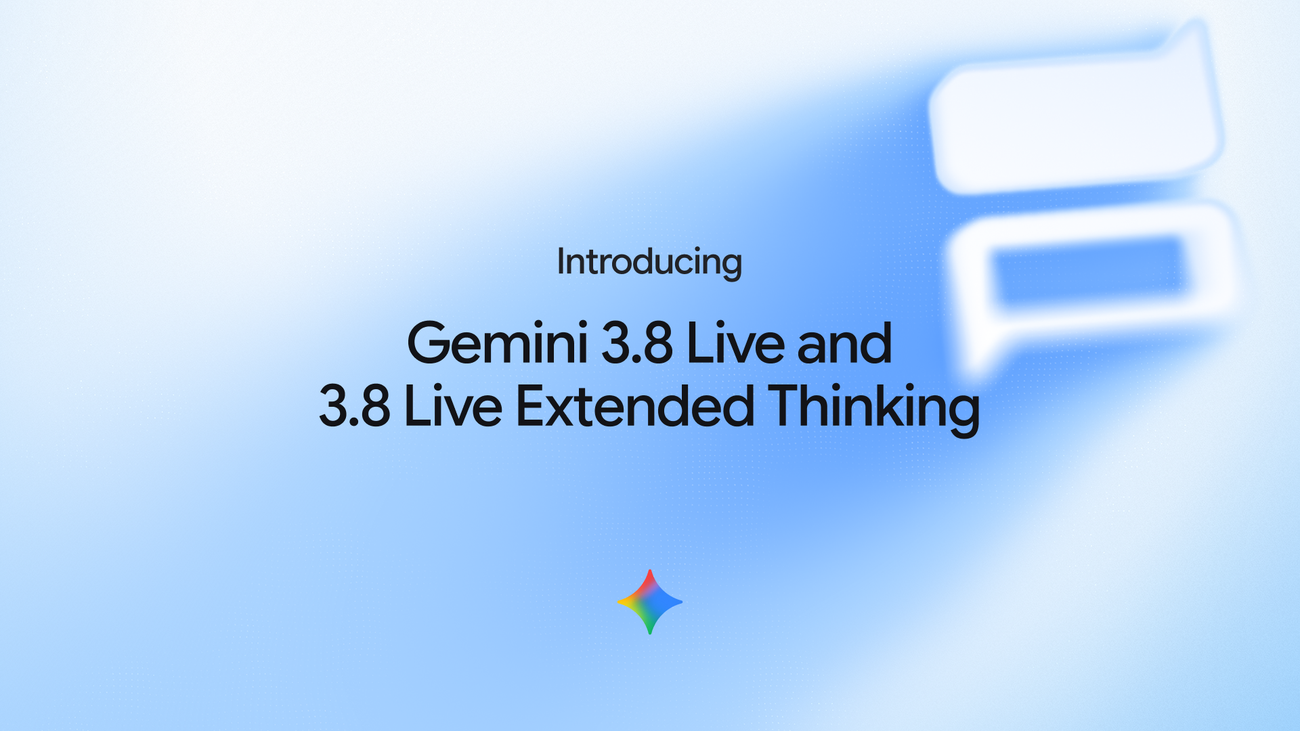
Google introduced Gemini 3.8 Live and Gemini 3.8 Live Extended Thinking on September 15, then updated the announcement on September 17. The lower-latency model supports visual grounding, automatic switching across 97 languages and asynchronous tool calls while dialogue continues. Extended Thinking is aimed at more complex multi-step work. Google also launched Gemini 3.5 Transcribe for 85-plus languages, files up to one hour, timestamps and speaker diarisation. Generated audio carries SynthID watermarking.
Why it matters: Google published several evaluation conditions rather than relying only on a polished voice demo. It reports an 82.6 Speech-to-Speech Quality Index score, 68.6% on tau-Voice, 35.1% on Sierra's banking version of that benchmark and 97.7% on Big Bench Audio, while noting that EVA-Bench was run through the Live API on Gemini Enterprise Agent Platform. Those numbers make the launch more inspectable, but they still combine external leaderboards with supplier-reported tests and do not predict performance in a noisy studio, multilingual production office or customer call.
What to do with it: build a 30-call evaluation set from the actual accents, interruptions, room noise, visual references and tool actions your workflow contains. Measure time to first audio, task completion, correction turns, false tool calls, speaker attribution, language switches and recovery after interruption. Store the audio, transcript, tool trace and reviewer score together. Treat SynthID as one provenance signal, not a substitute for an audible disclosure or production log where either is required.
Signal 3 — September 16–17: Training-data economics become a recurring line item
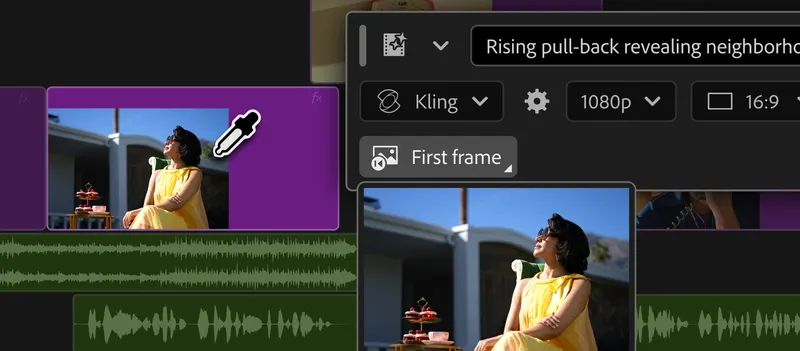
Adobe updated its Firefly FAQ on September 16 ahead of the September 17 contributor payment. Eligible Adobe Stock contributors whose photos, vectors, illustrations, videos or generative-AI content were considered for Firefly training receive a discretionary bonus. The 2026 calculation uses content considered between June 3, 2025 and June 2, 2026 together with the licences those assets generated in that period. Adobe says this is the fourth year of the programme and confirms that Stock video is now used in Firefly model training.
Why it matters: recurring payment makes training-data compensation operational rather than hypothetical, and the addition of video brings filmmakers' motion assets into the same economics. The limits matter just as much. Adobe does not publish each asset's contribution, the formula or future payment commitment, and contributors cannot opt out while remaining under the existing Stock terms. A bonus demonstrates a compensation mechanism; it does not by itself explain consent, attribution, model influence or whether the amount tracks the value created.
What to do with it: for every library used in training or retrieval, keep a dataset register with supplier, asset classes, contract version, training permission, opt-out route, compensation method and evidence date. Contributors should export their portfolio and payment records, note which assets are video, and compare the bonus against licence income without assuming the two measure the same use. Agencies buying generative services should ask vendors how creator payment, removal requests and future model versions are handled—not settle for the phrase 'commercially safe.'

Signal 4 — September 14: Broadcasters reward an open agent control layer
At IBC2026, the 2025 Accelerator Project of the Year award went to AI Agent Assistants for Live Production. The project demonstrated an AI Assistant Director orchestrating specialist production agents through voice and natural-language control. ITN, BBC and Channel 4 championed the work with vendors including CUEZ, Shure, EVS, Moments Lab and Google Cloud. IBC highlighted an open, vendor-agnostic framework and the preservation of editorial control.
Why it matters: live production is where agent claims meet unforgiving timing. A system that can coordinate cues, microphones, media, highlights or graphics across vendors is more consequential than a chat interface, because a plausible mistake can go to air. The broadcaster-led emphasis on an open control layer suggests that interoperability, traceability and human override are becoming part of the product requirement. The award recognises a proof-of-concept shown in 2025; it is not evidence of unattended broadcast deployment or a published reliability benchmark.
What to do with it: run the assistant director in shadow mode before granting control. Map every natural-language instruction to a typed command, allowed device, confidence threshold and named human owner. Require read-back for ambiguous cues, a hard kill switch and deterministic fallback rundowns. Measure cue accuracy, latency, operator interventions, recovery time and near misses across rehearsals, then retain the command trace beside the programme log. Add one vendor at a time so a failed handoff has a visible boundary.

Turn authority into a testable production artefact
Choose one system from this week's report and make an authority card before the pilot. Name what it may say, read, generate, buy or control; the sources it may trust; the rights basis; the actions that require approval; the spend or time ceiling; the human owner; the stop condition; and the evidence kept after the run.
Then test the edge, not the demo. Give the sponsored agent an unavailable product, interrupt the voice agent during a tool call, trace one stock asset through the training-data register, or issue an ambiguous live-production cue. Measure whether the system refuses, escalates, recovers and leaves enough evidence for a reviewer to understand what happened.
The useful signal this week is not that AI can hold a conversation or coordinate more tools. It is that the commercial surface is widening. Brands, studios and production teams should expand the control surface at the same time—so every automated decision still has an accountable source, owner and route back to safety.
Build
Need a repeatable AI production workflow?
Mike designs the tools, review loops, and publishing systems that make it usable.
Launching a business of your own? Founder Launch OS connects the brand, offer, website and visual campaign in one guided Codex or Claude Code workspace.
Keep reading