The deliverable had no locked answer
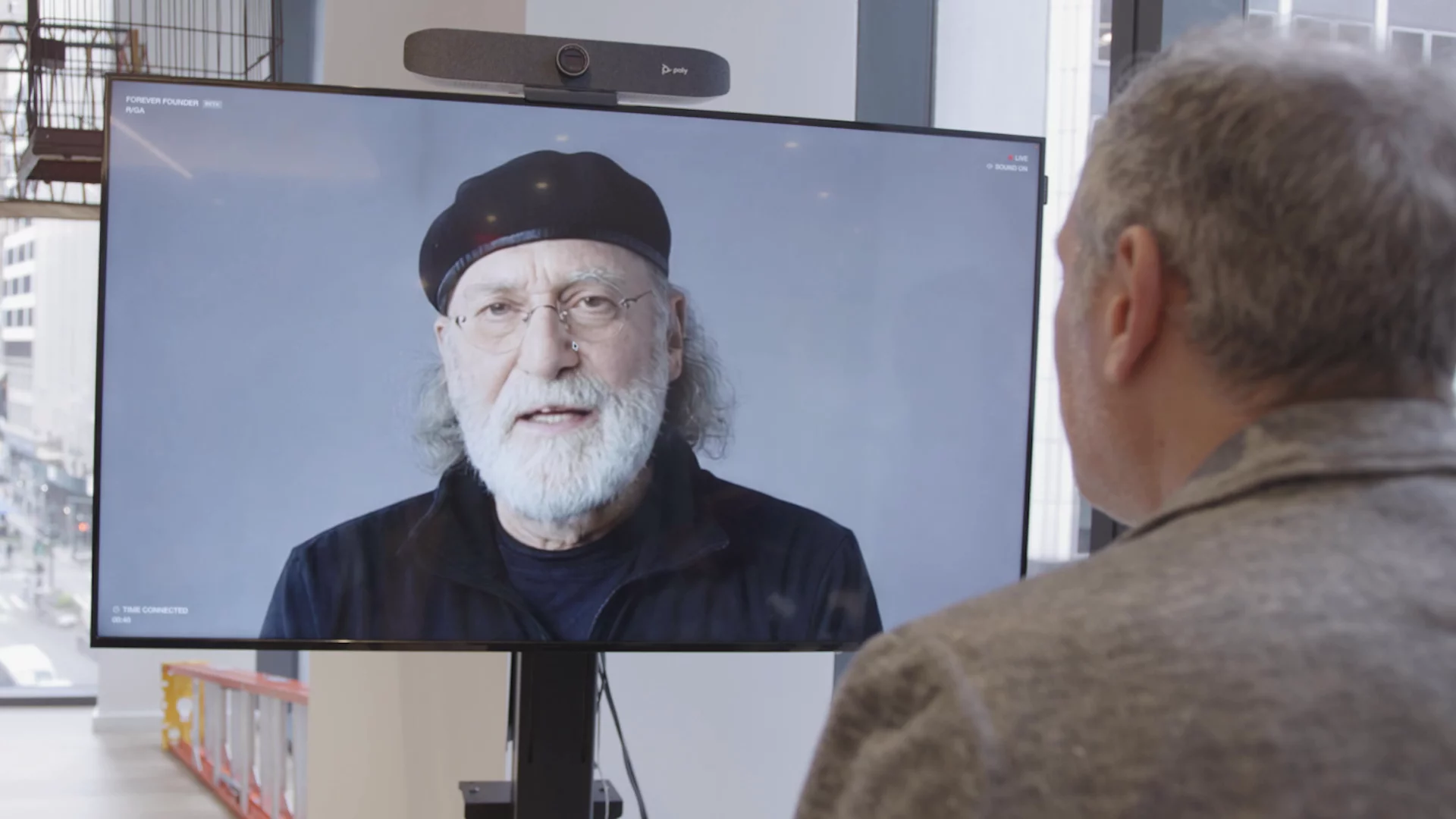
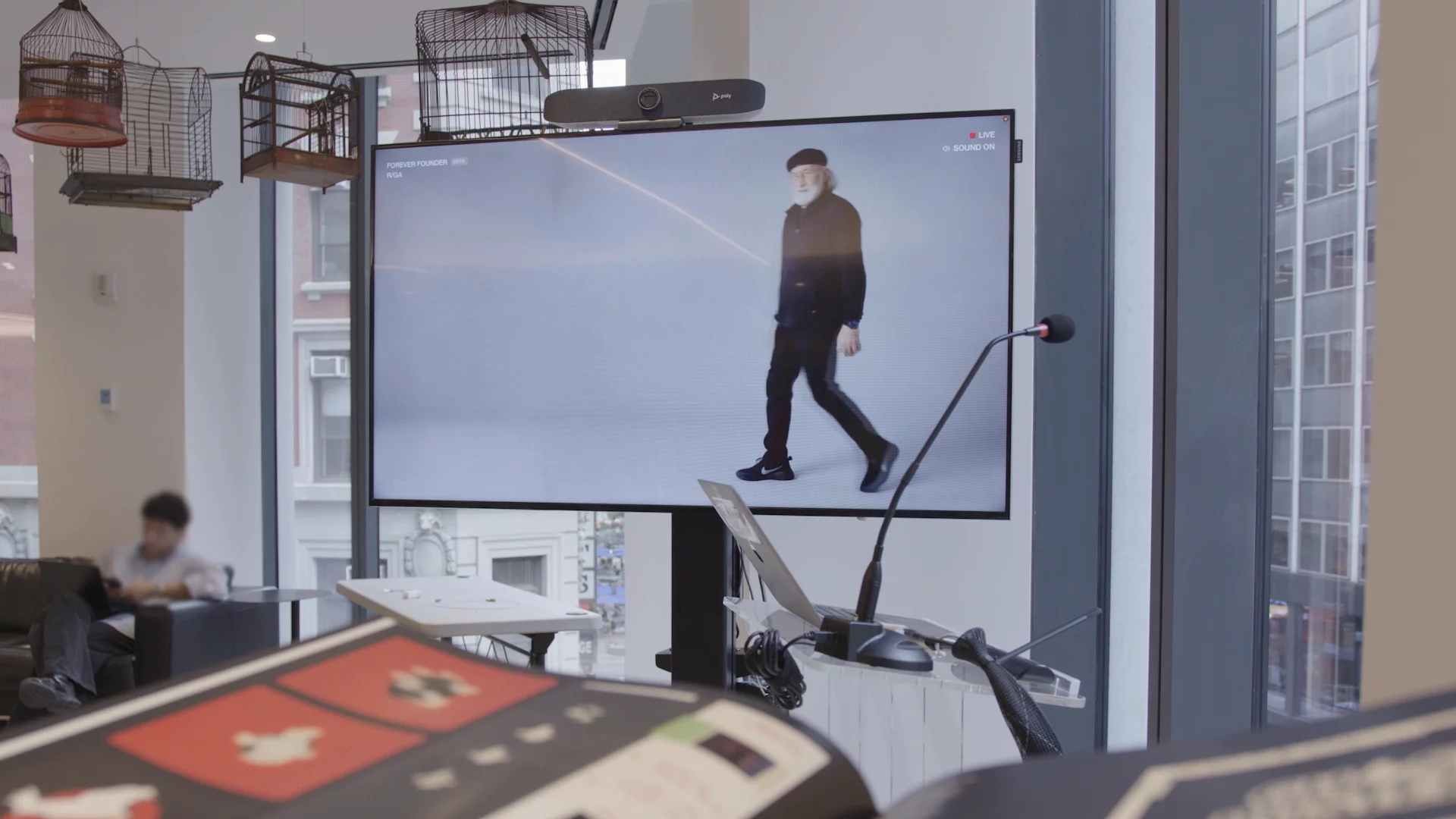
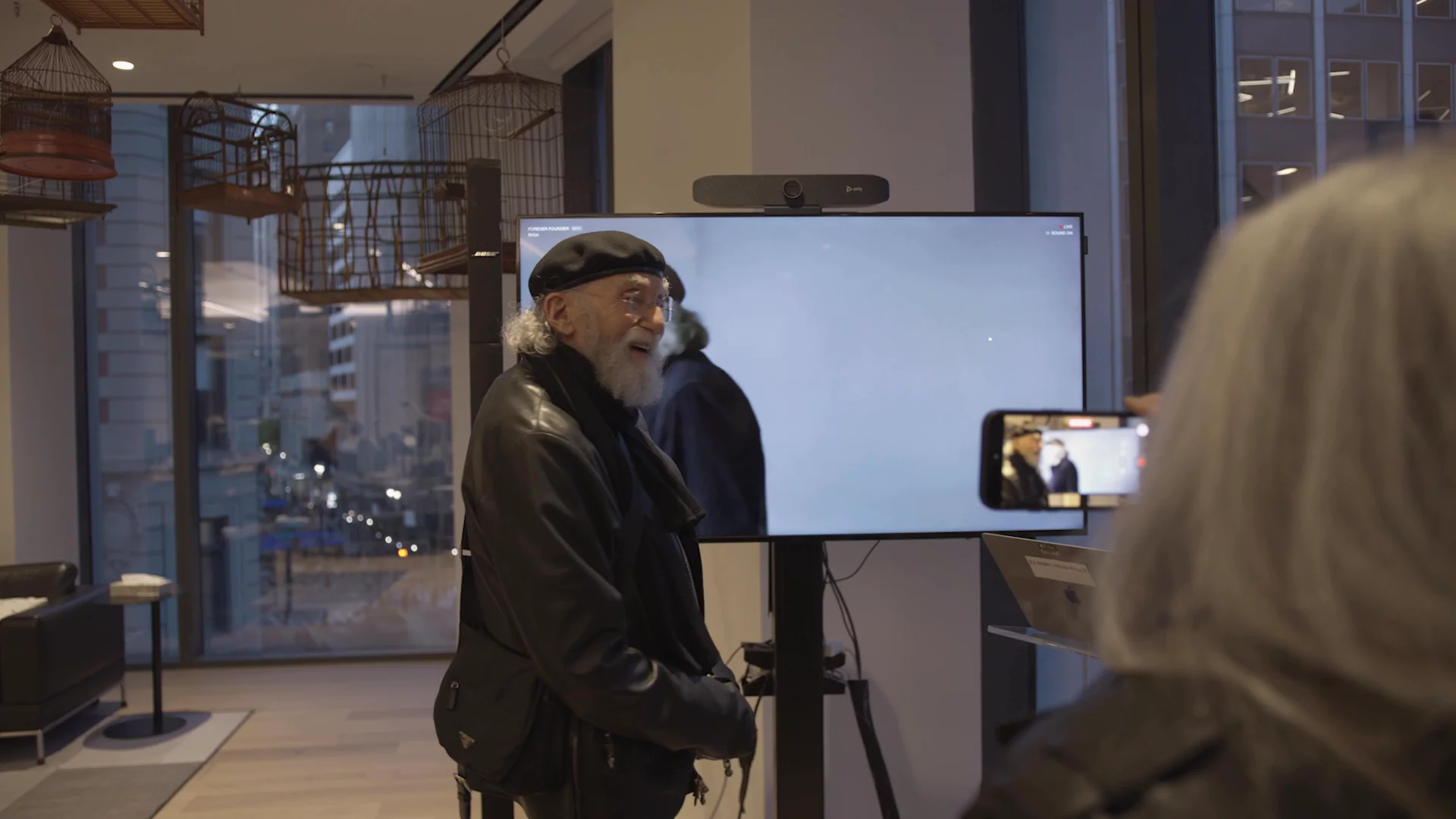
In a customer story published on July 17, 2026, R/GA and Runway described Forever Founder: a real-time AI avatar of R/GA co-founder Bob Greenberg, built for a party marking the release of “R/GA by Design”. Guests did not watch a pre-rendered tribute. They walked up to a microphone and asked the founder's likeness questions.
Runway reports 145 questions across 20 conversations and ten consecutive minutes of live conversation without a technical failure. R/GA says one developer on its side built with Runway's team, reached roughly 90% of the desired result quickly, then refined prompts, the voice, and the knowledge base. Those are useful production signals, but they are vendor-published launch figures, not an independent reliability study or evidence of unrestricted public deployment.
The more important signal is the shape of the deliverable. A film, commercial, or brand book can be reviewed frame by frame and locked. Forever Founder generates a new performance in response to each guest. The AI avatar production workflow therefore includes the face and voice, but also the source corpus, system instructions, answer boundaries, session handling, moderation, disclosure, monitoring, and the authority to switch it off.
A founder becomes four production assets
A convincing founder avatar is not one asset. It is at least four: a recognisable likeness, a voice, a knowledge source, and a set of behavioural instructions. Runway's current Characters documentation describes persistent avatars in almost those terms: appearance, voice, personality, knowledge base, and actions, connected to users through live sessions.
Each layer can fail differently. The likeness can drift into caricature. The voice can sound fluent while placing emphasis Bob would never use. The source can contain a date or opinion that has changed. The behavioural prompt can make an uncertain system sound overly certain. A polished face is therefore weak evidence of an accurate or authorised answer.
Production should give each layer its own owner and version. Name the approved portrait and voice sources, the voice model and permitted transformations, the exact knowledge bundle, the personality instructions, the model release, and the deployment configuration. If one layer changes, the approval record should show which tests were rerun. That is closer to maintaining a product than exporting a campaign master.
Consent has to cover the future tense
This case begins from a comparatively strong place: Greenberg saw the prototype, approved the direction, and had actively shaped the book used as its principal source. That is meaningful participation. It still does not answer every future-use question a buyer would need answered, and the public customer story does not claim to publish the underlying agreement.
A live-replica consent schedule should be specific about channels, audiences, territories, languages, duration, voice and likeness inputs, generated behaviours, session recording, marketing excerpts, model retraining, sublicensing, approval rights, revocation, security incidents, and use after incapacity or death. Permission to appear at one book event should not silently become permission to onboard staff, advise clients, front advertising, or speak indefinitely.
Entertainment and advertising agreements make the wider direction visible. SAG-AFTRA's AI policy record repeatedly centres informed consent, specific intended use, notice, bargaining, and limits around digital replicas. That does not establish which rules govern this private prototype; it does show why a brand should document scope before a conversational likeness becomes valuable enough to travel.
The book is a source, not ground truth
“R/GA by Design” is unusually coherent source material because Greenberg helped shape it after stepping down as CEO. The publisher describes a 400-page archive of projects, interviews, photographs, sketches, and maquettes covering nearly fifty years of the agency. R/GA's team says the avatar is grounded in that story through Bob's lens rather than a neutral historian's account.
That perspective is the creative value and the accuracy limit. At the event, the avatar answered a family question about Bob's late brother Dick in a way the team recognised from the book. The moment felt emotionally precise because the source carried a first-person point of view. It did not prove that every new inference would be factual, current, complete, or something Greenberg would choose to say aloud.
Treat the knowledge bundle like an editorial edition. Record which pages, interviews, captions, case studies, dates, and corrections are included; mark first-person recollection separately from verified company fact; give sensitive subjects an approved response; and maintain a route for a human to challenge an answer. Runway's Documents API allows knowledge to be updated and replaced. That makes an editorial change log part of the production file.
Live conversation creates an editorial control room
A guest can ask the careful question the team tested, the ambiguous question nobody anticipated, or the adversarial question designed to make the founder endorse a person, product, political claim, workplace allegation, or confidential client detail. The answer arrives in performance, under a recognisable face, before an editor can remove it.
That makes launch-day moderation a production role. Build an evaluation set from company history, contested decisions, dates, client confidentiality, family material, legal claims, hate and harassment, financial advice, current events, and direct attempts to override the system. Score not only factual accuracy but also whether the avatar refuses clearly, signals uncertainty, distinguishes memory from record, and hands the conversation to a human when the subject exceeds its authority.
The live team needs visible telemetry and a rehearsed incident path: who watches conversations, what triggers an automatic stop, who can mute or end a session, how an incorrect answer is preserved for review, how the source or prompt is corrected, and what must be retested before relaunch. Zero reported technical failures across ten minutes is a promising event result. It is not a substitute for an error budget and a kill switch.
Every question can become audience data
The camera points at the founder, but the microphone points at the audience. A guest may volunteer a name, a personal memory, a client reference, a complaint, or information about somebody else. Runway's documentation says completed conversations can be reviewed through transcripts and, when available, recordings. That makes the audience side of the exchange a privacy and records-management surface, not background noise.
Before the first question, the experience should say that the character is AI, whether audio or transcripts are retained, why they are retained, who can access them, how long they remain, and where a participant can request deletion. The visible BETA and LIVE labels in the event interface help with product state, but they do not by themselves answer consent and retention questions.
Keep observability proportional. The production team needs enough record to investigate failures and improve the experience, but not an open-ended archive of identifiable conversations because storage is easy. Separate reliability logs from creative-research material, restrict access, redact sensitive content, and set deletion dates. If a conversation is repurposed for a case film or social clip, obtain that permission separately.
Scale changes the meaning of the replica
R/GA describes the event build as a prototype, then sketches a larger future: access across global offices, language versions, a knowledge base spanning company history, case studies that can be called up during conversation, onboarding, and second-screen use. That is a move from one supervised installation to an internal media platform.
Each expansion changes the agreement. Translation can alter tone and certainty. Connecting case-study media introduces client rights and archival accuracy. Personalised onboarding introduces employee data. Remote access increases security and impersonation risk. Updating the corpus with current company material may also blur Bob's historical perspective with positions he never reviewed.
Version the identity and the institution separately. Preserve a clearly dated Bob edition sourced to his approved record; route new company facts through a labelled R/GA layer with its own owner; and make the interface tell users which voice they are hearing. Without that separation, a living archive can quietly become a founder-shaped corporate spokesperson.
The buyer standard is the operating envelope
Do not approve a founder avatar because a launch reel feels human. Approve its operating envelope: named rights for face and voice; dated source material; allowed subjects and actions; disclosure before interaction; participant-data rules; answer tests; human escalation; live monitoring; version history; security ownership; and an expiry or retirement condition.
Then test the derivative, not only the demo. Ask whether the same permissions and labels survive a translated version, a recorded highlight, a social edit, an onboarding module, a client pitch, a public website, and a deployment after the source material changes. The risk usually enters through the successful prototype becoming useful enough to be reused somewhere its original consent and review never contemplated.
Forever Founder is high-signal because the emotional experience appears to have worked and the team has described enough of the build to expose the real job. The AI avatar is not a cheaper talking-head film. It is a performance system carrying a person's identity and an organisation's memory in real time. The craft is making that exchange compelling; the commercial discipline is making sure it remains authorised, legible, correctable, and finite.
Build
Give the founder's intent a system
Founder Launch OS turns one founder's decisions into shared brand memory, a clear offer, a working website and a connected visual campaign inside Codex or Claude Code.
Keep reading