The model in the treatment may not reach delivery
OpenAI's current discontinuation notice says the Sora web and app experiences ended on April 26, 2026, and the Sora API will close on September 24. It recommends exporting Sora content promptly and says associated data will be permanently deleted after the discontinuation and any final export window. A team that built an automated previsualisation, social-versioning or concept pipeline around that API therefore has weeks, not quarters, to recover assets and move the dependency.
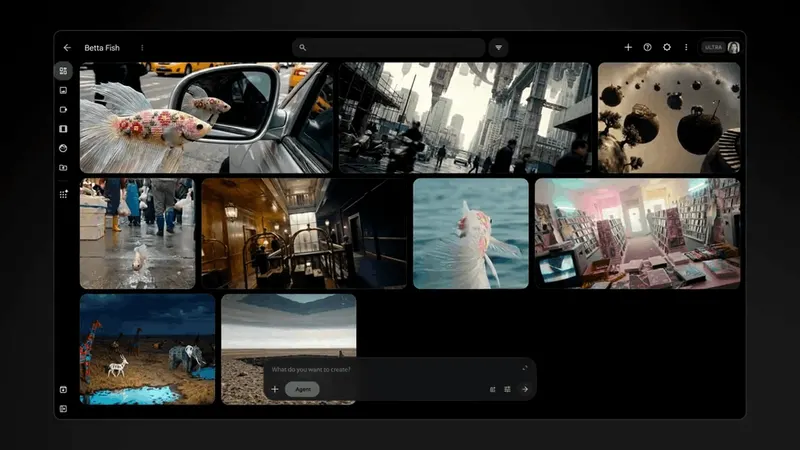
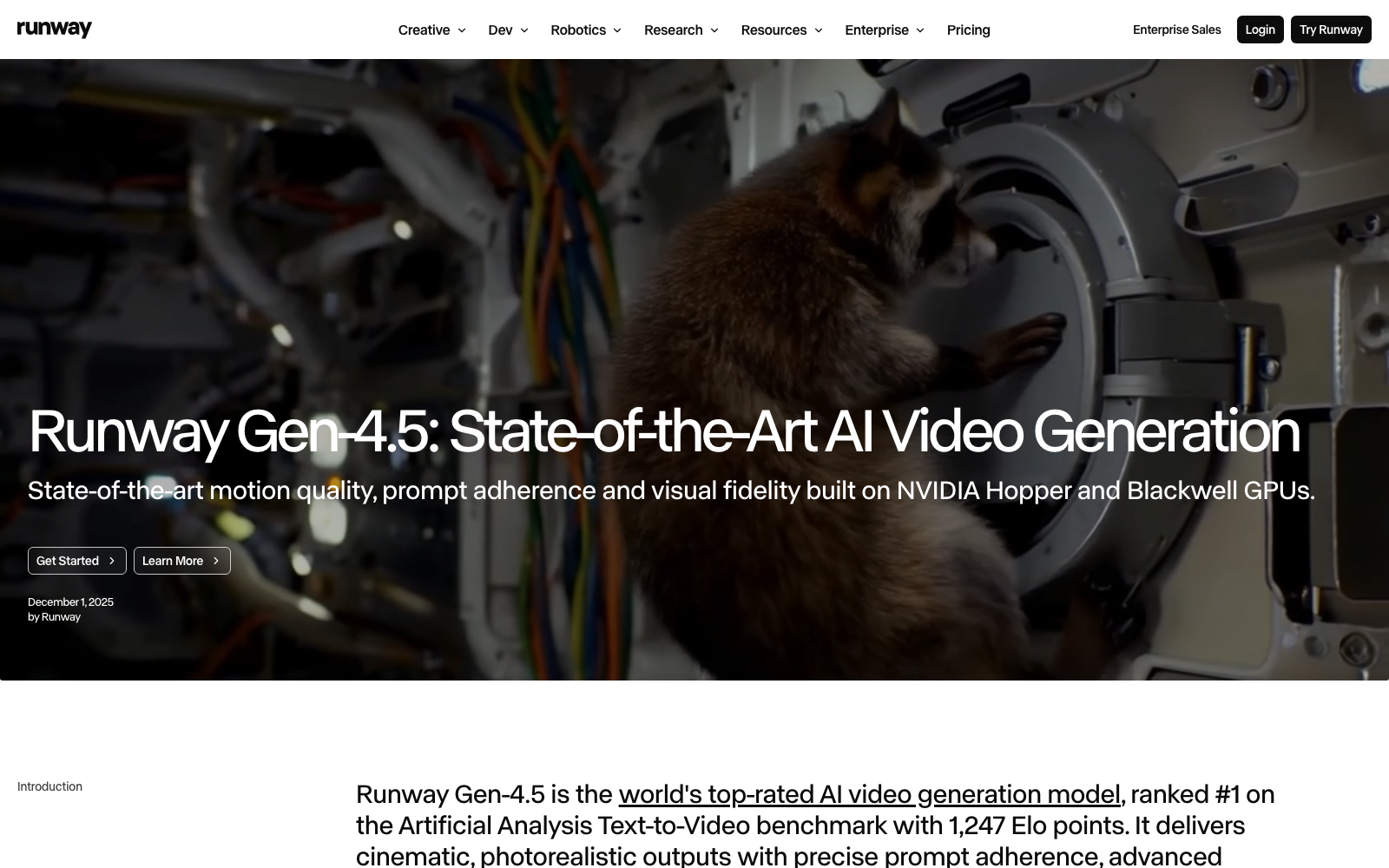
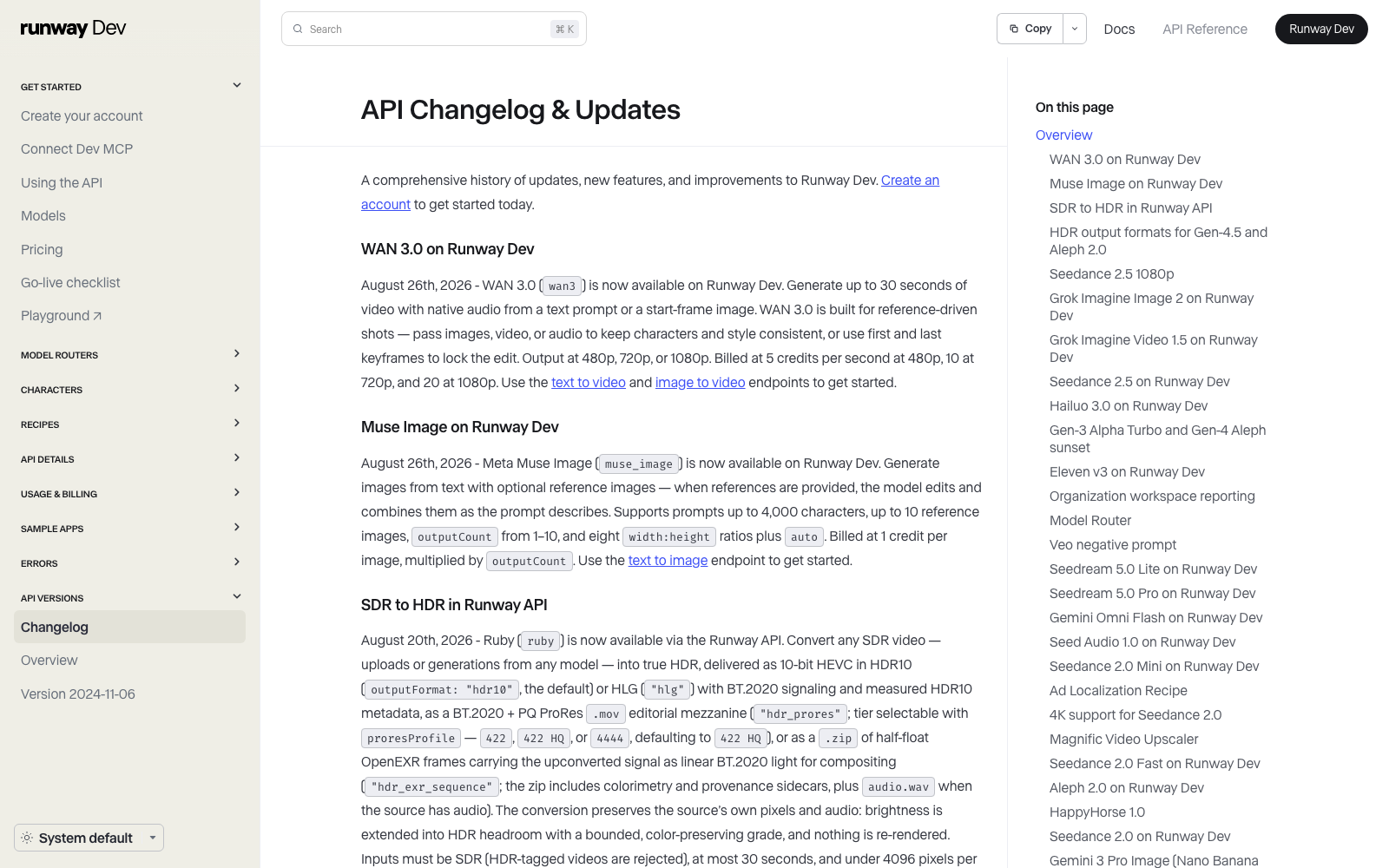
Runway's documentation shows the same pressure in a different form. Its August 5 deprecation table redirects older tools towards newer apps and models. Its API changelog says Gen-3 Alpha Turbo and Gen-4 Aleph requests began failing on July 30, while new model and output options continued to arrive through August. On August 27, Runway also extended eligible legacy Unlimited access to November 30 while confirming that Unlimited is being phased out in favour of the credit-based Max plan.
These are not claims that one supplier is safer than another. They are evidence that AI video is a fast-moving service layer. Availability, interface, price, queue behaviour, output specification and retention can change during a campaign. If a specific model sits on the critical path, its exit conditions belong in the production plan beside location access, talent availability and post capacity.
Inventory the dependency before approving the method
Start the job with a model dependency register. For every generated shot or automation, record the provider, model identifier, access route, account owner, region, plan, current unit cost, queue expectation, maximum duration and resolution, input types, output format, commercial terms, retention setting and known retirement notice. Name the person who checks those facts again before principal generation and before final delivery.
Then classify the dependency. A model used to explore mood is replaceable because the approved outcome will be rebuilt elsewhere. A model used to create final character performance is material because a migration may change identity, motion and rights evidence. An API embedded in an automated localisation or versioning system is critical because failure stops throughput. The stronger the dependency, the earlier the team needs a tested alternative.
Put the register next to the estimate rather than hiding it in a technical appendix. Producers and buyers need to see which creative promise depends on a revocable service, what a migration would cost and who owns the decision to continue, switch or simplify.
Separate shot intent from model-specific instructions
A prompt is not a portable production brief. It often contains shorthand tuned to one model: named controls, reference slots, seeds, strength values, negative terms or camera language that another system interprets differently. If that string is the only record of the shot, switching tools means reverse-engineering the director's intention from an implementation detail.
Keep a vendor-neutral shot card above the prompt. Describe the dramatic purpose, subject and action, framing, camera path, motion cadence, spatial relationships, lighting logic, protected brand elements, continuity anchors, dialogue or sound requirement, duration, aspect ratio and finish. Attach approved visual, motion and audio references with their rights status. Store the provider-specific prompt and settings as one execution of that card, not as the card itself.
This also improves review. A replacement model does not need to reproduce every accident in the previous output. It needs to satisfy the same protected intent. Reviewers can compare both versions against the shot card and identify whether a difference is an acceptable interpretation, a continuity break or a new rights risk.
Export the evidence before the service exports you
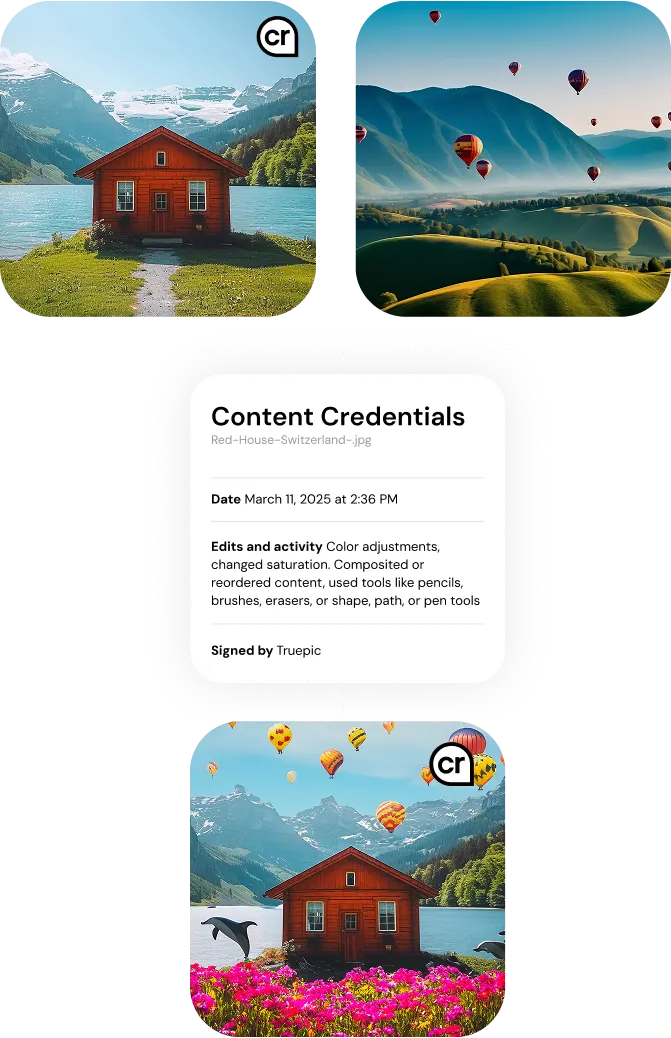
Archive every approved input and output outside the generation platform. That includes original camera files, still references, masks, audio, prompt versions, model and tool identifiers, generation timestamps, seeds where available, account and licence context, consent records, review notes, selected masters and rejected outputs that explain a safety decision. Preserve embedded provenance and sidecar files before transcoding, then create a clearly named editorial copy rather than overwriting the source.
The Sora notice makes the timing concrete: export is not an administrative task to leave until the end of the campaign when the underlying product has already closed and the API has a dated shutdown. The team should be able to reconstruct what it supplied, what the service returned and what humans changed without relying on a vendor gallery, project history or expiring download link.
Treat the archive as part of delivery. The client does not necessarily need every failed generation, but the production company should retain enough evidence to support authorship, consent, provenance, insurance questions, later adaptations and a migration. Set that retention period in the contract and align it with the client's own information-security rules.
Benchmark a route out before the deadline
Do not wait for a shutdown notice to run the first comparison. Build a small migration pack from three to five representative shots: a face or character continuity test, a product-accuracy test, a complex camera or action test, a typography or overlay handoff, and one shot with the workflow's heaviest reference load. Use cleared material rather than confidential client assets when evaluating a new supplier.
Score the candidate on the things delivery actually needs: identity and product fidelity, temporal stability, motion cadence, prompt and reference control, audio behaviour, moderation failure rate, generation time, queue variance, resolution, colour and codec, provenance, retention, commercial terms and cost per approved second. Record attempts and human finishing time, not just the price of the selected generation. A cheap model that needs forty passes and extensive repair is an expensive production route.
Run the pack whenever a material model version, plan or policy changes. Keep one alternate route warm enough that the team knows how to access it, who can approve its terms and where its output enters post. The goal is not pixel-identical interchangeability; it is a known path to an acceptable master.
Budget capacity and migration as separate lines
Runway's move from legacy Unlimited access towards Max is a useful reminder that exploration economics and deadline economics are different. A plan may offer generous generation under relaxed conditions, while client delivery needs predictable priority, concurrency and spend. Estimate the expected attempts per shot, peak-day throughput, input and output charges, upscaling or professional-format costs, storage, egress and human review time.
Add a migration reserve rather than burying it in contingency. It should cover benchmark generations, prompt and reference translation, fresh safety and legal review, colour or codec changes, automation updates and re-approval of affected shots. Define who pays when a supplier retires a service after award but before delivery. Without that sentence, a technical change becomes a commercial argument at exactly the wrong moment.
For longer campaigns, avoid buying capacity solely against the average week. Launches concentrate revisions, localisation and last-minute platform versions. Measure whether the alternative can carry that peak, not whether it can produce a convincing test on a quiet afternoon.
Put the exit plan into the client handoff
The production method should name the current primary model without promising that brand value depends on it forever. Contract language can allow an equivalent replacement subject to the same creative, rights, privacy, security and technical acceptance criteria. Define which changes require client approval, how material differences will be shown and whether a model switch affects schedule or cost.
At handoff, deliver the approved masters, vendor-neutral shot cards, cleared source assets, edit and finish files, relevant generation metadata, approval record and a short dependency note. Keep credentials, private account details and unnecessary rejected material out of the client package. The handoff should enable continuity without transferring avoidable security or privacy risk.
Finally, rehearse the exit. Once a quarter, choose one representative shot, disable the primary route and ask the team to reproduce an acceptable result through the alternate. Time the recovery, count missing files and note where approval stalls. A plan that has never survived a model switch is only a document. A rehearsed route is production infrastructure.
A 30-day continuity check for the next commission
In week one, inventory every model, account, plan, API and retained asset in the workflow. In week two, convert the most important prompts into vendor-neutral shot cards and assemble the representative migration pack. In week three, run one alternate model through the pack and calculate cost per approved second, including human repair. In week four, export the evidence, update the estimate and contract language, then rehearse one controlled switch.
The competitive advantage is not allegiance to the model with this month's strongest reel. It is the ability to keep creative intent, rights evidence, schedule and budget intact while the tool layer changes underneath the job. Buyers can approve ambitious AI video more confidently when the production system has a credible way out.
Build
Need a repeatable AI production workflow?
Mike designs the tools, review loops, and publishing systems that make it usable.
Launching a business of your own? Founder Launch OS connects the brand, offer, website and visual campaign in one guided Codex or Claude Code workspace.
Keep reading