The week in one production decision
Four announcements this week put AI inside places where work already has momentum: a shared image canvas, a team conversation, an organisation's specialist judgement and a video delivery platform. That removes handoffs and makes useful actions faster. It also makes it easier for an unapproved source, casual instruction or plausible agent decision to reach a finished asset before anybody notices.
The production decision is to move the approval boundary into those surfaces. Do not treat the AI step as a private experiment followed by a conventional review somewhere else. Decide which material may enter, what the system may change, what evidence it must preserve and where a person must approve the result. Then measure the workflow by accepted deliverables, not the number of generations or agent actions.
Signal 1 — September 1: Google Pics puts image generation inside the document
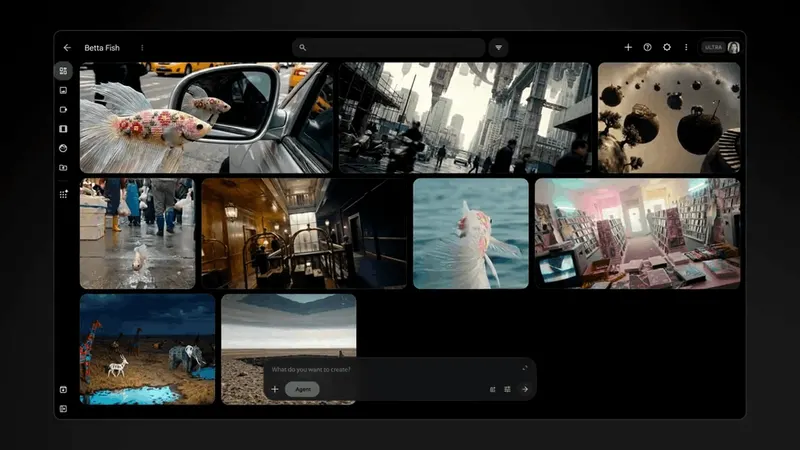
Google began rolling out Pics on September 1 to Google AI Pro and Ultra subscribers and most Workspace business customers. Built on its Nano Banana image model, Pics can generate several options, isolate and transform objects, edit or translate words inside an image and support shared editing. It is available as a standalone product and is entering Docs and Slides first, with Drive integration following. The notable change is not another image generator; it is an editable visual workflow attached to the files and collaborators already shaping the brief.
Why it matters: campaign imagery can now be generated, localized and revised without leaving the document where strategy and approval live. That is useful for mood boards, story frames, pitch visuals, product mock-ups and rapid channel variants. It also collapses the distance between reference and output. A logo, client photograph or licensed asset placed in Drive can become an input to generation before the team has agreed whether that use is permitted.
What to do with it: create a small approved-input library rather than opening the whole Drive to experimentation. Mark which logos, products, people and references may be generated from; preserve the original and each accepted version; and assign a reviewer for brand, rights, product accuracy and in-image copy. Test targeted edits by checking the unchanged regions as carefully as the requested change. For localisation, have a native reviewer compare the rendered words, layout, claims and cultural detail against the approved source—not only the prompt.
Signal 2 — September 2: Adobe makes the team conversation an execution surface
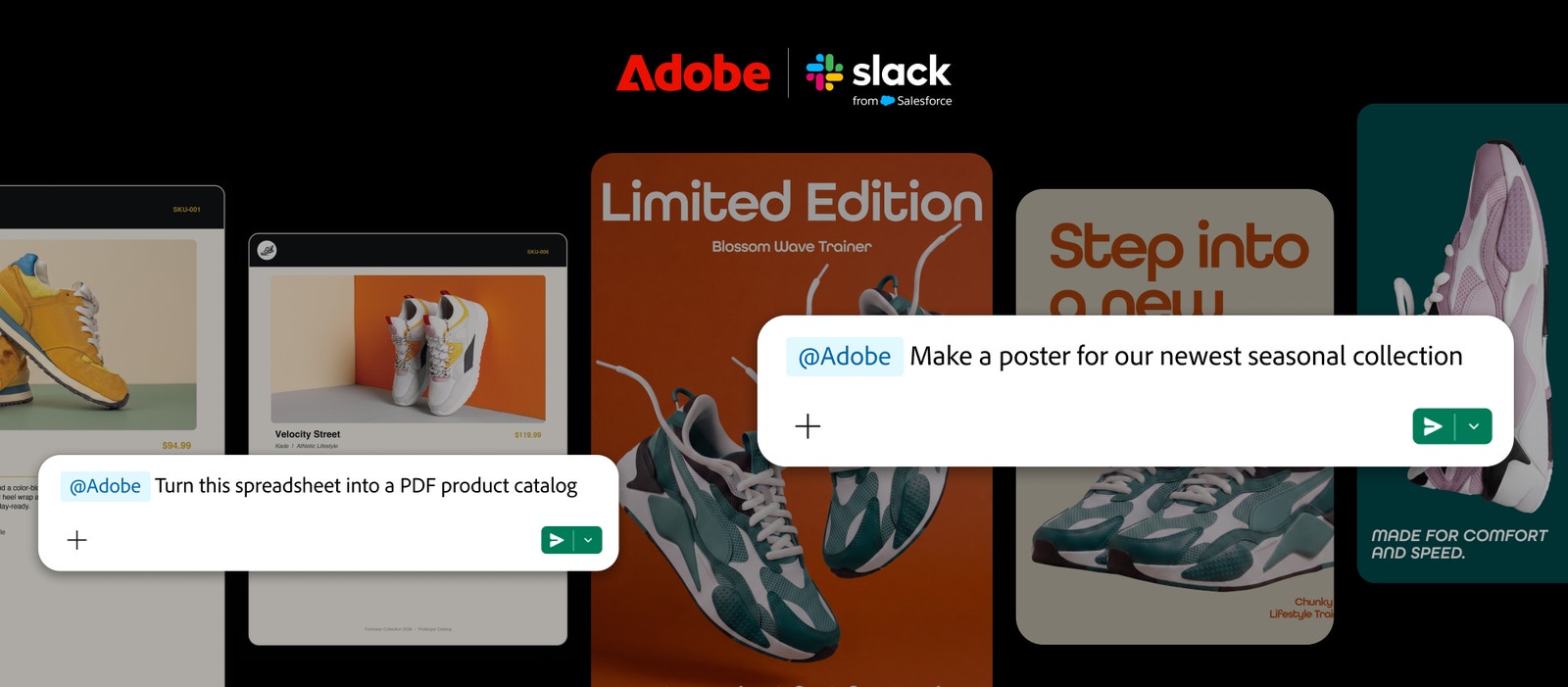
Adobe launched Adobe for Slack on September 2 for Slack Business+ and Enterprise+ teams. Through Slackbot, users can call more than 70 Adobe tools across Firefly, Express, Photoshop, Premiere, Acrobat, InDesign, Illustrator, Stock and Lightroom. Adobe describes workflows that draw on conversations, Canvases, files and Creative Cloud assets to make images, videos and documents; search previous assets; adapt campaign creative; and refine images in bulk. Detailed work can continue in the flagship applications.
Why it matters: the conversation around a deliverable is becoming executable. A request such as ‘use last week's feedback and make vertical versions’ can connect informal language, stored assets and transformation tools in one step. That shortens the path from decision to output, but chat is full of provisional ideas, jokes, outdated attachments and contradictory approvals. Context is valuable precisely because it is messy.
What to do with it: separate discussion channels from authorised production channels, and state which message or Canvas is the current brief. Require the agent to show the source assets and planned operations before a bulk or generative action. Put destructive edits behind copies, keep masters read-only, and use a predictable naming pattern that links each output to the instruction and source. Before rollout, run five representative tasks—search, document creation, image refinement, video adaptation and bulk processing—and record what the connector could read, create and overwrite.
Signal 3 — September 2: Expert feedback can become tested agent memory
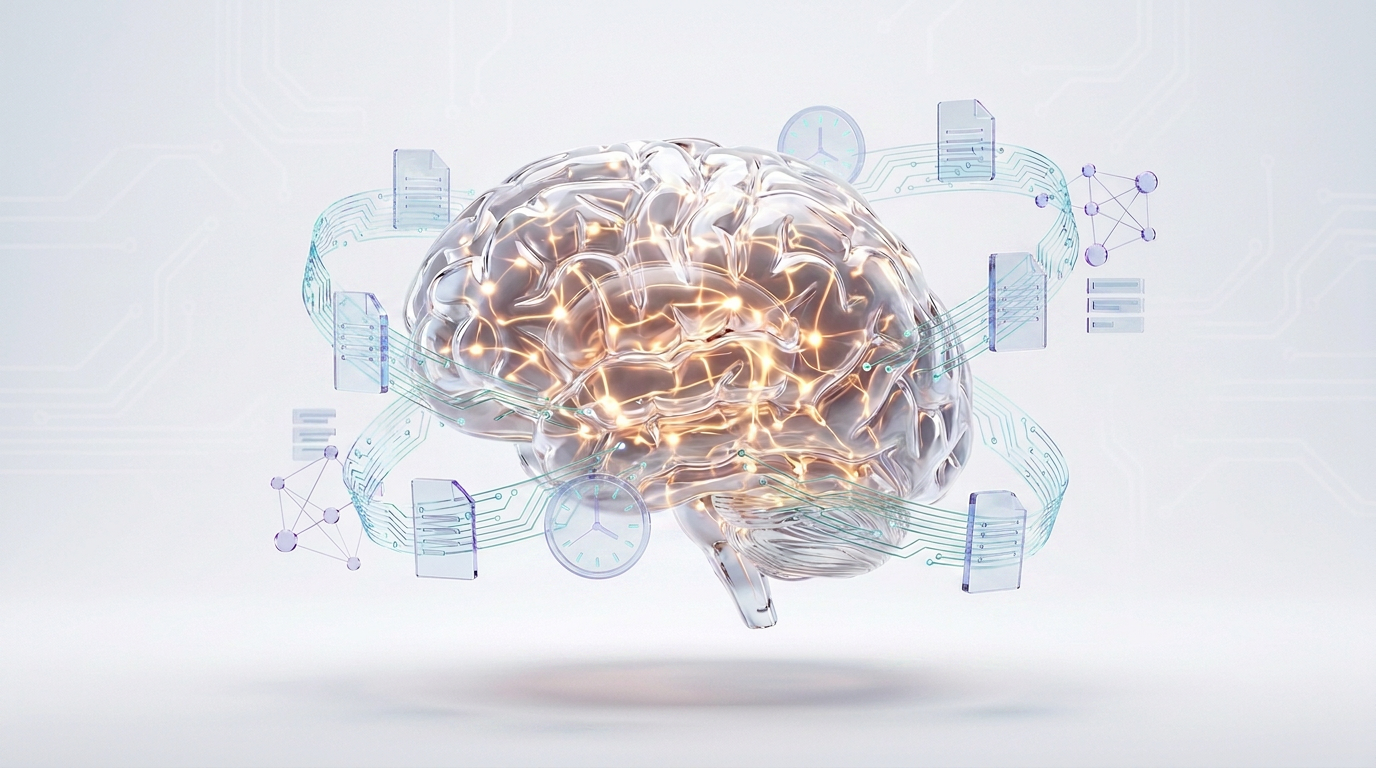
Meta Engineering described an internal domain agent on September 2 that separates structured organisational knowledge from the procedures used to reason with it. Authoritative positions, vocabulary and routing rules live in knowledge files; composable ‘recipes’ define what to inspect, which sources to load and what counts as a complete analysis. Human expert feedback enters an automated improvement loop, but proposed changes must pass regression tests before promotion. Meta reports that recipe-driven progressive disclosure reduced tokens used per turn by around 80% in its implementation.
Why it matters: production knowledge is more than a folder of decks. The useful part is how an experienced producer resolves an incomplete brief, how a post supervisor checks a delivery or how a brand lead distinguishes an acceptable variation from drift. A generic retrieval system repeatedly asks the model to infer those methods from documents. Separating policy from procedure makes corrections durable and failures easier to locate: the fact may be wrong, the method may be wrong, or the test may be weak.
What to do with it: choose one bounded, repeatable review such as an incoming-brief check, rights-pack audit or delivery specification review. Write the team's current positions as short source-linked files, then write the review sequence separately as a checklist the agent can execute. Assemble twenty past examples with expert-approved outcomes, including ambiguous and failed cases. Every correction should update knowledge or procedure—not disappear into chat—and must pass the full set before it becomes the new production version.
Signal 4 — September 2: Video platforms want agents to act on audience insight
Brightcove announced Gen 2 on September 2, combining more than 22 major innovations and 30 platform advancements across video creation, distribution, engagement and monetisation. Its new AI Agentic Hub is described as allowing users to define an outcome while agents coordinate actions across content, metadata, analysis, workflows and viewer experiences. Brightcove says the Hub is already available to customers in production, with a broader rollout after IBC 2026. These are supplier claims rather than independent performance evidence, so teams should test the actions that matter in their own account.
Why it matters: the agent is moving downstream from making content into operating the system that publishes and earns from it. Metadata, localisation, accessibility, placement and experience configuration can affect discovery, compliance and revenue as much as the master itself. An agent that can both analyse performance and change distribution creates a fast feedback loop—but can also optimise a proxy, overwrite carefully authored metadata or spread one weak decision across a library.
What to do with it: start in recommendation-only mode on a defined catalogue. Give each proposed action an asset ID, current state, evidence, expected effect, reversible change and owner. Permit low-risk metadata suggestions before publishing changes; keep rights, territory, monetisation, accessibility and deletion decisions behind named approval. Compare agent recommendations against a control group for four weeks using accepted changes, correction rate, time saved, audience outcome and reversals—not the number of automated tasks completed.
Run one workflow test before expanding access
These releases point to the same operational change at four layers: create the visual where the brief lives, execute the edit where the conversation lives, preserve expert judgement where the agent reasons and act on performance where the video is distributed. The handoffs are shrinking. The controls, evidence and acceptance criteria must shrink into the workflow with them.
For the next seven days, choose one real but low-risk deliverable. Define its authorised sources, allowed transformations, approval gates and success measure before connecting the tool. Keep a simple ledger of inputs, instructions, outputs, reviewers, corrections and final use. At the end, calculate accepted outputs per hour, human correction time and the percentage of actions reversed. Those figures reveal more than a polished demo.
The teams that gain an advantage will not be those that let AI act everywhere first. They will be the ones that turn each new execution surface into a controlled production path: fast enough to matter, legible enough to review and structured enough to improve after the first mistake.
Build
Need a repeatable AI production workflow?
Mike designs the tools, review loops, and publishing systems that make it usable.
Launching a business of your own? Founder Launch OS connects the brand, offer, website and visual campaign in one guided Codex or Claude Code workspace.
Keep reading