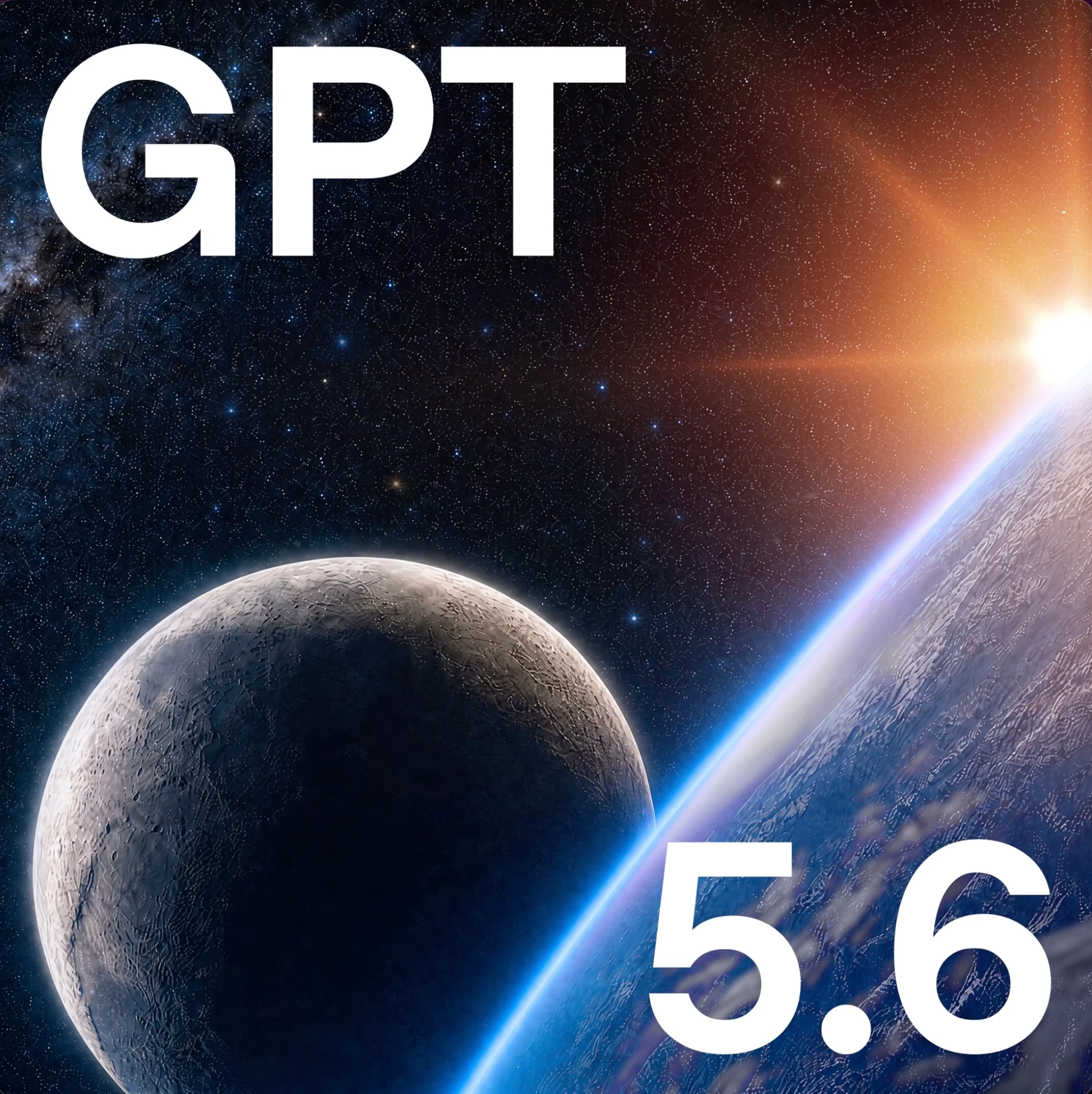
GPT-5.6 is a production system, not a single personality
OpenAI's GPT-5.6 release is really a family of three models. Sol is designed for complex, open-ended work; Terra balances capability and cost; Luna handles clearer, repeatable tasks quickly and economically. That distinction matters to creative teams because the most capable model is not automatically the correct model for every job.
A director interrogating an ambiguous treatment might benefit from Sol's deeper reasoning and design judgment. A producer converting approved concepts into production documents could use Terra. Luna is a better fit for repetitive operations: tagging transcripts, restructuring shot data, formatting deliverables or producing consistent summaries.
The useful shift is from asking whether AI belongs in a creative workflow to deciding where different levels of intelligence belong within it. GPT-5.6 also introduces `max` reasoning for difficult individual tasks and `ultra`, which coordinates agents across parallel workstreams. A team could separate visual research, audience analysis, production planning and technical prototyping, then bring those strands back into one coherent response.
The model can carry more of the production process
The technical changes are less glamorous than an image generator, but potentially more useful. Programmatic Tool Calling allows GPT-5.6 to coordinate tools and process intermediate results without sending every minor step back through the model. Persisted reasoning helps it retain useful reasoning across a longer piece of work. Original image detail lets it inspect supplied images at their original dimensions, while improved design judgment is intended to produce more polished interfaces, documents and presentations.
For a creative team, these capabilities connect stages that are usually fragmented. A research conversation can become a structured brief. That brief can inform a treatment, schedule or presentation. Reference files can establish typography and visual hierarchy. Feedback can be checked against the source material rather than applied as a disconnected list of notes.
The result is not a machine replacing the creative process. It is a system capable of maintaining context while work moves between research, planning, making and review.
Voice removes a layer of translation
GPT-Live, the technology behind the new ChatGPT Voice, may prove just as significant as the reasoning model. It uses a full-duplex architecture, meaning it can listen and speak at the same time. It can wait through a pause, respond to an interruption and continue a conversation while deeper work happens elsewhere. Voice can also use search, memory, images, file uploads and supported visual results.
This matters because creative intent rarely arrives as a perfectly written prompt. It often emerges through fragments: “The reference is right, but it feels too clean.” “Keep the scale, lose the corporate tone.” “The reveal should happen earlier, but I don't want it to feel explained.” Typing encourages us to tidy those thoughts before the system receives them. Conversation provides room to find the thought while expressing it.
A creative director can talk through what is not working. A producer can describe shifting constraints while reviewing a schedule. An editor can discuss the emotional purpose of a sequence before translating that purpose into specific notes. Voice is valuable here not because speaking is faster than typing, but because it preserves more of the uncertainty, emphasis and correction through which creative decisions are actually formed.

From conversation to coordinated work
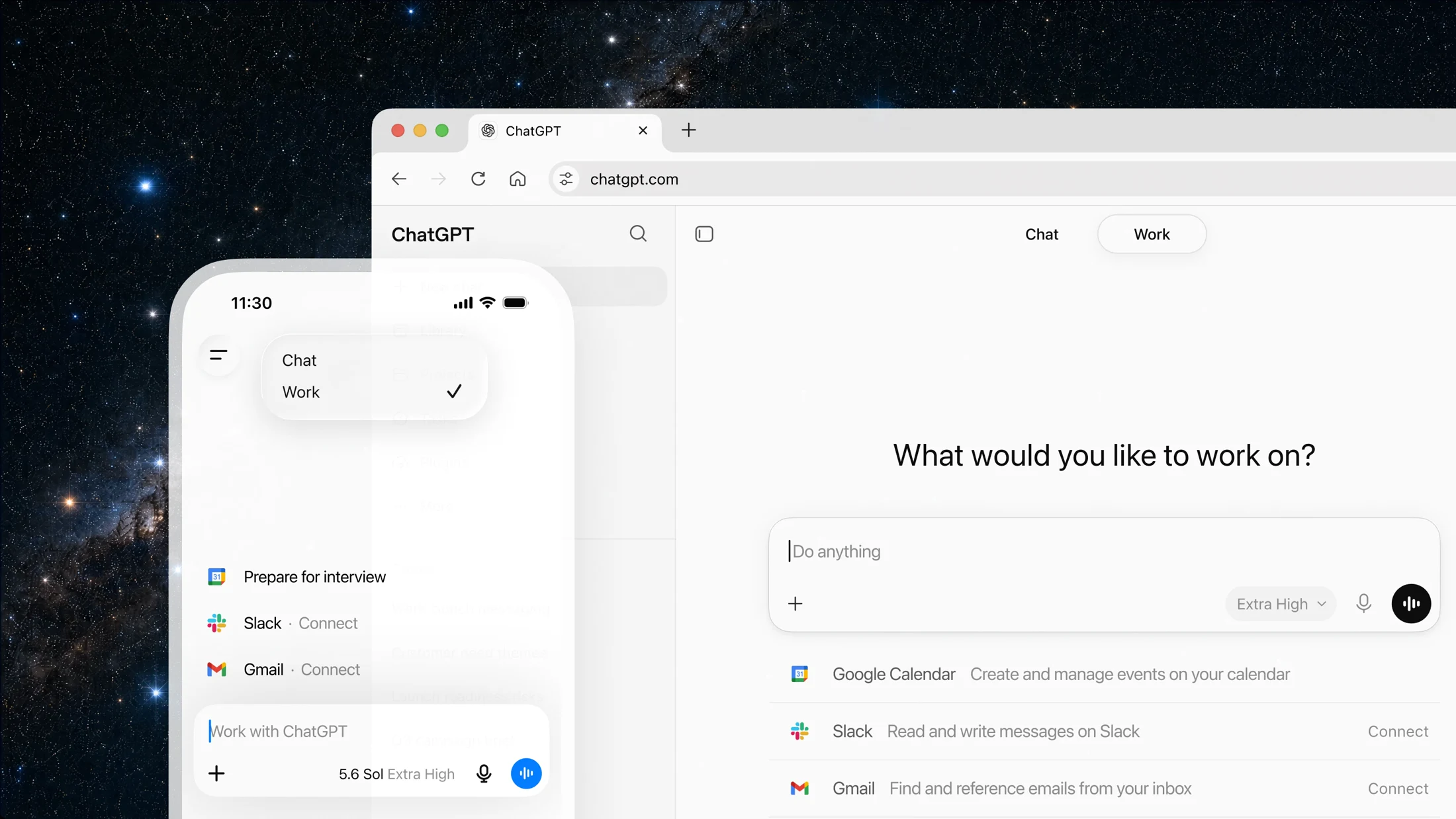
The desktop integration extends voice beyond a single exchange. ChatGPT Voice can start, check and steer work happening in other tasks. On macOS, optional Screen context can also share a view of the frontmost window. That makes conversation a control surface for work rather than merely another way to enter a prompt.
A director could review a treatment on screen, explain which passages feel false and ask for alternative approaches without losing the original argument. A motion designer could discuss an interaction while the system inspects the current implementation, then send a bounded revision task to Codex. A producer could dictate decisions after a client call and have separate tasks update the action list, risk register and next presentation.
A small studio could ask one agent to research references, another to test technical feasibility and a third to turn the approved direction into a client-facing document. This is where GPT-5.6 and Voice complement each other. Voice captures intent. GPT-5.6 reasons through it. Codex and ChatGPT Work turn that reasoning into inspectable work.
Human judgment becomes more important
None of this resolves the central problem in creative automation: a system can produce plausible work without understanding why it deserves to exist. Creative teams still need to establish the argument, judge cultural context, recognise imitation and decide what should remain unresolved. They need to know when an efficient answer has flattened the difficult part of an idea.
Voice introduces another risk. Natural conversation can make a system feel more perceptive than it is. Acknowledgements, timing and fluency create presence, but presence is not authorship or accountability.
The strongest workflow therefore keeps approval boundaries visible. The agent can explore, organise and execute. The team remains responsible for taste, consent, originality and consequence.
Less prompting, more directing
The interesting future is not one in which every creative becomes a prompt engineer. It is one in which prompting recedes into ordinary direction: showing references, explaining constraints, correcting interpretations and deciding when the work is ready.
GPT-5.6 gives the system greater capacity to act on that direction. GPT-Live makes the exchange feel less like programming a machine. Together, they reduce the administrative distance between creative intent and practical execution.
That could give small teams more leverage and larger teams fewer handoff failures. It could also generate an extraordinary quantity of polished but unnecessary work. The advantage will belong to teams that use the technology to protect attention rather than merely increase output.
Build
Need a repeatable AI production workflow?
Mike designs the tools, review loops, and publishing systems that make it usable.
Launching a business of your own? Founder Launch OS connects the brand, offer, website and visual campaign in one guided Codex or Claude Code workspace.
Keep reading